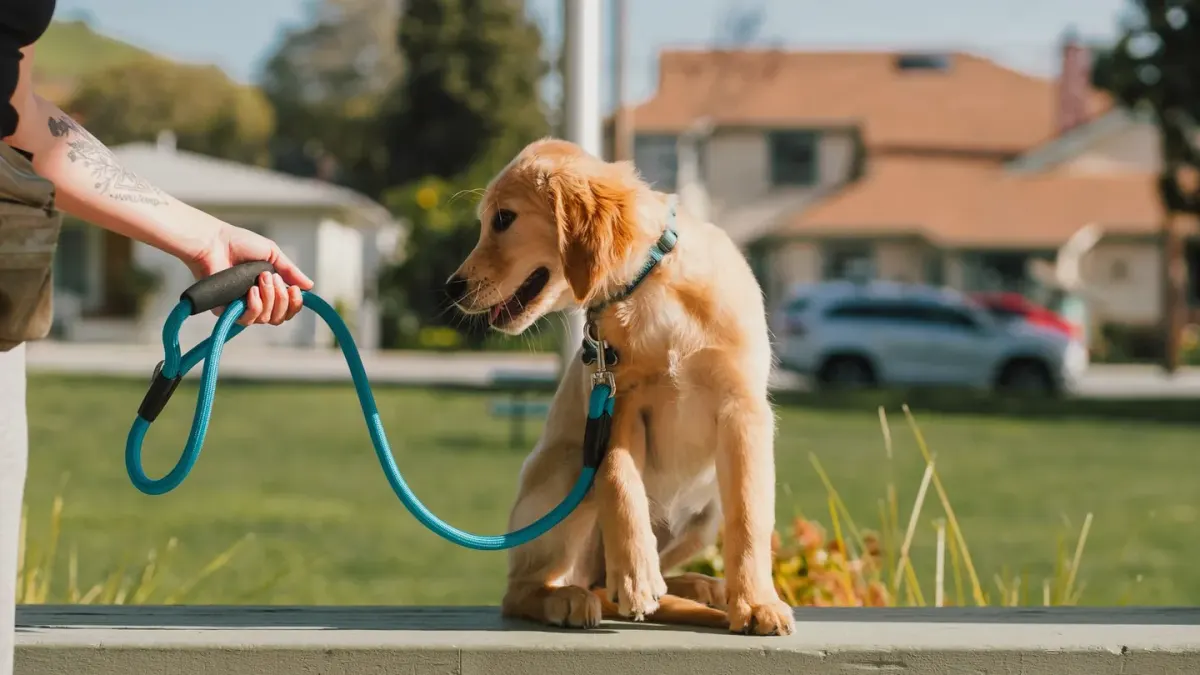
The checklist most owners get half right
Here’s the list, up front, because you’ll want to reference it before you read the reasoning.
- 3–14 weeks: the primary socialization window — this is when new experiences do the most good and the least harm.
- 8–11 weeks: first fear period — pause big introductions, keep exposure gentle and short.
- Before the vaccine series is finished: low-risk, controlled socialization can still start; it doesn’t have to wait.
- People: at least a few different ages, heights, and appearances per week — hats, beards, uniforms, wheelchairs, strollers.
- Surfaces and sounds: gravel, grass, tile, metal grates, vacuum, doorbell, traffic — introduced one at a time, not all at once.
- Other dogs: vaccinated, known-healthy playmates or a well-run puppy class, not the dog park.
- Handling: ears, paws, mouth, collar grabs, nail trims — practiced daily in short sessions.
- Car rides and the vet clinic: short, food-paired visits that aren’t only for shots.
- 12–16 weeks and beyond: widen the circle — new neighborhoods, elevators, stairs, crowds.
- Watch for: freezing, tucked tail, whale eye, or refusal to move — that’s the signal to shrink the exposure, not push through it.
Most owners get the first half of this right and the second half wrong. They know puppies need to meet people and dogs. They don’t know the calendar matters almost as much as the content.
Why the window closes faster than people expect
In my practice, I tell new puppy owners the same thing almost every time: the American Veterinary Society of Animal Behavior has been direct about this for over a decade — the primary socialization period runs through roughly the first three months of a puppy’s life, and it is the window when sociability outweighs fear. After that, the biology shifts. New things stop being automatically interesting and start being automatically suspect. That’s not a training failure; it’s a normal developmental transition, and it’s exactly why the checklist above is organized by age rather than by task.
I remember a Cavalier puppy named Wilbur, ten weeks old, twelve pounds, who came in for his second round of vaccines. His owners had done everything “right” by the old advice — they’d kept him home until his shots were finished at sixteen weeks, worried about parvo at the dog park. By four months, Wilbur froze on the exam table at the sight of my stethoscope, tucked his tail on the tile floor, and wouldn’t take a treat from my technician’s hand. Nothing was medically wrong with him. He simply hadn’t met enough new people, surfaces, or handling before his fear response matured. We spent the next two months doing daily five-minute handling exercises and short, food-paired visits to the clinic lobby just to build tolerance he could have built at ten weeks in half the time.
The vaccine-timing myth that keeps puppies home too long
The single biggest checklist mistake is waiting for a fully vaccinated puppy before starting socialization. It’s an understandable instinct — nobody wants to risk parvovirus — but it works against the biology of the window itself. Both the American Veterinary Society of Animal Behavior and the American Animal Hospital Association: AAHA Canine Life Stage Guidelines take the same position: there’s no medical reason to delay puppy classes or controlled social exposure until the vaccine series is done, as long as the puppy isn’t around unvaccinated or unscreened dogs, high-traffic dog parks, or areas with unknown fecal contamination. A well-run puppy class that screens for vaccination and health status is low-risk. A dog park with strangers of unknown status is not. That distinction is the whole checklist, condensed.
Behavioral problems, not infectious disease, are the leading cause of death in dogs under three years old, according to that same AVSAB position statement — dogs are surrendered, rehomed, or euthanized for fear and aggression far more often than they die of a virus they could have caught at a puppy class. That statistic reframes the risk calculation for a lot of owners the first time they hear it.
Building the week-by-week sequence
Once a puppy is home, usually around eight weeks, the checklist becomes a rhythm rather than a single event. I ask owners to think in three overlapping tracks: people, environments, and handling.
For people, the goal by fourteen weeks is roughly a hundred different individuals — not a hundred strangers mobbing the puppy, but a hundred brief, calm, puppy-initiated greetings spread across weeks. Vary the details: someone in a hat, someone using a cane, a child, a person with a deep voice. For environments, add one new surface or sound category every few days — a vacuum running in another room, a metal grate on a walk, the echo of a parking garage — always paired with something the puppy already likes, usually food. For handling, five minutes a day of touching paws, ears, and mouth, plus practicing a gentle collar grab, pays off enormously at the first nail trim and every vet visit after that.
The American Kennel Club: AKC’s guidance on fear periods is worth building into the schedule too, because most owners hit the first fear period, usually between eight and eleven weeks, right as they’re bringing the puppy home and feeling ambitious about introductions. During that window I tell people to keep doing the checklist but turn the volume down — shorter sessions, calmer environments, more distance from anything overwhelming. No amount of socialization prevents a fear period from happening; the goal is just to avoid a bad experience landing inside it.
If your puppy is also working on house manners during this stretch, a potty-training schedule and socialization checklist run well side by side — feeding, sleep, and outings already structure the day, so slotting in a five-minute handling session or a short walk past new surfaces isn’t extra work, it’s the same walk done a little more deliberately.
When a puppy shuts down instead of warming up
One thing the checklist can’t capture in bullet form is what “too much” looks like in the moment. A puppy who freezes, tucks its tail, shows whale eye, or tries to hide behind your legs isn’t being stubborn — that’s the exposure exceeding what the puppy can process. The fix isn’t to power through; it’s to create distance, lower the intensity, and try again in a smaller dose. I’ve watched owners misread this as their puppy being “difficult” and push harder, which almost always makes the next introduction worse, not better.
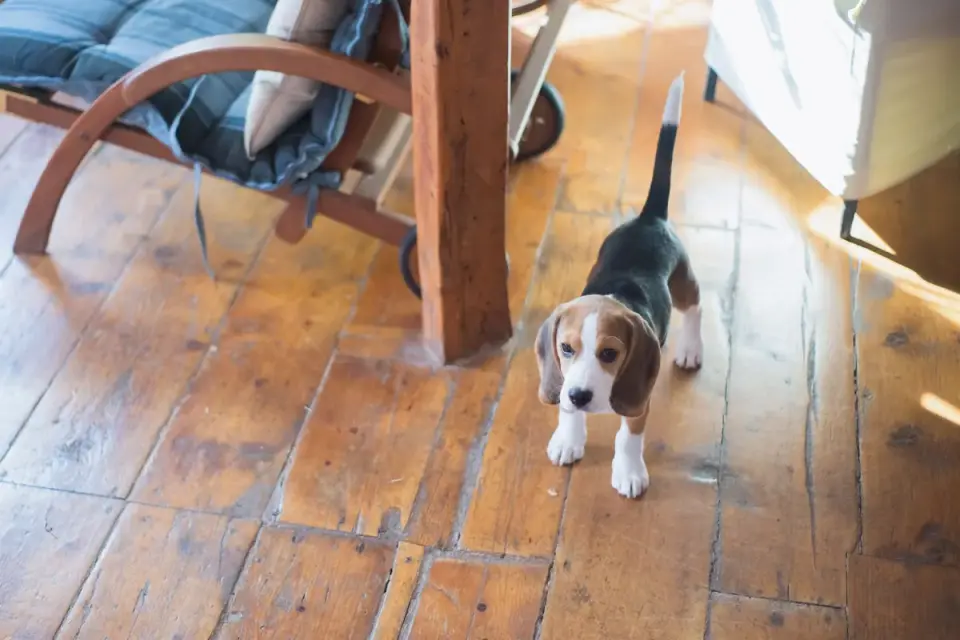
If your puppy already has a formal training plan in place, a clicker or verbal marker can make the handling and greeting exercises easier to shape precisely, since you can mark the calm moment the puppy chooses to approach rather than the moment it’s forced to.
Choosing where to get structured help
Not every household needs a formal class, but many benefit from one, especially for the dog-to-dog piece of the checklist, which is harder to arrange safely on your own. A good comparison of group classes, private sessions, and online training is worth reading before you commit, because the right format depends on your puppy’s temperament and your schedule as much as on the curriculum.
By four months, most puppies who’ve worked through this checklist show it in small, concrete ways: they recover from a startle in seconds instead of minutes, they approach new people with loose body language instead of hanging back, and a vet visit is uneventful instead of a wrestling match. Wilbur, the Cavalier I mentioned earlier, got there — it just took longer and more deliberate work than it would have if we’d started at ten weeks instead of sixteen. That’s the whole argument for front-loading the checklist rather than catching up on it later.
Bottom line: start controlled, low-risk socialization before the vaccine series is finished, front-load it into the 3–14 week window, and organize it by calendar rather than by a single list of “things to expose your puppy to.”
Frequently asked questions
When should puppy socialization actually start?
As early as possible after you bring a puppy home, usually around eight weeks, and it doesn't need to wait for the vaccine series to finish as long as exposure is controlled and low-risk.
What is the puppy fear period, and does it stop socialization?
It's a developmental stage, most commonly between eight and eleven weeks, when puppies become more cautious of new things. It doesn't stop socialization, but it's a good reason to keep sessions shorter and gentler during that window.
Is a puppy class safe before all the vaccines are done?
A well-run class that screens for vaccination status and health is considered low-risk and is recommended over waiting, according to veterinary behavior and life-stage guidelines.
Sources
- Puppy Socialization Position Statement — American Veterinary Society of Animal Behavior
- 2019 AAHA Canine Life Stage Guidelines — American Animal Hospital Association
- Puppy Fear Periods: Why Is My Puppy Suddenly Afraid? — American Kennel Club