On this page
Biscuit’s owner called me two weeks after bringing the ten-week-old cattle dog mix home, convinced something was wrong with her. The puppy would use the yard perfectly, then walk straight back inside and squat on the kitchen mat within the hour. Nothing about her plumbing was broken. She was simply being taken out on the owner’s schedule, not her own, and left loose in the house the rest of the time with no one watching the early signs — the circling, the sniffing along the baseboards, the sudden stillness mid-play. Once we swapped free roaming for supervised time and added two more outdoor trips tied to meals and naps, the accidents dropped off within a week. That case is the whole lesson in miniature: potty training rarely fails because a puppy is being stubborn. It fails because the schedule doesn’t match the puppy’s actual bladder, and no one is watching closely enough to catch the moment before it happens.
Start Here: The Checklist Before You Start Training
- Take her out first thing in the morning, after every meal, after naps, and after active play — not on a fixed clock alone.
- Pick one exit and one outdoor spot, and walk her there on leash every single time at first.
- Supervise constantly indoors, or use a crate, baby gate, or tether when you can’t watch her directly.
- Reward within seconds of her finishing outside — a treat, a word, a bit of praise, delivered immediately.
- Log the accidents. A pattern in the log usually reveals a schedule gap, not a training gap.
Each of those five points earns a longer look below, because the mechanics behind them matter more than the rule itself.
The Myth That Slows Owners Down
A lot of owners treat housetraining as an obedience problem — as if the puppy understands the rule and is choosing to break it. Puppies don’t reason that way. A puppy who eliminates on the rug isn’t testing you; her body told her it was time, and the rug happened to be there. The fix isn’t a firmer correction. It’s tighter supervision and a schedule built around her real biology, not a training-book average.
What a Puppy’s Bladder Can Actually Hold
A workable rule of thumb: a puppy can typically hold her bladder for about as many hours as her age in months, plus one, up to the adult ceiling of roughly eight hours. A two-month-old puppy, then, is realistically good for about three hours between breaks — not the five or six an adult dog manages. Smaller breeds run tighter than that estimate because of their faster metabolism and smaller bladder volume, according to the American Kennel Club.
Weeks 8–12: Build the Structure
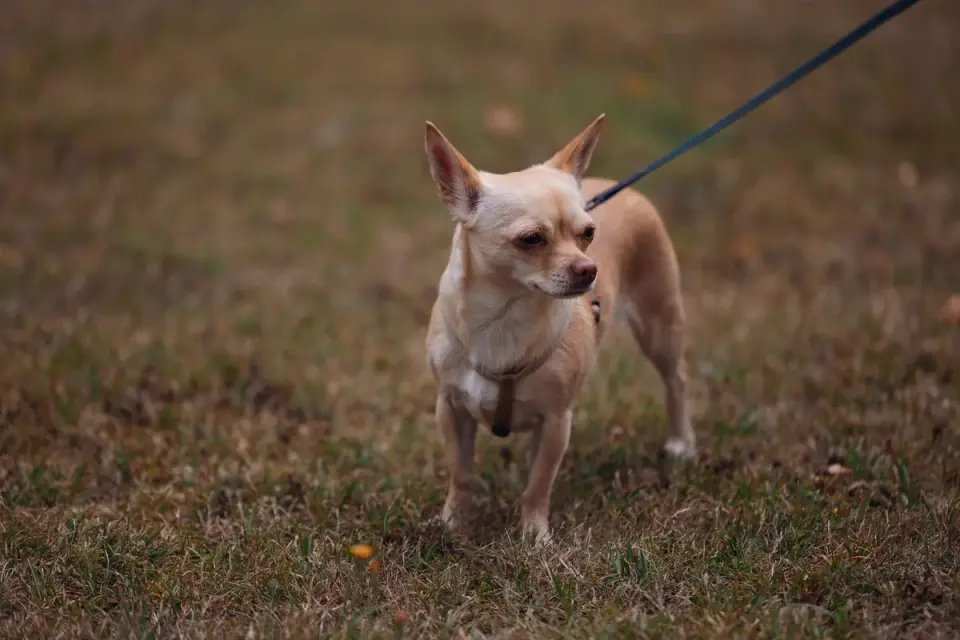
Most puppies come home around eight weeks old, and this is the window to build habits rather than expect finished results. Feed on a fixed schedule instead of free-feeding — a predictable stomach makes for a predictable bladder. Take her out immediately after waking, within ten to fifteen minutes of eating, and after any burst of play. Leash her to the same exit every time in the early weeks; the consistency does more work than the walk itself. This is also the stretch when the American Veterinary Society of Animal Behavior recommends beginning broader socialization, since the first three months are the primary window for a puppy to comfortably meet new people, dogs, and environments — potty walks double nicely as short, low-pressure outings for that purpose. If your household is still working through the basics of a new puppy’s routine, our getting-started guide covers the broader daily framework this schedule fits inside.
Where Crates Fit In
A properly sized crate — big enough to stand, turn, and lie down in, no more — leans on a puppy’s instinct not to soil the space she sleeps in. It is a management tool, not a timeout. Puppies left in a crate too long will eventually be forced to go against that instinct, which undermines the whole strategy, so keep stretches short and build them up gradually rather than testing her limits overnight.
Weeks 12–16: Real Control Starts to Show Up
Somewhere in this stretch, most puppies develop enough physical control to start holding it deliberately rather than by luck. This is usually when owners notice the first real signals — pacing near the door, sitting by it, a specific whine. Reward those signals the moment you see them, even if it means dropping what you’re doing. A missed signal today makes tomorrow’s signal weaker.
One quiet stretch is worth naming on its own: the plateau. Around week 12 or 13, a lot of puppies seem to backslide for a few days after real progress. That’s normal teething, growth, or a schedule change talking, not a reset button on everything learned so far.
When Accidents Happen Anyway
They will. Clean the spot with an enzymatic cleaner so no odor trace draws her back to it, and skip the scolding — by the time you find the mess, the connection between the act and the correction is already gone for her. Instead, go back to your log. An accident almost always maps to a gap: a nap that ran long, a meal that shifted the schedule, a stretch of unsupervised time. Close that gap and the pattern usually resolves within days, not weeks, according to guidance summarized by PetMD.
Weeks 16–24: Widening the Circle of Trust
Once accidents are rare for two to three consecutive weeks, start extending her freedom in small increments — one more room, then supervised time on a different floor, then short stretches loose while you’re nearby but not watching directly. Pull back a step if accidents reappear rather than pushing through them; trust earned too fast tends to collapse.
The Short Version
Potty training rewards a schedule built around a puppy’s real bladder capacity, not a generic timeline, paired with supervision tight enough to catch the moment before it happens. Most puppies land reliable housetraining somewhere between four and six months, with the true window of transformation sitting around 12 to 16 weeks, when physical control finally catches up to the habits you’ve been building since week eight. Stay consistent through the plateau, keep the log, and treat every accident as a schedule correction rather than a setback.
Frequently asked questions
How long does it really take to potty train a puppy?
Most puppies are reliably housetrained in 4 to 6 months, though some take closer to a year, especially smaller breeds with smaller bladders and faster metabolisms.
Should I punish my puppy for an accident?
No. Punishing a puppy after the fact does not connect the mess to the behavior in their mind — it mainly teaches them to hide from you when they need to go. Catch the moment before it happens instead.
Is crate training necessary for potty training?
It is not the only method, but a properly sized crate used for short, humane stretches leans on a puppy's natural reluctance to soil their own resting space, which makes the schedule easier to hold to.
Sources
- Puppy Potty Training Schedule: A Timeline for Housebreaking Your Puppy — American Kennel Club
- Puppy Socialization Position Statement — American Veterinary Society of Animal Behavior
- How To Stop a Puppy From Peeing in the House — PetMD