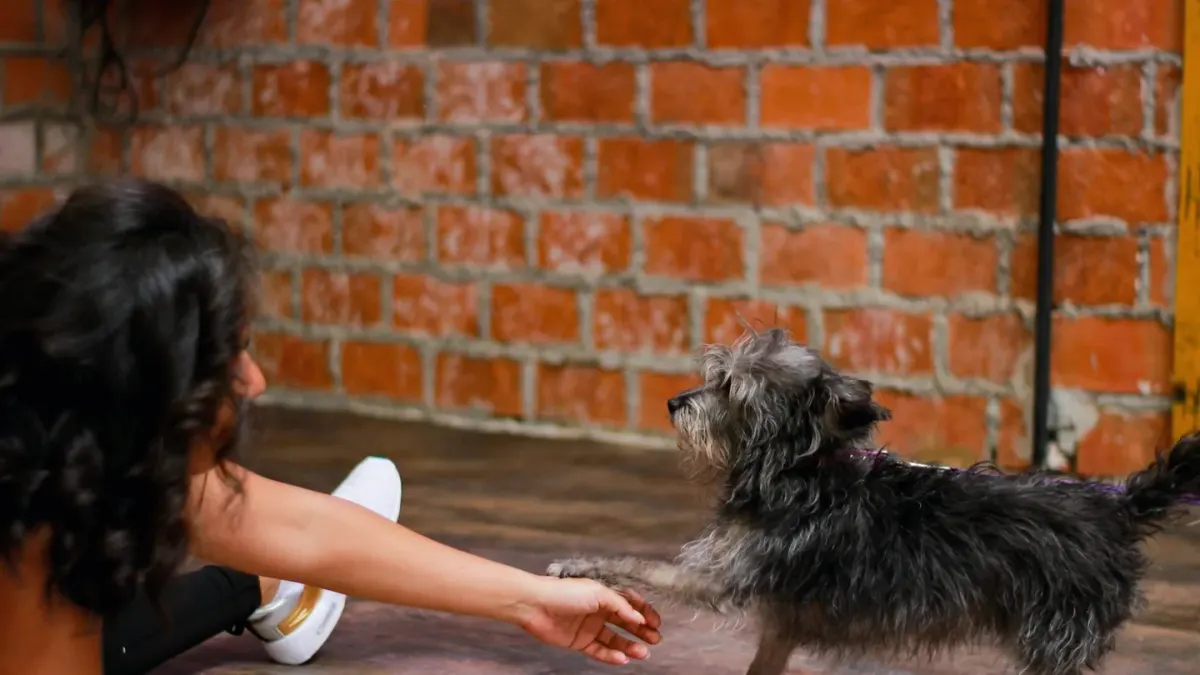
Your dog can sit on cue but pops up after two seconds, and you are wondering how to make your dog stay longer without nagging or looming. Expectation first from the exam room: a stay is not willpower, it is a muscle for stillness that may help support calm behavior when you build it in tiny, paid slices.
A 10-month-old terrier mix learning to wait at the back door kept popping up the second her owner reached for the handle. We set the expectation first: she could only earn the reward for holding her sit while the hand moved, not for sitting fast. For six quiet evenings we practiced the same doorway, paying for still paws while the knob jiggled, the door cracked, then opened a foot. By the sixth evening she held through the full leash clip and door swing without breaking, and the owner finally stopped having to body-block the gap.
Staying still is hard, and that is the point
Stillness goes against normal dog behavior. Dogs are built to move toward interesting things, check the environment, and follow you. When you ask for duration, you are asking for impulse control under distraction, which tires quickly like any new skill.
That is why the American Veterinary Society of Animal Behavior emphasizes reward-based training that keeps the learner under threshold, and why pushing too fast tends to create break-ups, barking, or creeping forward. If you have not built the starting cue yet, walk through How to Teach a Rock-Solid Stay first, then come back to stretch it.
Stillness is a skill, not obedience magic.
Myth: a good dog should just know to wait
Many owners believe a dog who breaks a stay is being defiant, and the fix is a sterner voice or more repetitions. In practice, most breaks mean you raised two criteria at once, waited too long between rewards, or only rewarded at the very end.
What a longer stay actually looks like is quiet and a little boring. The dog settles into the position, breathes, glances around but stays put, and waits for a release word. There is no trembling, staring you down, or sliding forward inch by inch. That relaxed hold comes from many short wins, which How Do Dogs Actually Learn? explains as paying the behavior you want in the moment you see it.
A lanky 58-pound rescue mix a few months out of the shelter could hold a stay if his owner stayed close, but fell apart when time and distance grew together. The tradeoff that broke him was stepping farther back while also waiting longer, so he rehearsed popping up toward the treat pouch again and again. We stripped it back to distance only, keeping the wait super short while the owner eased from three feet out to twelve feet across short kitchen sessions. Once twelve feet felt boring, adding time again was easy.
Grow one thing at a time to hold longer
Pick one position, sit or down, and train in three- to five-minute sessions when your dog is a little tired but not wired. Use tiny, soft treats and a clear marker the instant your dog is still, as Clicker vs Verbal Marker Word: Which One Should You Actually Use? breaks down for timing. For a refresher on setup and release cues, the American Kennel Club outlines a simple stay progression you can borrow.
Try this sequence on the same day:
- Pay for position, not duration. Ask for sit, mark and treat while your dog is still sitting after one breath. Repeat five times, then release with your word like “okay.”
- Add time in breaths. Count one breath, pay. Count two breaths, pay. If your dog breaks twice in a row, you jumped too far — go back to the last easy length.
- Add tiny distance separately. Once a short hold is easy at your side, take one half-step back, step right back in, and pay in position. Build steps only while duration stays short.
- Add one distraction later. Bounce a toy, jiggle keys, or open a door a crack while duration stays short and you stay close. Train the new challenge, not all challenges.
- Use a release every time. The release teaches that holding pays until you say so, which may help support clearer expectations around doors and sidewalks.
End while you are winning. Three good holds beats ten sloppy ones, and a short baseline today supports a longer stay next week.
A recently adopted senior beagle who nailed stays in a quiet bedroom lost it completely when the apartment hallway buzzed with dinner-time traffic. The usual advice to keep adding seconds had to bend, because sound, not time, was breaking her. Instead of longer reps we did eight tiny pay-for-stillness moments around recorded hallway noise at low volume, then practiced near the cracked front door. She learned the rule still applied when the world got loud, and her owner learned to train the distraction before the duration.
If your dog keeps breaking, shorten the ask, raise the pay rate, and change only one variable next rep. That practical next step turns most “stubborn” stays into steady ones within a week or two of calm practice.
Frequently asked questions
How long should my dog be able to stay?
Start with a few seconds of relaxed stillness and build slowly. Most pet dogs do well working toward a 30-second stay with mild distraction at home before you add distance or public places.
Why does my dog break the stay when I step back?
Distance and duration are separate challenges. Shorten the time, reward in position, and add steps back one at a time so your dog does not rehearse popping up.
Should I repeat stay while my dog is holding it?
No. Say it once, pay quietly for holding, then release. Repeating the cue can teach your dog to wait for the third or fourth reminder.
Sources
- AVSAB Position Statements — American Veterinary Society of Animal Behavior
- Dog Training Basics — American Kennel Club