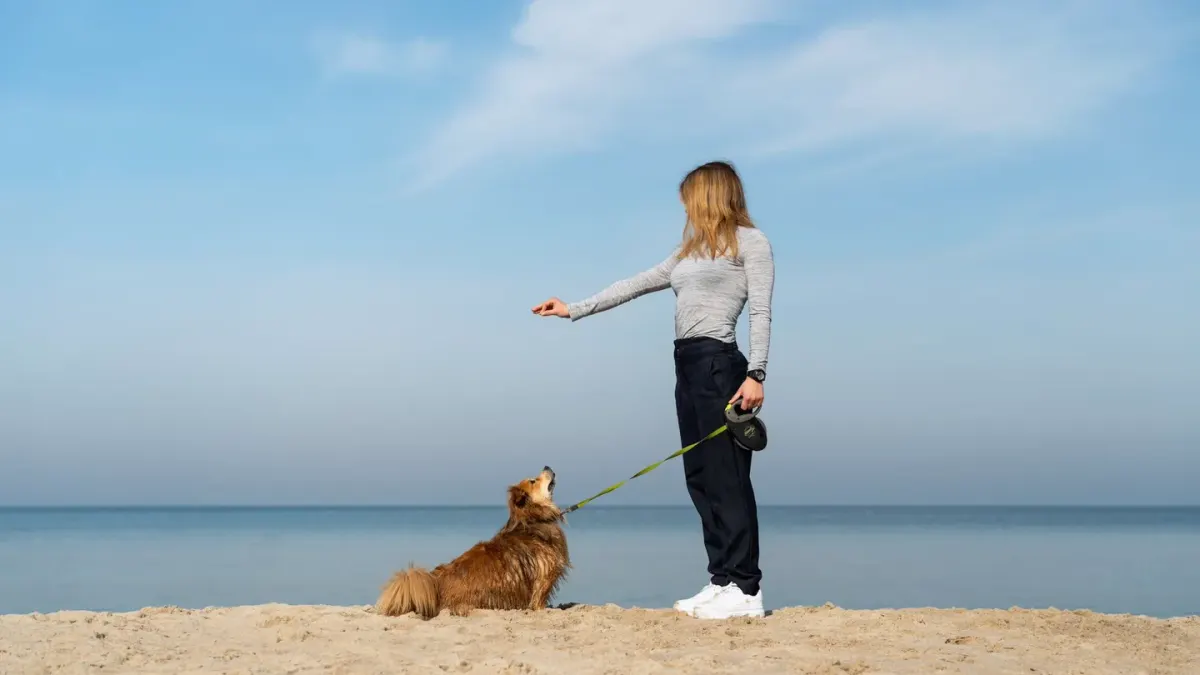
Most owners assume they need to pick a side in the clicker-versus-voice debate before they can start training. You don’t. The honest answer is that the mechanism matters less than most training blogs make it sound, and I tell clients that in the exam room more than almost anything else about training gear.
A marker, clicker or spoken word, is not a reward. It’s a signal that tells your dog, in that exact half-second, “that’s the behavior that just earned a treat.” According to training guidance from the American Kennel Club, the marker acts as a bridge between the behavior and the reward, and precise timing is the single biggest factor in how fast a dog learns something new. Everything else, clicker or “yes,” is a delivery mechanism for that timing.
The myth: a clicker trains faster than your voice
I hear a version of this from almost every new puppy owner who’s read a training book: clickers are scientifically superior, and a spoken word is a lesser substitute. It isn’t true, or at least not consistently. Some early studies suggested a speed advantage for the clicker, but later comparisons didn’t hold that up under closer scrutiny, and the practical difference for a pet dog learning sit, stay, or loose-leash walking is small. What actually separates a clean marker from a sloppy one is consistency, not the noise itself. A clicker forces consistency because it only ever means one thing. A voice can drift, warmer one day, rushed the next, mixed in with praise you didn’t mean as a marker.
Where I actually land, and why
Here’s my honest take after years of walking clients through both: start with a verbal marker for everyday obedience, and reach for a clicker only when you need surgical precision. A verbal “yes” is always in your pocket. It works when your hands are full of leash and treats, when you’re teaching loose-leash walking on a busy sidewalk, when your dog does something praiseworthy at 6 a.m. and you didn’t bring gear downstairs. The tradeoff is discipline: you have to say it the same way, every time, and not let it blur into casual praise like “good boy.”
The clicker earns its keep in narrower situations, competitive obedience shaping, precision behaviors like nose targeting, or a dog who’s genuinely confused by inconsistent verbal cues from multiple family members. That’s a real and valid use case. It’s just not most people’s Tuesday-night training session.
In my practice, I worked with a family who had a nine-month-old Australian Shepherd named Radar, a dog smart enough to notice every inconsistency in how they praised him. Three different family members were saying “good,” “yes,” and “okay” interchangeably, sometimes as a marker and sometimes just as affection while petting him on the couch. Radar had started hesitating mid-command, watching their faces instead of finishing the behavior, a pattern that had crept in over about six weeks. We didn’t switch them to a clicker. We picked one word, “yes,” assigned it only to the instant a correct behavior happened, and asked every household member to stop using it as casual praise. Within about ten days, Radar was offering behaviors faster and holding a sit-stay through mild distractions he’d been blowing off before. The tool wasn’t the problem; the inconsistency was.
A practical sequence to build a clean marker, either way
- Pick one marker and commit the whole household to it. If it’s verbal, choose a short, distinct word you don’t say in normal conversation, “yip” or “mark” work better than “good,” which gets overused as praise.
- Load the marker before you ask for behavior. Say the word or click, then immediately deliver a treat, ten to fifteen repetitions, with no cue involved yet. Your dog needs to learn the sound predicts food before it means anything else.
- Mark the instant the behavior happens, not a half-second after. This is where clickers have a real edge for beginners, the mechanical click is harder to mistime than a spoken word said out of habit.
- Fade the marker as behaviors solidify. Once a sit is reliable, you don’t need to mark and treat every single rep. Move to intermittent reinforcement so the behavior holds up in the real world, not just during training sessions.
- Keep training sessions short and criteria realistic. Five minutes of clean marking beats twenty minutes of inconsistent timing, for you and for your dog.
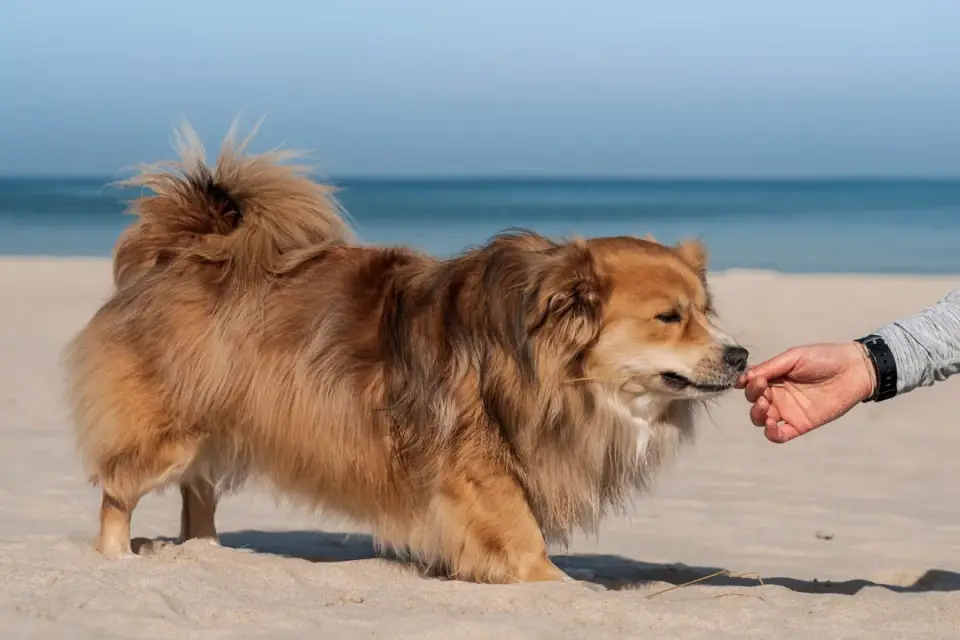
This isn’t just a training-mechanics question, either. The American Veterinary Society of Animal Behavior: AVSAB position statement on humane dog training recommends reward-based methods, including marker-based training, over aversive techniques for behavior modification, and it lists both clickers and verbal markers as tools that fit within that reward-based framework. Neither one is more or less humane than the other; the welfare question is about the training philosophy behind the tool, not which noise you’re making.
If you’re just getting your puppy’s foundations in place, a marker is one piece of a bigger structure. It pairs naturally with the same groundwork covered in How to Teach a Dog to Sit, and the timing skills you build with a marker carry directly into trickier behaviors like the ones in How to Teach a Dog to Roll Over. If jumping on guests is the more urgent problem in your house, the same marker-and-timing principles show up again in How to Stop a Dog From Jumping on People.
I think about a retired client’s dog, a fourteen-year-old terrier mix with early arthritis, whose owner switched from a clicker to a verbal marker not for training-science reasons but because kneeling to reach a clicker in her jacket pocket had gotten hard on her knees. The dog didn’t miss a beat. That’s the part training debates online tend to skip: the “best” marker is the one you’ll actually use correctly, every day, in your own kitchen and yard, not the one that wins an argument on a forum.
So which one should you use? If you’re a first-time owner working on everyday manners, start with your voice, it’s free, it’s always with you, and it’s good enough. If you’re chasing precision in a specific skill, or your timing keeps slipping with a spoken word, add a clicker to that one behavior and see if the extra structure helps. What does your dog actually respond to fastest, and are you willing to be that consistent with it every single day?
Frequently asked questions
Is a clicker really more effective than a verbal marker word?
For most everyday training, no. Research comparisons haven't shown a consistent speed advantage for clickers over verbal markers; what matters most is marking the exact instant a behavior happens, every time.
Can I switch between a clicker and a verbal marker?
You can, but avoid mixing them in the same session for the same behavior early on. Pick one, build reliability, then transition if you want to.
What word should I use as a verbal marker?
Choose something short and distinct that you don't say casually around your dog, like "yes" or "mark," and make sure every household member uses it the same way.
Sources
- Clicker Training: Mark & Reward Dog Training Using Clickers — American Kennel Club
- Position Statement on Humane Dog Training — American Veterinary Society of Animal Behavior