On this page
Start Here: The Checklist Before You Change Anything
- Confirm the behavior is greeting-related, not fear or resource guarding dressed up as excitement.
- Pick one incompatible behavior — sit is the default — and commit the whole household to it.
- Remove the payoff: no petting, no eye contact, no scolding while paws are airborne.
- Practice the greeting on leash or behind a gate before testing it with real guests.
- Recruit visitors ahead of time; one person who rewards jumping can undo a week of progress.
Each of those five lines solves a different failure point, and most owners who feel stuck are only missing one or two of them. The rest of this guide expands each item into something you can run today.
Why ‘Just Ignore It’ Fails More Often Than Trainers Admit
Ignoring a jumping dog is common advice, and it is not wrong so much as incomplete. The idea comes from a sound principle: dogs jump because it reliably gets attention, and removing that reward should extinguish the behavior over time. In practice, a dog mid-greeting rarely reads a stiff, silent posture as ‘no reward here.’ It often reads as a new game — a person who won’t look at them, won’t talk, maybe takes a step back. That’s motion, and motion is exciting.
The more dependable version of this advice pairs the ignore with an active ask: turn away, wait for four paws on the floor, then immediately cue a sit and reward it. According to the American Kennel Club, teaching an alternative greeting and rewarding a dog for sitting tends to outperform ignoring alone, because the dog is never left guessing what earns the attention it wants. Withholding a reward only teaches a dog what not to do; it has to be paired with a clear, well-paid answer to what it should do instead.
Consider This Ordinary Front-Door Scene
Consider a fifty-pound mixed breed named Otis who has never met a delivery driver, dog walker, or grandparent he didn’t want to greet at full velocity. His owner has tried the classic advice — turn your back, cross your arms, wait him out — and it works about half the time, mostly with people who are patient enough to hold still for a full minute while Otis paces and whines. The other half of the time, a well-meaning guest bends down, says ‘oh it’s fine!’ and gets a face full of dog. Within a week, Otis has learned exactly which humans are a sure bet.
That inconsistency, not any flaw in Otis, is the actual problem. A dog cannot generalize a rule that only half the people in his life enforce. The fix isn’t a better ignore — it’s a script every visitor can follow in under ten seconds: ask for a sit, wait for it, reward it, and only then allow contact. Once that script is the same for the mail carrier and the grandmother, Otis stops treating greetings as a coin flip.
The Response-Substitution Method, Step by Step
Veterinary behavior resources describe this technique as response substitution: teaching an alternative behavior that physically cannot happen at the same time as the one you’re trying to reduce. A dog cannot sit and jump simultaneously, which is exactly why sit is the go-to replacement. Per VCA Animal Hospitals, this approach works best when the dog is not already highly aroused, so the training rehearsals matter more than the real-world tests early on.
- Practice sit-to-greet with no distractions — just the owner, at a normal volume, several times a day.
- Add mild distraction: a family member approaching casually, no big buildup.
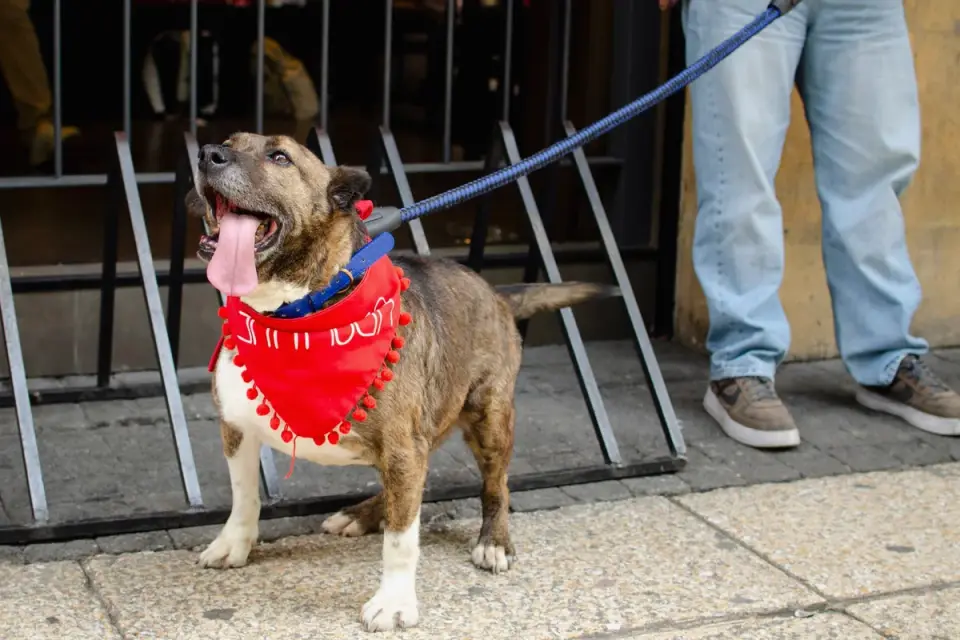
- Introduce a leash or house line for the first sessions with actual guests, so the owner can guide rather than react.
- Reward generously and immediately the instant the dog’s rear hits the floor — timing matters more than the treat itself.
- Gradually fade the leash and the treats once sit-to-greet is the dog’s automatic first move.
This sequence takes most dogs one to three weeks of short daily sessions before it holds up against a genuinely excited guest. Adolescent dogs, and breeds bred for high engagement with people, often need the longer end of that range.
Where Owners Go Wrong: Family, Guests, and Strangers
The single biggest reason this training stalls isn’t the dog — it’s inconsistent enforcement across the humans involved. A partner who allows jumping ‘because it’s cute when I get home’ is functionally training a different rule than the one being taught during formal sessions. Kids, in particular, tend to reward jumping unintentionally through squealing and running, which most dogs read as invitation rather than correction.
Before visitors arrive, a thirty-second heads-up — ‘please ignore her until she sits, then you can pet her’ — does more for consistency than any single training session. This is also where a leash, baby gate, or short ‘place’ cue earns its keep: it buys the dog a few extra seconds to settle into the sit before greeting, rather than asking for perfect self-control at the height of excitement. Readers newer to structuring a dog’s daily routines around consistent household rules may find it useful to start with the fundamentals in New to Dog Care? Start Here With the Everyday Basics, since jumping is rarely an isolated problem — it usually travels with a household that hasn’t agreed on shared cues yet.
When Jumping Signals Something Bigger
Most jumping is ordinary greeting behavior and responds well to the steps above. It’s worth a closer look, though, if jumping is paired with growling, stiff body language, or shows up mainly around food, toys, or a specific family member rather than at greetings generally. That pattern points toward anxiety or resource guarding rather than excitement, and it benefits from a veterinarian or credentialed behaviorist’s input rather than a standard greeting protocol. The AVSAB notes that reward-based methods consistently outperform punishment-based corrections across behavior problems generally, including cases that look straightforward on the surface but have an underlying stress component.
Most owners don’t need a specialist for garden-variety jumping. They need a consistent script, a few weeks of short daily reps, and every person the dog meets reading from the same page.
The Bottom Line
A dog that jumps on people is asking for attention the only way it knows how, and the fix isn’t punishment — it’s teaching a better answer and paying it off every single time, from every single person. The AKC resource above and VCA Animal Hospitals both land on the same core method for good reason: it’s the one with the evidence and the track record behind it.
Frequently asked questions
How long does it take to stop a dog from jumping on people?
Many dogs show real improvement within one to two weeks of consistent practice, though full reliability around excited guests can take a month or more, especially with adolescent dogs.
Is it okay to knee a dog or push it down to stop jumping?
Most trainers and behaviorists advise against physical corrections. Pushing a dog can read as play and often increases jumping rather than reducing it; a structured sit-for-greeting approach has a better track record.
Why does my dog only jump on certain people?
Dogs quickly learn who reinforces the behavior. A person who laughs, touches, or talks to a jumping dog — even to say 'no' — is providing attention the dog values, so jumping toward that person tends to persist.
Should I use a leash indoors to manage jumping on guests?
A house line or leash is a reasonable management tool while training is still new. It lets an owner guide the dog into a sit and reward it, rather than reacting after the jump has already happened.
Sources
- Position Statement on Humane Dog Training — AVSAB
- How to Stop Your Dog From Jumping Up on People — AKC
- Dog Behavior Problems – Greeting Behavior – Jumping Up — VCA Animal Hospitals