On this page
If your dog ducks, freezes, or backs away when a hand moves toward him, you’re not dealing with defiance. You’re seeing a normal fear response, and pushing through it tends to make hands scarier, not more familiar.
A medium adult brindle mix I saw for a new-pet visit flattened herself to the exam table when my hand was still two feet above her head, lips tight and head turned hard away. Her owner wanted her to accept petting from guests, and we had to make one clear decision first: stop reaching over her head entirely and let her earn treats for approaching a low, still hand instead. After a week of two-minute sessions in her living room, that same dog held her nose in a six-inch hover under my open palm for two full seconds, tail low but wagging, then bumped forward for her treat. That distance change told us the plan was working.
That choice feels slow, and I get the doubt behind it.
Your treats can’t outrun a scary hand
Here’s the surprising limit: you can’t treat your way out of fear while the scary thing keeps happening at full strength. Tossing chicken while you still grab for the collar or pat the top of the head just pairs good food with a frightening moment. The American Veterinary Society of Animal Behavior supports humane, reward-based methods built on desensitization and counterconditioning, not force or flooding, because fear learning sticks fast.
Think structure and function for a minute. A hand reaching over the head looms into the dog’s visual field, blocks escape, and often precedes restraint. Backing up, ducking, lip-licking, yawning, or showing the whites of the eyes may help support your read that your dog is stressed and needs more space. Your baseline job is lower pressure, shorter reps, and a clear way for your dog to say “not yet.”
Fear doesn’t need a dramatic backstory to be real.
What hand fear looks like versus what it means
Myth says a hand-shy dog was abused and just needs extra love and handling to get over it. Reality is broader and more hopeful: poor socialization, a startle during a sensitive period, quick grabs by kids, or painful ear handling can all teach the same flinch. The behavior is information, not blame.
Watch the whole body in context. A dog that leans away, drops low, tucks the tail, pins ears, or snaps after freezing is asking for distance. The ASPCA describes desensitization as gradual exposure at low intensity paired with counterconditioning to build a new, calmer association, and that only works if you stay under the threshold where panic takes over.
A lanky adolescent herding mix I coached by video showed why forcing it backfires. His owner, meaning well, had been holding a treat in her fist over his head and coaxing him closer until he took it, then petting him while he ate. After 20 tossed treats in a row did nothing to stop the head-whip and retreat, we mapped the tradeoff: every close-range grab undid a dozen easy wins. When she switched to tossing treats away from her body and letting him return on his own, his approach got bouncy instead of braced within three sessions.
You want the dog to choose to close the gap.
The low-hand, sideways plan you can start today
Keep sessions to three to five minutes, once or twice a day, on a non-slip surface after a walk or sniff break. You’ll need tiny, soft treats in a pouch — if fumbling slows you down, review How to Use a Treat Pouch Effectively — plus a mat and a way to toss treats away for reset breaks.
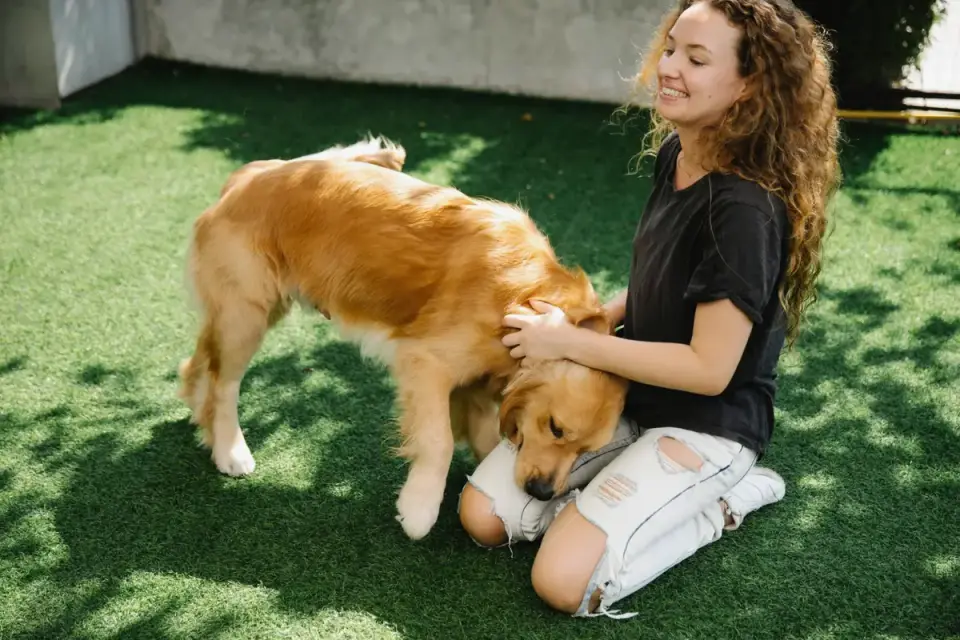
Start with hands that do nothing. Sit sideways, not square, with an open palm resting low on your thigh. Mark and toss a treat away each time your dog glances at the hand without moving away. You’re paying calm notice, not luring a touch.
When glances look soft, add a two-second hover. Present the side of your hand at chest height, well to the side of the muzzle, and hold still. If your dog sniffs or leans in, say “yes,” feed from the other hand, then toss a reset treat. If he hesitates, you got valuable data — shrink the reach, not the dog.
Next, teach a consent check for touch. Offer that low hand, wait for a nose bump or chin lean, then stroke the chest or side for one second and stop. Stillness or leaning in may help support continuing; moving away always ends the rep. Build from one second to three, then add gentle collar touches, ear lifts, and leash clips as separate mini-skills.
An older small-breed dog with stiff hips showed where this standard sequence has to bend. His owner needed to give eye drops twice daily and couldn’t wait for a perfect chin rest, and every head grab set him barking behind the couch. From March 4 through March 16 we changed the job: we trained a towel chin target on the couch arm for meds and paused all casual head petting, keeping hand work to low chest scratches he chose. By day 12 he held his chin on the towel for the drops without scrambling, then trotted to his mat for his payout.
That kind of detour still honors choice.
When to hold steady, bend the plan, or get help
Expect a wobbly two to four weeks for mild cases and longer for generalized fear. Progress isn’t linear. A wag one day and a duck the next usually means the setup got harder too fast, the room was busier, or your dog was tired.
Hold steady if you see small, repeatable softening: quicker returns, looser body, taking treats normally. Bend the plan if your dog stops eating, needs increasing distance, or only succeeds in one room — go back to tossing, shorten the hover, or change locations. Call your veterinarian promptly for growling that escalates, snapping, panic, or any sudden change in behavior, and ask about a Fear Free or low-stress handling visit before the next exam. VCA Hospitals notes that professional guidance can help tailor desensitization and counterconditioning when fear is intense or handling is unavoidable.
If you feel stuck choosing formats, Group Classes vs. Private Training vs. Online Dog Training: How to Choose can help you find coaching that respects fearful body language.
Your dog doesn’t need to love every stranger’s hand to live well — he needs predictable hands that listen when he says no.
Frequently asked questions
Should I keep petting my dog if he flinches but stays still?
Pause and offer a reset. Stillness with a tight mouth, turned head, or tucked tail often signals discomfort, not consent. Toss a treat away, lower your hand, and let him choose to return.
Is it okay to have guests give treats to a hand-shy dog?
Only with clear rules. Have guests sit sideways, keep hands low and still, and toss treats away rather than luring the dog closer. Skip reaching over the head until the dog consistently approaches on his own.
How long does it take for a dog to stop fearing hands?
Mild cases often soften in two to four weeks of short daily reps, while deeper fear can take months. Track observable signs like approach speed and body looseness, and ask your veterinarian for help if progress stalls or handling is urgent.
Sources
- AVSAB Position Statement on Humane Dog Training — American Veterinary Society of Animal Behavior
- Desensitization and Counterconditioning — VCA Hospitals