
On this page
Maya carried the crate up two flights on Saturday morning with a 2-year-old, 48-pound mixed-breed tucked inside, tail tucked and eyes darting past every hallway noise. The shelter had described him as friendly and house-trained, yet by 9 p.m. he had not eaten, had paced past the water bowl four times without drinking, and startled at the dishwasher. Maya wondered if she had missed something on the first walk, or if she needed to start obedience work right away to set rules. Expectation first: that shutdown is normal behavior under stress, not defiance or a failed adoption, and the most supportive move in the first 48 hours is less training, not more.
Many adopters expect a grateful dog who explores, plays, and learns cues on day one. Stress hormones, broken sleep, new smells, and unfamiliar handling make that unlikely. Appetite may dip, housetraining may look messy for a few nights, and a dog who was social at the shelter may hide behind furniture. That does not mean the dog’s personality changed. It means the baseline is still settling.
Your new dog cannot learn much until life feels predictable
Learning needs a calm body. A dog scanning for exits cannot focus on sit or loose-leash skills, and pressure to perform can raise avoidance. The American Veterinary Society of Animal Behavior emphasizes reward-based, low-stress handling to support learning, which matters most when everything is new.
Keep the world small for now. One room for resting, one potty spot, one or two short walking loops, and the same feeding times each day. Limit visitors, dog parks, long outings, and marathon training sessions during week one. Predictability may help support normal digestion, sleep, and willingness to engage.
Quiet is a strategy.
What decompression really looks like, day by day
Decompression is not doing nothing. It is active rest with structure: regular potty breaks, meals, sniff walks, and short, pleasant interactions that teach the dog people are safe.
By the middle of the first week Maya tried a different rhythm. Instead of a 45-minute march around the neighborhood, she took the same quiet block loop three times per day, let him sniff for five minutes at the corner hedge, fed half his dinner as scattered kibble on a towel, and sat nearby while he chewed. On night four he ate within 10 minutes, slept in stretches of about 3 hours between potty breaks, and offered a soft tail wag at the leash. The change was not a new personality. It was a nervous system getting enough repetition to predict what happened next.
Use this sequence for days 1 to 3. Potty on leash to the same spot every 2 to 3 hours while awake, plus after naps and meals. Feed at consistent times in a low-traffic corner. Offer a crate or gated nook with the door open, not closed for long periods. Sit on the floor nearby and toss treats without reaching for the dog. Note eating, drinking, urination, stool, sleep, and hiding in a simple log.
For days 4 to 14, add brief training windows. Two or three sessions of 2 to 3 minutes beat one long session. Teach name recognition, hand targeting, and a settle on a mat with food rewards. Practice coming when called only indoors or in a secure area, a few feet at a time. Pair the harness and leash with treats before longer walks. For housetraining detail built for adult dogs, see Why Housetraining an Adult Rescue Dog Isn’t Just Puppy Training All Over Again.
Small skills that build trust faster than obedience drills
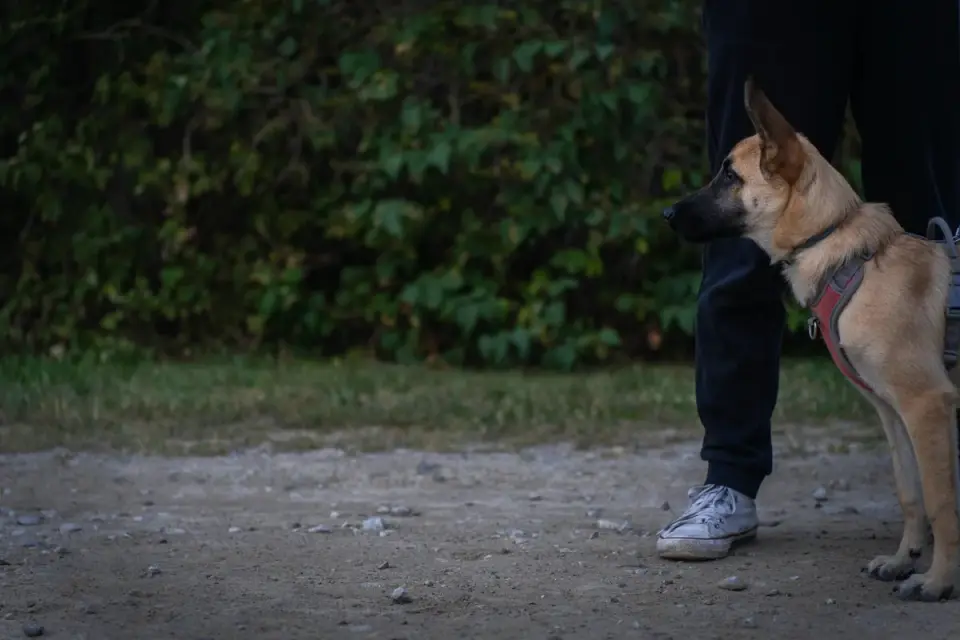
Prioritize behaviors that make daily life easier. A dog who will orient to his name, follow a tossed treat, go to a mat, and trade an object can live safely while formal cues wait. Keep food rewards small and frequent, and let the dog disengage without penalty.
A second household shows where pushing too fast backfires. A family with a 5-month-old, 31-pound hound mix tried to make up for lost time with two 20-minute obedience sessions on day two, plus introductions to six neighbors and a trip to a busy pet store on day three. By the evening of the third day the puppy was mouthing harder, jumping on the toddler gate, skipping meals, and needing 40 minutes to settle in the crate. When they cut training to one 3-minute name-and-reward game after each potty break and paused outings for four days, crate settling dropped to under 10 minutes and mouthing softened. Effort was not the problem. Dose and timing were.
If you use food lures, deliver from a pouch so timing stays clean. See How to Use a Treat Pouch Effectively. For crate setup that helps the first nights feel safer, see Surviving the First Night Crate Training a Puppy.
The American Society for the Prevention of Cruelty to Animals notes that patience, consistent routines, and positive reinforcement help new dogs adjust to home life, especially for housetraining and fear-related behavior.
When the usual advice has to bend
Some dogs cannot do a quiet two-week bubble. A third scenario involved a senior, 9-year-old beagle adopted 220 miles from the shelter, who arrived with loud nighttime whining and stood by the front door from 1 a.m. to 4 a.m. The standard advice to ignore and wait felt wrong, and confinement made panting worse. The owner bent the plan: leashed potty break at 2 a.m. without play, then a pen in the bedroom instead of a closed crate in the living room, white noise, and a morning veterinary check within 36 hours to rule out urinary discomfort and pain. With a person in sight, whining shortened from nearly an hour to about 12 minutes by night five, and daytime appetite returned.
Bend the plan when you see persistent panting, drooling, trembling, refusal to eat for more than 24 hours, diarrhea with lethargy, growling or snapping when approached, or panic at confinement. Those signs call for a veterinary exam first, then a slower behavior plan. Owners weighing class formats after week two can compare options in Group Classes vs. Private Training vs. Online Dog Training: How to Choose.
Close the fortnight by reviewing your log. Look for shorter latency to eat, more regular potty times, longer sleep stretches, and voluntary check-ins on walks. Keep what worked and add one new challenge at a time. Most rescue dogs do not need more rules in the first two weeks. They need a predictable home that makes learning possible.
Frequently asked questions
How long does rescue dog decompression take?
Many dogs show early settling in 3 to 7 days and steadier behavior by 2 to 3 weeks, though shy or undersocialized dogs may need longer. Track eating, sleep, potty regularity, and willingness to engage rather than the calendar alone.
Should I train my rescue dog in the first week?
Yes, but keep it brief and low-pressure. Focus on name recognition, hand targeting, mat settling, and rewarding check-ins in 2- to 3-minute sessions, with predictable meals, potty breaks, and rest doing most of the work.
What are signs I pushed too fast?
Loss of appetite, pacing, hiding, harder mouthing, jumping, crate distress, or regression in housetraining after busy days. Shorten sessions, reduce outings, and return to a smaller routine for several days.
Sources
- Position Statements — American Veterinary Society of Animal Behavior
- Common Dog Behavior Issues — American Society for the Prevention of Cruelty to Animals