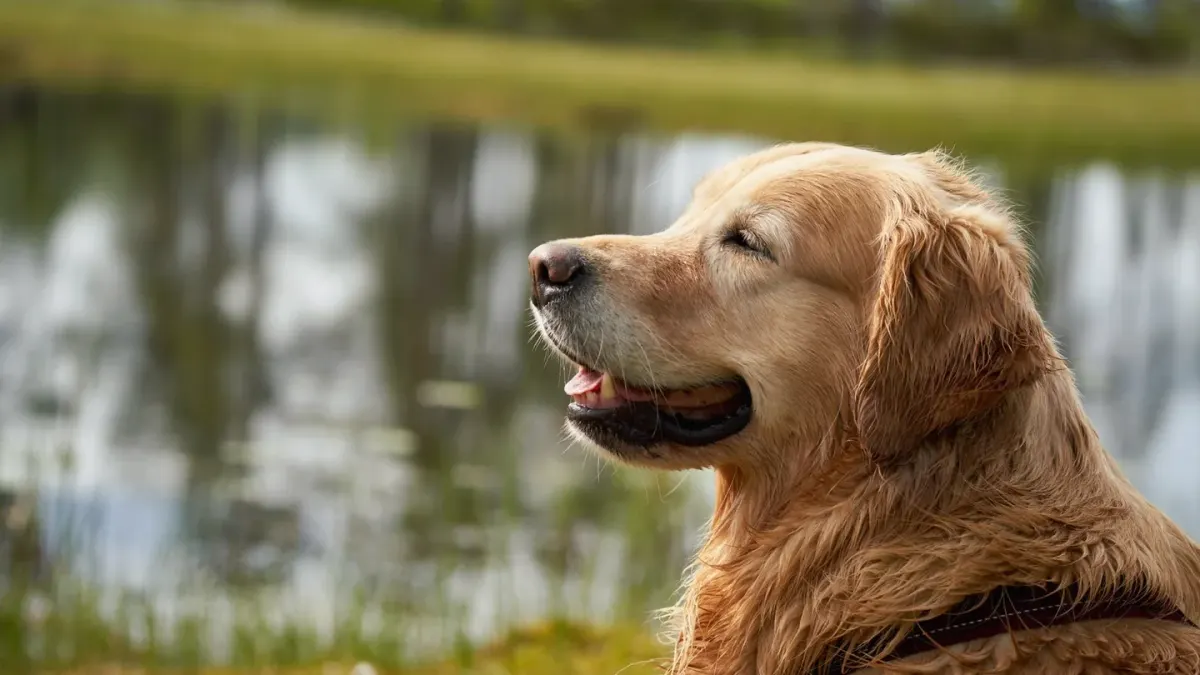
On this page
I still remember a nine-year-old beagle mix named Otis who came into my practice with a chronically waxy right ear and a limp that only showed up after his owner’s lake weekends. Otis wasn’t a natural swimmer. He’d been tossed off a dock by a well-meaning teenager the summer before, panicked, paddled hard for the ladder, and never fully relaxed in water again. His owner assumed the limp and the ear were unrelated annoyances. They weren’t. He was overusing his front end to keep his head up, and he was retaining water in an L-shaped ear canal that never quite dried between visits to the lake. Neither problem was really about swimming ability. Both were about how he’d been introduced to the water in the first place.
That’s the piece most guides skip. Teaching a dog to swim is less a coordination task than a trust-building one, and the sequence you use in the first ten minutes at the water’s edge matters more than anything that happens once the dog is actually paddling.
The paddling reflex is real, the confidence is not
Dogs are generally born with the physical mechanics to paddle — it’s a variation on the trotting gait, and most dogs will move their legs in a swimming pattern the instant their feet leave the bottom. What they are not born with is calm. A dog who thrashes, claws at the surface, or tries to climb the nearest human isn’t failing to swim; he’s panicking, and panic burns through a dog’s stamina fast. If you’ve ever wondered whether that stiff-legged scramble counts as “learning to swim,” it doesn’t. It’s a stress response that happens to move the dog forward. Confidence, not coordination, is the actual skill you’re building, and it’s also the piece that differs enormously by body type — a Labrador’s rudder tail and otter-like undercoat cooperate with water in a way a bulldog’s dense, low-set frame simply does not. If you’re unsure where your own dog falls on that spectrum, Are All Dogs Natural Swimmers? What Body Shape and Breed Really Determine walks through which builds struggle and why.
A same-day sequence that respects the nervous system
Start on land. Let the dog approach standing water — a puddle, a kiddie pool, the shallow edge of a lake — entirely on his own terms, with no leash pressure pulling him toward it. Reward calm investigation, not entry. Once he’s stepping in voluntarily to ankle depth, move to a spot where he can stand with his belly still touching bottom and just let him get wet without any expectation of swimming. Most owners rush this stage by about a week; I’d rather see it take three short sessions than one long one that ends in a scramble for the shore.
The actual first swim should happen somewhere the dog can walk himself into deeper water gradually rather than being carried or dropped in — a gently sloping beach beats a dock every time. Stay in the water with him, at his side rather than ahead of him, so he’s swimming toward a stable point rather than chasing one. Keep the first real swim to under a minute. End on a controlled exit, not on exhaustion. If he claws at your arms or tries to climb your shoulders, that’s your cue to turn back toward shallow water immediately rather than push through it — a dog who associates deep water with panic will regress every session you force it.
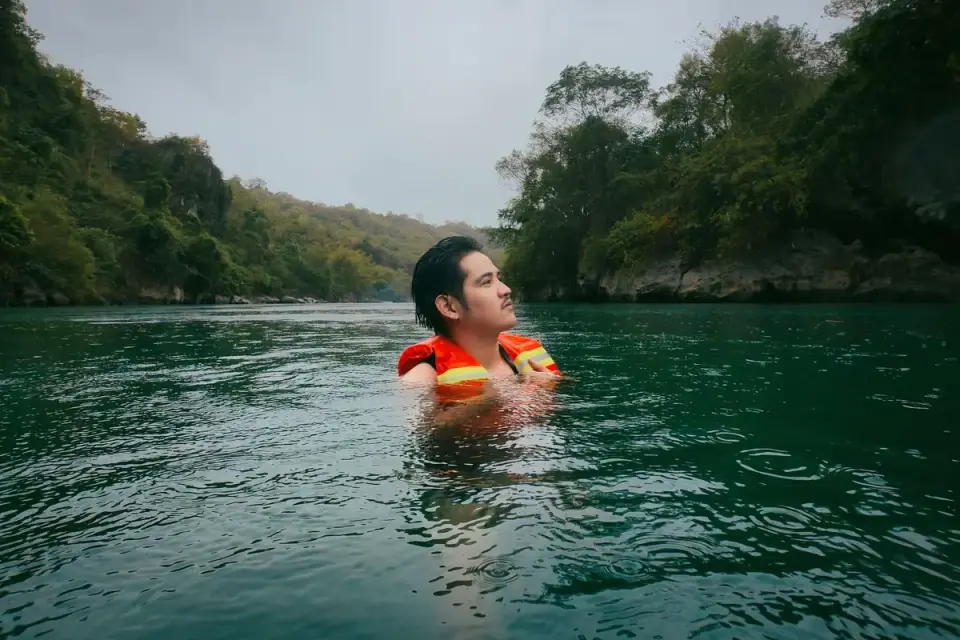
A properly fitted life jacket earns its keep here even for confident swimmers. According to the AAHA, a life jacket adds buoyancy and reduces fatigue, which matters most in exactly the scenario where a dog is most likely to panic: the first few unsupervised strokes past the point where his feet can touch. I use one on every dog in the early sessions, and I don’t consider it optional for weak or novice swimmers regardless of how the first few minutes go. If you eventually want to take that comfort further out onto open water, Kayaking and Canoeing With Your Dog: A Vet’s Practical Safety Guide covers what a properly fitted jacket should look like in more depth.
What actually goes wrong after the swim, not during it
Owners I see most often are braced for the wrong risk. They’re worried about drowning during the swim, which is legitimate, but the two problems I treat most after a summer of lake trips are ear infections and algae exposure — and neither shows up while the dog is still in the water.
The first is mechanical. A dog’s ear canal is L-shaped, which means water that gets trapped inside doesn’t drain the way it would in a straight canal; it just sits there, warm and dark, until bacteria move in. The Merck Veterinary Manual describes this as a classic setup for otitis externa, and dogs with floppy, low-set ears — spaniels, retrievers, hounds like Otis — are disproportionately affected because the ear flap folds over the canal opening and holds moisture in. Head shaking, scratching at the ear, or a sour smell within a day or two of swimming are the signs I tell owners to check for before assuming it’s “just a wet-dog smell.” Toweling the outer ear dry after every swim, and using a vet-recommended drying rinse for dogs who swim often, prevents most of what I end up treating in the exam room in August.
The second risk is one owners underestimate because it looks so ordinary: a green-tinged pond that seems no different from the one down the road. Harmful algal blooms, often called blue-green algae, can produce toxins that cause liver failure or neurologic signs in dogs, and according to Cornell University College of Veterinary Medicine, even small amounts ingested while swimming or grooming can be dangerous. Foam, scum, or a paint-like sheen on the surface is reason enough to skip that water entirely and drive to a different spot — there’s no version of “just a quick dip” that’s worth the risk once a bloom is visible.
I’ve watched this play out with a lab-mix client, Piper, four years old, sixty-two pounds, who came in lethargic and vomiting the evening after a weekend at a shallow farm pond her owners had swum her in for years without issue. The pond had a faint green film that week that nobody thought twice about. She recovered with prompt treatment, but it was close enough that her owners now check every new body of water for scum or discoloration before she’s allowed anywhere near it, and I’ve adopted that same habit into how I counsel every client heading into lake season.
Where this leaves you at the water’s edge
Teaching a dog to swim is mostly an exercise in not rushing the trust-building part, protecting the ears on the way out, and reading the water itself before you read your dog’s enthusiasm for it. Land time first, shallow water second, a life jacket for the early sessions, a towel and possibly an ear rinse waiting at the car, and a hard no on any water with foam or scum on the surface. None of that requires special equipment or a training class — it just requires doing the steps in that order, the same day you start.
If your dog turns out to be more hesitant than most, that’s not a training failure; some dogs simply need more sessions than others before the water stops feeling like a threat, and pushing past that timeline tends to backfire. Once you’ve got a confident, ear-healthy swimmer, the same principles carry over cleanly into other water-adjacent outings — from a lakeside patio (see How to Find a Dog-Friendly Patio That’s Actually Good for Your Dog) to a paddling trip, or even to a dog who’d honestly rather retrieve a ball on land than swim for one, which How to Teach a Dog That Won’t Fetch covers on its own terms.
Frequently asked questions
How long does it take to teach a dog to swim?
It varies widely by dog, but a cautious dog often needs three or more short land-and-shallow-water sessions before the first real swim, rather than one long session pushed to the point of panic.
Does my dog need a life jacket if he already knows how to swim?
A fitted life jacket still reduces fatigue and adds buoyancy for any dog swimming in open or deep water, according to AAHA, and it's worth using for weak or novice swimmers in particular.
How do I know if a pond is safe to swim in?
Skip any water with foam, scum, or a paint-like sheen on the surface, since that can indicate a harmful algal bloom that's dangerous even in small amounts.
Sources
- Water Safety Tips for Dogs: Pools, Lakes, Beaches and Boats — AAHA
- Ear Infections and Otitis Externa in Dogs — Merck Veterinary Manual
- Blue-Green Algae Poisoning (Cyanobacteria Toxicosis) — Cornell University College of Veterinary Medicine