On this page
A friend of mine brought her ten-year-old spaniel mix, Biscuit, to a brewery patio on a Saturday that felt like a good idea at 11 a.m. and a mistake by 1 p.m. The table was concrete, the only shade had migrated with the sun an hour earlier, and Biscuit spent most of the visit standing rather than lying down, panting harder than the walk over should have justified. Nobody at that table did anything wrong on purpose. The patio genuinely was dog-friendly, in the sense that the venue allowed it. What it wasn’t, for that particular dog on that particular afternoon, was dog-appropriate, and that distinction is the whole subject of this guide.
The myth worth correcting first: owners tend to treat ‘dog-friendly’ as a fixed property of a place, something you can look up once and trust from then on. It isn’t. It’s closer to a weather-dependent, table-dependent, crowd-dependent condition that changes hour to hour. A shaded courtyard at 9 a.m. and the same courtyard at 3 p.m. are two different environments for a dog lying on the ground. Treating the policy as the whole answer is how good intentions turn into a rough afternoon.
What ‘Dog-Friendly’ Actually Means Once You Sit Down
Most patios that allow dogs are simply not prohibiting them, which is a lower bar than most owners assume. Very few venues have thought through paw-pad safety on their flooring, water access away from human glasses, or what happens when a server’s tray passes at nose height. That’s not a criticism of the venue; it’s just outside their job description. It’s yours. Practically, that means walking the patio for thirty seconds before you sit: where’s the shade an hour from now, is the surface concrete or grass or wood decking, and is there a low-traffic corner away from the main walkway. The AVMA’s warm-weather guidance is a reasonable baseline for what ‘too hot’ looks like before you ever get to the table.
Read the Ground Before You Read the Menu
Surface temperature is the single most underrated variable in patio scouting, and it’s also the easiest to check. Press the back of your hand to the concrete or asphalt for five seconds; if it’s uncomfortable for you, it’s already capable of burning paw pads. The AKC notes that dark, hard surfaces can run tens of degrees hotter than the surrounding air on a sunny day, which is exactly the gap that catches owners off guard, because the air itself might feel perfectly pleasant. Grass, mulch, and shaded wood decking are meaningfully cooler and worth seeking out specifically, even if it means a slightly less scenic table.
A short caution here: senior dogs and short-nosed breeds lose heat less efficiently than younger, longer-nosed dogs, so the same patio that’s fine for one dog in your group can be genuinely risky for another sitting at the same table.
The Table Is the Real Risk, Not the Sidewalk
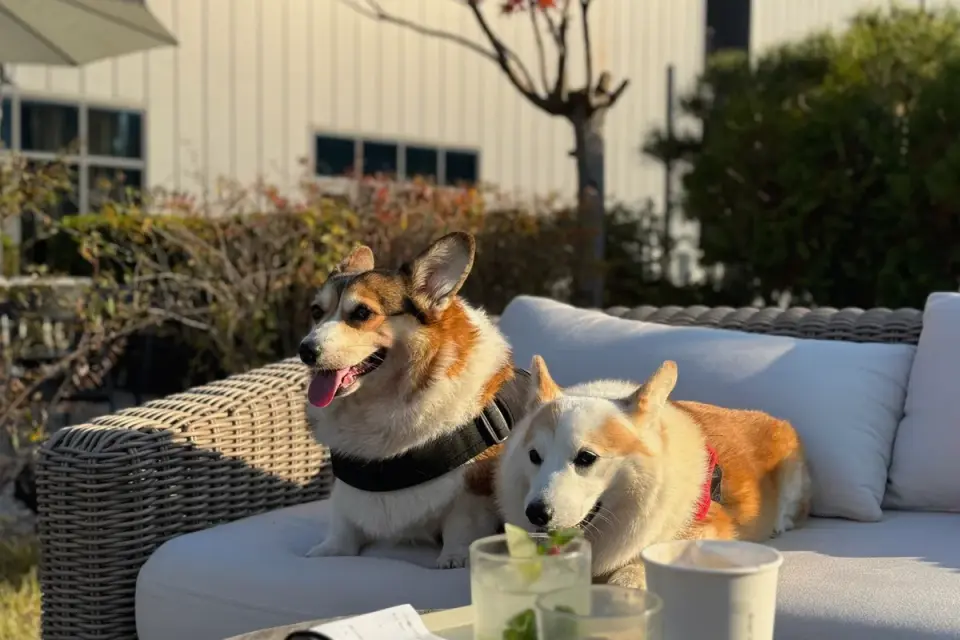
Owners tend to worry about the walk over and relax once they’re seated, which is backwards. The table is where the actual hazards concentrate: garnish grapes in a cocktail, a sugar-free mixer sweetened with xylitol, a dropped rib bone, a puddle of spilled beer. The ASPCA’s list of foods to avoid flags grapes and raisins, alcohol, and xylitol as three of the more common patio-adjacent risks, and each one is plausible in exactly the setting you’re sitting in for an hour. Xylitol deserves particular respect here; the FDA’s consumer warning describes how quickly it can trigger a dangerous drop in blood sugar in dogs, sometimes within minutes, which is a fast timeline for a mistake made at a crowded table.
This is where I’d push back on a common owner instinct, which is to treat a shared bite of pretzel or a lick of foam as harmless because it’s small. Weigh what that bite off the table can realistically do for a dog’s diet and recovery on that particular day, not what it looks like in isolation. A single lick of xylitol-sweetened seltzer is a different risk category than a fry, and the portion size that reads as generous to a person is a meaningfully larger share of a twenty-five-pound dog’s daily intake than most owners do the math on. The counterargument I hear most is that a well-mannered, well-socialized dog earns the benefit of the doubt at the table, and there’s something to that: a dog with solid impulse control genuinely does lower the risk. But impulse control doesn’t override chemistry, and a food-motivated dog with excellent manners can still be handed something dangerous by a stranger at the next table over. I still land on keeping the table’s edge dog-free as the default, not the exception, because the downside of being overly cautious is mild and the downside of being wrong is not.
A Same-Day Sequence for Scouting a Patio
Before you commit to a full visit, run a quick sequence: check the surface temperature with your hand, locate shade for the next hour rather than the current one, ask staff whether a water bowl is available on request, and pick a seat with a clear exit path rather than one boxed in by other tables. Once seated, keep your dog on a shortened leash near your feet rather than reaching toward neighboring diners, and treat any food offered by strangers the same way you’d treat an unfamiliar supplement: politely, but with the assumption that you don’t know the full ingredient list. If your dog hasn’t settled into a relaxed, loose-bodied posture within about fifteen minutes, that’s useful information, not something to push through for the sake of finishing the visit.
When to Just Order Takeout Instead
Some combinations aren’t worth solving for. A concrete-only patio with no shade during peak heat, a packed brunch crowd with servers weaving through tight rows, or a senior dog already showing stiffness from the walk over are all reasonable cues to skip the sit-down version and head home instead. None of that means the dog missed out on anything essential; a shorter outing followed by a calm afternoon is not a consolation prize. If you’re still building the fundamentals of reading your dog’s comfort signals in unfamiliar settings, our getting-started guide is a good place to start before you take on busier environments like a packed patio.
The short version: scout the ground, watch the table, and let your dog’s body language, not the venue’s signage, make the final call on whether this is the round to stay for.
Frequently asked questions
Is it safe to bring my dog to a brewery patio?
Often, yes, with real caveats. Breweries tend to have concrete patios, communal tables at nose height, and long dwell times, all of which raise the odds of heat exposure or a stray snack. Scout the layout, ask about shade and water, and keep your dog leashed and away from the table's edge rather than assuming the venue has already thought this through for you.
What temperature is too hot for a dog to sit on a patio?
There's no single magic number, but the surface matters more than the air. The American Veterinary Medical Association notes that pavement and concrete can run far hotter than the air temperature on a sunny day, hot enough to burn paw pads well before the air itself feels unbearable. If you can't hold the back of your hand on the ground for five seconds, it's too hot for paws.
What foods on a patio table are actually dangerous for dogs?
The short list that matters most: grapes and raisins (garnishes, sangria fruit), anything with xylitol (some sugar-free drink mixers and desserts), alcohol itself, and cooked bones or skewers. Small, accidental bites of onion- or garlic-heavy sauces add up too. Keep the table's edge dog-free rather than trying to police every crumb after the fact.
How do I know if my dog is actually enjoying the patio, versus tolerating it?
Watch for a soft, loose body, easy settling under the table, and normal interest in the environment rather than fixed staring, panting that doesn't match the temperature, or reluctance to lie down. A dog that won't settle after fifteen minutes is telling you something worth listening to, not something to wait out.