On this page
- Why does a dog who loves the water still need this much prep?
- What does a properly fitted life jacket actually look like?
- How do I introduce a dog to a kayak or canoe for the first time?
- What’s the real risk when a dog swims hard for an hour — drowning, or something else?
- Should I let my dog drink from the lake or river?
- A short paddling-day checklist
- Where this leaves paddling owners
Why does a dog who loves the water still need this much prep?
Here’s the limitation most owners don’t expect: it’s rarely the paddling itself that causes trouble. It’s the twenty minutes before and after — the ill-fitting jacket, the water nobody questioned, the dog who swam an extra lap past the point of good judgment. I’ve spent years weighing what actually protects a dog’s mobility and recovery against what just looks cautious on paper, and kayaking is a good example of where the real risk and the imagined risk don’t line up.
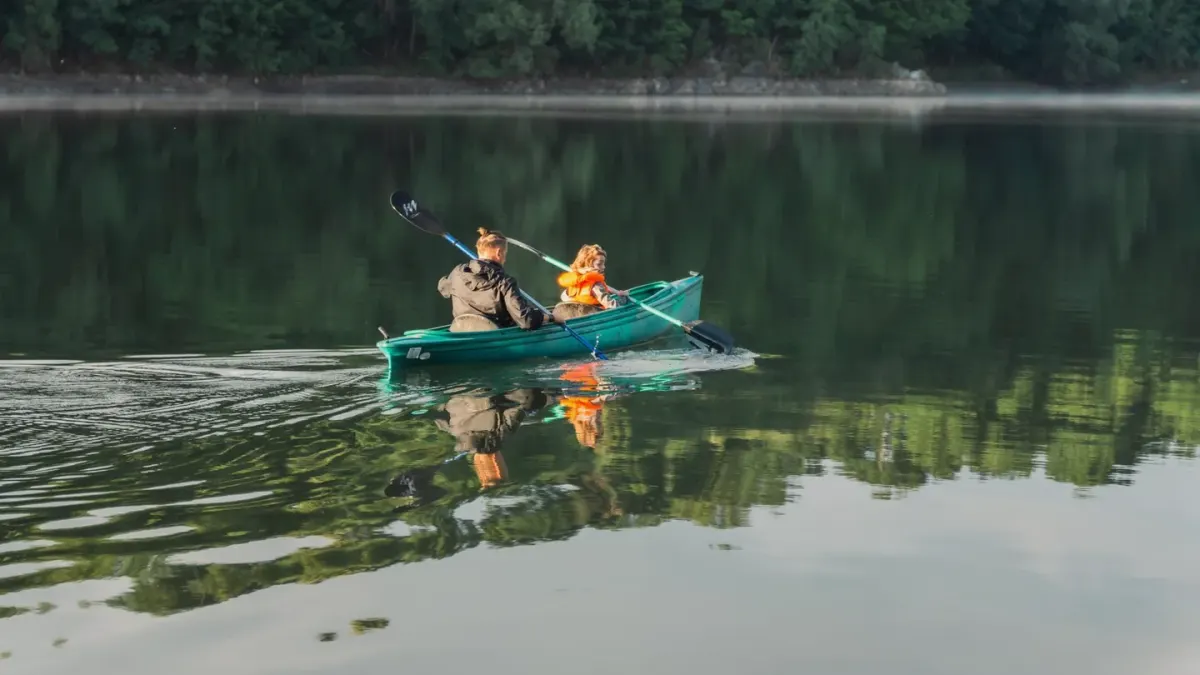
Picture a Saturday morning on a slow, glassy river. The kayak is loaded, the dog is pacing the dock, tail going in that wide, unmistakable arc that means she already knows what’s coming. Her owner clips a bright orange life jacket over her shoulders, checks the strap under her belly with two fingers of slack, and lifts her into the bow seat. She settles low, chin on the gunwale, ears tracking every splash. Twenty minutes in, she spots a duck, launches off the side without warning, and paddles hard against a current that’s stronger than it looked from shore. The jacket does exactly what it’s built to do — it keeps her chin up and her effort manageable until the boat swings around and the handle on her back gets a firm grip. That’s the whole argument for gear you didn’t think you’d need: it’s not there for the swim you planned, it’s there for the one you didn’t.
What does a properly fitted life jacket actually look like?
Fit is where most owners get it wrong, not the concept of wearing one. According to BOATERexam, the jacket should sit snugly around the neck and torso — loose fit is the actual failure mode, since it lets the dog’s front legs slip through and turns a safety device into a hazard. Look for:
- A rescue handle on the back you can grab one-handed
- Open, unrestricted shoulder and leg movement so the dog can still swim naturally
- Full torso coverage without pinching behind the front legs
- A bright color — orange, red, or yellow are the easiest to spot against water
Don’t skip the float test. Before the first real outing, let the dog wear the jacket in shallow, calm water where you can stand next to her and watch how she sits in the water and whether the fit holds.
How do I introduce a dog to a kayak or canoe for the first time?
- Start on land. Let the dog sniff and climb in and out of the beached boat before it ever touches water.
- Choose calm, shallow water for session one. A gentle, sloping bank beats a dock or steep launch.
- Keep the first paddle short — 10 to 15 minutes. Watch for restlessness or heavy panting as your cue to head back.
- Reward calm settling, not excitement. A dog who lies down low in the boat is more stable than one standing at the rail.
- Build duration gradually over several outings, not in one long trip.
A sturdy harness and short leash as backup, in addition to the jacket, gives you one more point of control during entry and exit — something worth having even after the dog is a seasoned paddler.
What’s the real risk when a dog swims hard for an hour — drowning, or something else?
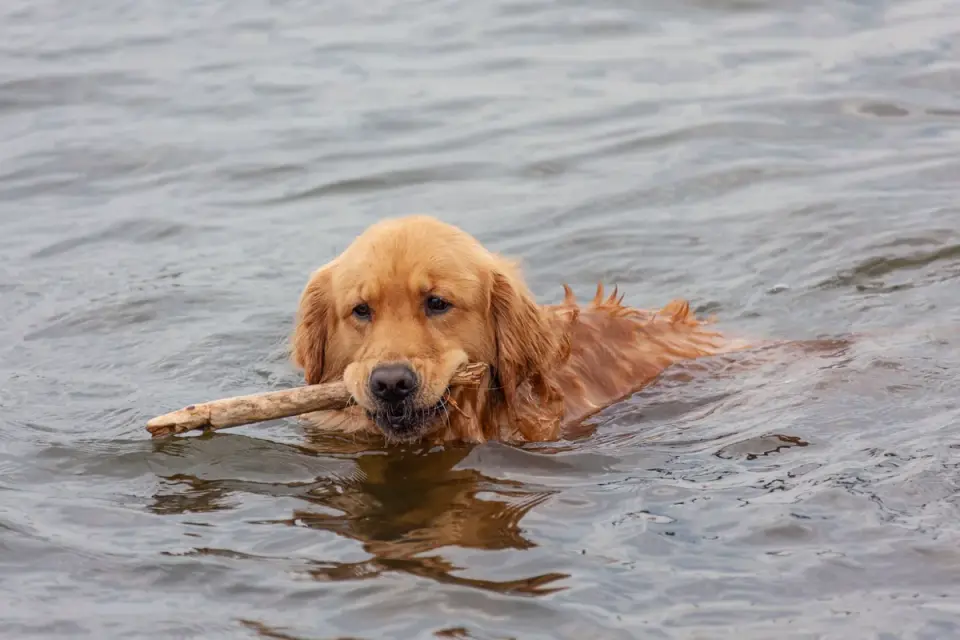
This is where I land firmly on one side of an argument I hear from a lot of paddling owners: the dramatic drowning scenario gets the attention, but water intoxication is the quieter risk that’s easier to miss. It happens when a dog swallows a large volume of water, often during repeated fetch retrieves or extended swimming, and the excess fluid dilutes blood sodium levels. Early signs include lack of coordination, lethargy, vomiting, bloating, and glazed or dilated-looking eyes; advanced cases progress to difficulty breathing or collapse, according to Vets Now. It’s uncommon, but it moves fast once it starts, which is exactly why I don’t treat it as a footnote. If your dog seems disoriented or wobbly after heavy swim play, that’s not a “let her sleep it off” situation — it’s a call to your veterinarian.
The practical fix is simple and doesn’t require giving up fetch from the boat: limit how long a dog spends chasing a toy through the water in one stretch, and give her real rest breaks on shore or in the boat between rounds.
Should I let my dog drink from the lake or river?
This is the counterargument I take seriously, because plenty of experienced paddlers let their dogs lap up river water without a second thought and most of the time nothing happens. But the exception matters. The American Veterinary Medical Association specifically flags slow-moving or stagnant water — ponds, marshy edges, calm river bends — as higher-risk for leptospirosis, a bacterial disease spread through the urine of infected wildlife that can progress to kidney or liver damage in severe cases. All dogs are considered at risk regardless of breed or lifestyle. My position: bring fresh water and a collapsible bowl on every trip, discourage drinking from the water you’re paddling through, and talk to your vet about lepto vaccination if you paddle regularly, especially in warm, wet climates where the bacteria persists longest.
If your dog is new to structured exercise on the water, or has any joint, heart, or heat-sensitivity history, that’s also a conversation worth having with your vet before the season starts — not after the first long outing. If you’re still working out the fundamentals of a new dog’s routine, our getting-started guide is a good place to build from.
A short paddling-day checklist
Before you launch, run through this:
- Life jacket fitted and float-tested
- Fresh water and a bowl on board
- Sun and heat plan — shade breaks for hot afternoons
- A realistic swim-time limit for fetch or free swimming
- Vaccination status current, lepto included where relevant
Where this leaves paddling owners
Kayaking and canoeing with a dog isn’t a high-risk activity when you treat the unglamorous details as the actual safety plan — fit, fatigue, and water quality, in that order. As paddling with dogs keeps growing in popularity, expect gear and guidance to keep catching up with what owners are already doing on the water; the fundamentals here will hold regardless of what jacket or boat you’re using next season.
Frequently asked questions
Does my dog actually need a life jacket if he's a strong swimmer?
Yes. A capsize, sudden current, or long swim to shore can exhaust even a confident swimmer, and a properly fitted jacket with a rescue handle gives you something to grab when seconds matter.
How do I know if my dog is drinking too much lake water?
Watch for stumbling, bloating, vomiting, or a glazed look after heavy swimming or fetch play; these can signal water intoxication, and a dog showing them needs veterinary attention promptly.
Is it safe to let my dog swim in every lake or river?
Not automatically. Slow-moving or stagnant water carries a real leptospirosis risk, and discussing vaccination status with your veterinarian before a season of paddling trips is worth the ten-minute conversation.
Sources
- Boating With a Dog: Safety Tips and Life Jacket Guide — BOATERexam
- Water Intoxication in Dogs: Critical Symptoms and Prevention — Vets Now
- Leptospirosis in dogs — American Veterinary Medical Association