On this page
Most owners assume “place” is just a fancier stay. It isn’t, and treating it that way is why so many dogs never really settle on the mat — they just freeze there, waiting to break.
Why “place” isn’t just stay with furniture
A stay cue asks a dog to hold a body position — sit-stay, down-stay — in whatever spot they happen to be. Place asks something different: go to this specific location and choose your own comfortable position once you’re there. That distinction matters more than it sounds. A dog on a stay is often bracing, watching you for the next instruction. A dog on place, taught well, is settling — shifting from a sit to a down to a hip-rocked sprawl over a few minutes, because nothing is asking them to hold still.
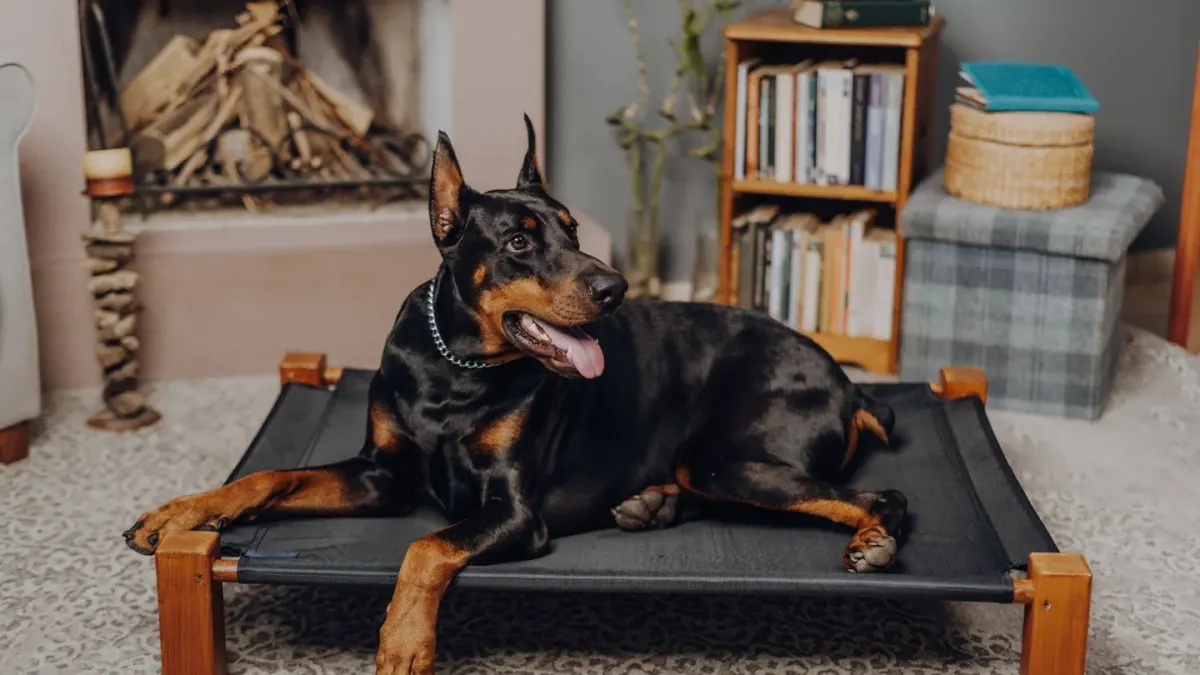
In my practice I’ve watched this play out with a two-year-old Doberman named Rex, about 75 pounds, whose owners called me after months of him “kind of knowing” place but never actually relaxing on it. He’d hit the mat, plant in a sit, and vibrate there, eyes locked on the kitchen, until someone said “okay.” That’s not a settled dog — that’s a dog under duress. When we walked through what the family was actually reinforcing, it turned out every release had come right after Rex broke position on his own and got called back, which had taught him the mat was a test to pass, not a place to relax. We rebuilt the cue from the ground up, rewarding loose, shifting body language on the mat instead of stillness, and within about three weeks of five-minute evening sessions he was flopping onto his side within a minute of being sent there.
Building the cue in the right order
The most reliable path follows the same shape most reward-based skills do: lure, mark, add duration, then add distraction — never all at once. According to the American Veterinary Society of Animal Behavior, reward-based methods that reinforce the desired behavior are the evidence-backed foundation for teaching and changing behavior in dogs, and that’s exactly the model that makes place stick.
Start with a flat mat, towel, or dog bed your dog already finds comfortable — this is not the time to introduce a brand-new surface. Lure them onto it with a treat, mark the moment all four paws land, and reward on the mat itself, not back at your hand. Repeat that a dozen times across a session before you ever say a word. Only once your dog is reliably following the lure onto the mat should you attach the verbal cue, saying “place” a half-second before you lure.
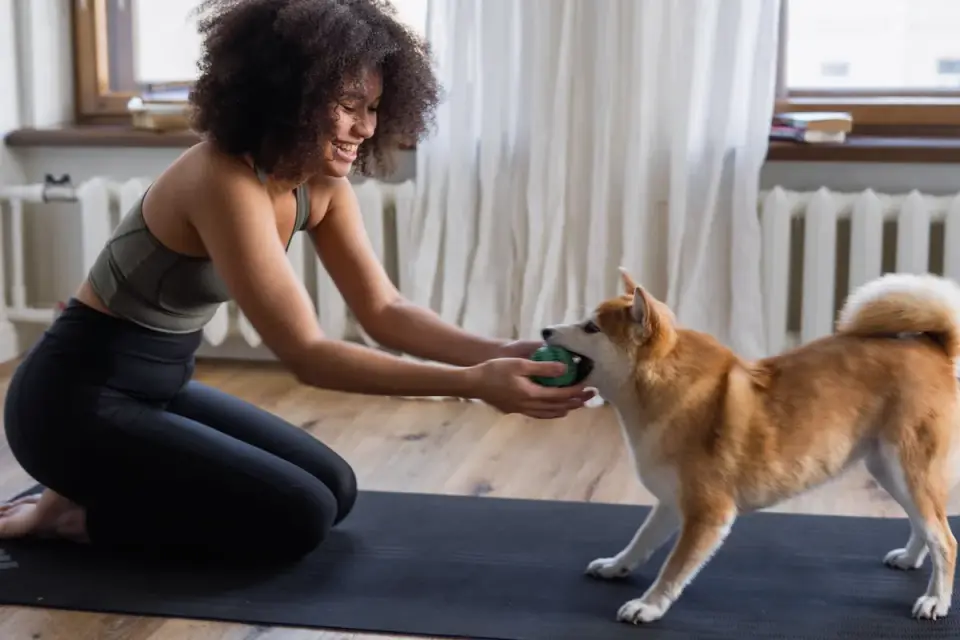
From there, duration comes before distance, and distance comes before distraction — in that order, and only one variable at a time. If your dog breaks position when you add distance, you didn’t fail; you moved too fast, and the fix is just to shrink the step back down.
Where owners go wrong, and where I land on it
The most common mistake I see is treating place as a punishment station — sending a dog there mid-jump, mid-bark, mid-chaos, with an edge in your voice. It works in the short term because the dog leaves the room, but it also teaches the mat to predict trouble, which undercuts the entire point of the cue. The American Kennel Club frames place as a management tool for everyday moments — mealtimes, doorbells, guests arriving — not a timeout corner, and I’d go further: if your dog flinches or slinks toward the mat rather than trotting to it, that’s a sign the association has already gone wrong and needs rebuilding with pure reward before you use it functionally again.
The counterargument I take seriously is that some trainers use place under mild pressure — a light leash cue, a hand block — to speed up the “stay put” part of the skill, and for some dogs that does shorten the timeline. I still don’t lead with it. A dog who learns place through reinforcement alone tends to offer the behavior voluntarily later — trotting to the mat when the doorbell rings before anyone’s asked — and that voluntary quality is the entire value of the cue. A dog who’s been pressured onto the mat mostly just complies when told.
I think about a lab mix named Daisy, five years old, sixty-some pounds, whose owner’s chief complaint was jumping on delivery drivers. We didn’t touch the jumping directly at first. Instead we spent two weeks building a rock-solid place cue in a quiet room, then slowly moved the mat closer to the front door, then added a knock sound from a phone speaker at low volume before working up to the real doorbell. By week four, Daisy was heading for her mat on her own the instant she heard tires in the driveway — not because anyone corrected the jumping, but because the mat had become the more rewarding option long before the driver ever knocked.
A realistic timeline, and what “done” actually looks like
Most healthy adult dogs can learn the basic mechanics — go to the mat, hold a relaxed position for a minute or two — within one to two weeks of short daily sessions. Real reliability around real distractions, the kind that holds up with a knock at the door or a plate of food on the counter, usually takes four to six weeks of consistent practice. Puppies and dogs with a strong startle response may need longer, and that’s normal, not a sign something’s wrong.
If you’re also working on related foundational cues, how to teach a dog to sit and how to teach your dog to lie down both feed directly into a strong place cue, since your dog will be shifting between those positions once they’re settled on the mat. If your dog struggles more with holding still than with going to a spot, how to teach a rock-solid stay covers the duration-building piece in more depth. And if door-answering chaos is your actual end goal, pairing place with how to teach “leave it” gives you two tools that solve most everyday-manners problems together.
The bottom line: place earns its keep when it’s built on reinforcement, one variable at a time, and used as a default spot to settle rather than a consequence — get that sequence right and most dogs offer the behavior on their own within a month or so.
Frequently asked questions
How long should place training sessions be?
Keep sessions short, roughly five minutes, once or twice a day. Short, frequent sessions build reliability faster than one long drilling session and keep your dog engaged rather than checked out.
Can I use place to stop jumping on guests?
Yes, but build the cue first in a low-distraction setting, then gradually introduce the doorbell or knock at low intensity before asking for the real thing. Sending an untrained dog to place mid-jump usually just adds confusion.
What size or type of mat works best?
Any flat, low mat, bed, or towel your dog already finds comfortable works. The material matters less than consistency — use the same surface each session so your dog generalizes the cue to that specific spot.
Sources
- What are Reward-Based Training Methods for Dogs (and Cats)? — American Veterinary Society of Animal Behavior
- How To Teach Your Dog To Go to Their Place — American Kennel Club