
On this page
Why does a dog who sits the instant you ask stall out completely on “down”? It isn’t defiance, and it usually isn’t a training failure either. Down asks more of a dog physically and emotionally than sit does, and once you understand why, the cue gets a lot easier to teach.
I think about a Boston Terrier named Gus who came into my exam room stiff-legged every time his owner tried the down cue on the vet clinic’s tile floor. He’d sit beautifully, then freeze, ears back, refusing to lower his hips any further. His owner assumed he was being stubborn. He wasn’t. Cold, slick tile made him feel unstable and exposed, and no amount of repeating the word “down” in a firmer voice was going to fix that. We moved him onto a folded towel, softened her tone, and within a few minutes he was lying down on his own. That’s the piece owners miss most: the environment and the dog’s comfort matter as much as the mechanics of the cue.
Is your dog actually refusing, or just uncomfortable?
Before you touch a treat, look at where you’re asking. A dog lying down brings its belly, throat, and hips closer to the ground, which is a more vulnerable posture than sitting. Slick floors, cold surfaces, unfamiliar rooms, or an audience of strangers can all make a dog reluctant to fully commit to that position, even if they know the behavior perfectly well at home.
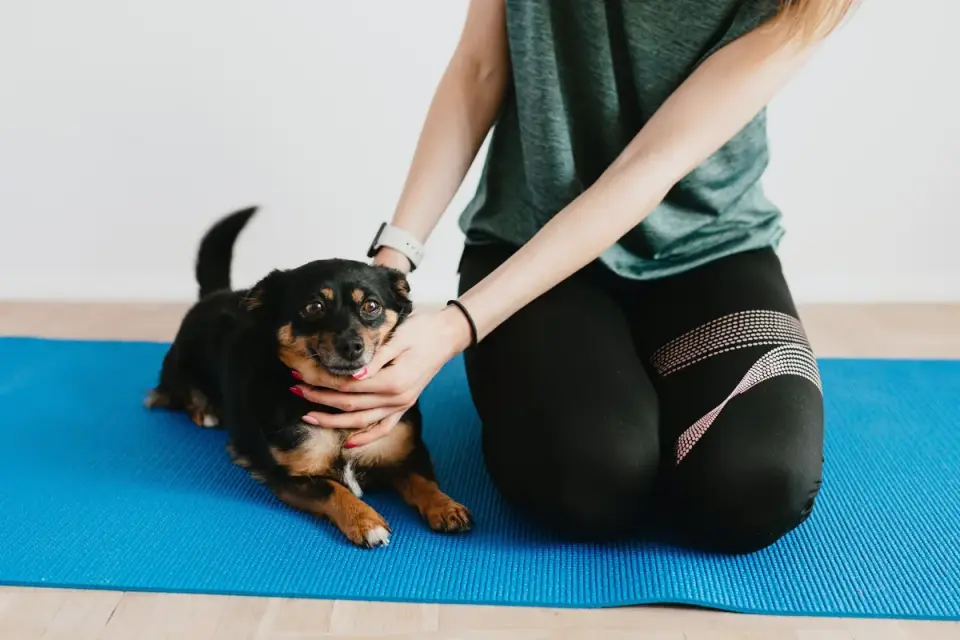
Start every new down session on a rug, mat, or carpeted surface. Once your dog is reliable there, move gradually onto harder or less familiar flooring. Skipping this step is the single most common reason owners feel stuck.
The lure method, step by step
This is the approach recommended by the American Kennel Club, and it’s the one I recommend to clients because it teaches the dog rather than forcing the dog.
- Start with your dog already sitting.
- Hold a small, soft treat right at their nose, then lower it slowly straight down to the floor between their front paws.
- Once their head is following the treat downward, slide it slowly outward along the floor, away from their body, tracing an “L” shape.
- As their front end follows the treat down and out, their back end should lower into a down. The instant their elbows and hips touch the ground, mark it with a calm “yes” or a clicker and deliver the treat.
- Repeat 5 to 8 times per session, keeping sessions short.
Don’t rush the outward slide of the treat. Move it too fast and most dogs just stand up and walk toward it instead of lying down.
When to add the word “down”
Add the verbal cue only after your dog is lying down reliably in response to the lure, not before. Say “down” a half-second before you start the hand motion, then lure as usual. Saying the word repeatedly before the dog understands the behavior teaches them to ignore it, which is how so many dogs end up needing three or four repetitions of a cue before they respond.
Fading the treat lure
Once your dog is lying down smoothly for five reps in a row, switch the treat to your other hand and repeat the same hand motion with an empty hand. Reward from the opposite hand after they lie down. After a few more successful reps, you’ll have an empty-hand signal, which is simply a lowering motion toward the ground, and your dog will respond to that gesture and the verbal cue without needing to see food at all.
This fading step matters more than most owners expect. Skip it, and you end up with a dog who will only lie down when they can see a treat in your hand, which isn’t a reliable cue, it’s a bribe.
Reading your dog’s stress signals along the way
Watch your dog’s face and body while you work, not just their hips. According to ASPCApro’s canine body language guidance, repeated lip-licking, yawning outside of a nap, a tucked tail, or a stiff, low body posture during training are signs of stress rather than stubbornness. If you see these, end the session on an easy win, give your dog a break, and come back later with shorter reps or a more comfortable surface.
This is also where I’d push back on a training habit I still see too often: physically pressing down on a dog’s shoulders or hindquarters to force a down. It might look like it works in the moment, but the science on this is fairly clear. The AVSAB’s position statement on humane dog training points to reward-based methods as both safer and more effective than physical manipulation or corrections, and I’ve watched enough dogs shut down or start avoiding the whole training session after being pushed into position to trust that guidance over the shortcut. Luring takes a few more minutes. It also builds a dog who offers the behavior willingly instead of bracing for a hand on their back.
Troubleshooting common sticking points
If your dog pops back into a sit the moment the treat reaches the floor, you’re likely moving the lure too quickly, or your dog’s elbows haven’t fully touched down before you mark the behavior. If your dog just walks forward instead of lying down, keep the treat closer to their chest as you slide it out, and consider luring next to a low couch or coffee table so their body has a natural boundary. If your dog seems to lie down fine in the kitchen but never in the yard, that’s a location and distraction issue, not a comprehension issue, and it just means you need to practice the whole sequence again in the new environment from scratch.
A down taught in one room doesn’t automatically transfer to every room, every floor, and every distraction level. Dogs generalize behaviors slowly, and each new environment is close to a fresh lesson the first few times.
If you’re just getting your daily routine with a new dog established, our guide to everyday dog care basics is a good next stop before you build out a full training routine.
The bottom line
A reliable down comes from a smooth lure, a comfortable surface, short sessions, and attention to what your dog’s body is telling you along the way. Skip the pressure and the repetition-for-repetition’s-sake, and most dogs pick this up faster than owners expect.
Frequently asked questions
Why won't my dog lie down even though it sits fine?
Sit and down use different muscles and different vulnerability. Down puts a dog's belly closer to the floor, which some dogs find exposing on cold tile, slick wood, or an unfamiliar surface. Start on a rug or mat before asking on hard flooring.
How long does it usually take to teach a down?
Many dogs offer the position within a few 5-minute sessions once the lure path is smooth, though full reliability around distractions can take a few weeks of short, regular practice.
Should I ever push my dog into a down?
No. Physically pressing on the shoulders or hips can trigger a fear response and works against the trust you're building. Luring and shaping are the evidence-backed approach recommended by veterinary behaviorists.
Sources
- Position Statement on Humane Dog Training — AVSAB
- How to Teach Your Dog to Lie Down — American Kennel Club
- Canine Body Language — ASPCApro