On this page
Isn’t short hair the easy coat?
The beagle in my exam room was twelve pounds overweight, mildly itchy along the flanks, and shedding enough that his owner had started keeping a lint roller in every room of the house. She’d assumed that because he had short hair, he didn’t need much grooming — no mats to worry about, no scissoring, no professional visits. What she’d actually done was skip brushing almost entirely for two years. His coat had gone dull, his undercoat was matted down close to the skin in patches along his hips, and he was tracking in more hair than a much longer-coated dog would have. Short hair doesn’t mean low grooming needs. It means different grooming needs, and a lot of owners never get told what those actually are.
That’s the myth worth correcting up front: a smooth, close coat like a beagle’s, a Labrador’s, or a boxer’s isn’t a coat you can ignore. It’s a coat that sheds continuously, sits directly against the skin with almost no insulating layer of fur to catch debris, and shows skin problems faster than a longer coat would hide them. The grooming job is smaller in scope than what a double-coated or curly-coated dog needs, but it isn’t optional, and treating it as optional is exactly how owners end up in my exam room wondering why their “easy” dog is shedding everywhere and starting to smell.
What a short coat is actually doing under your hand
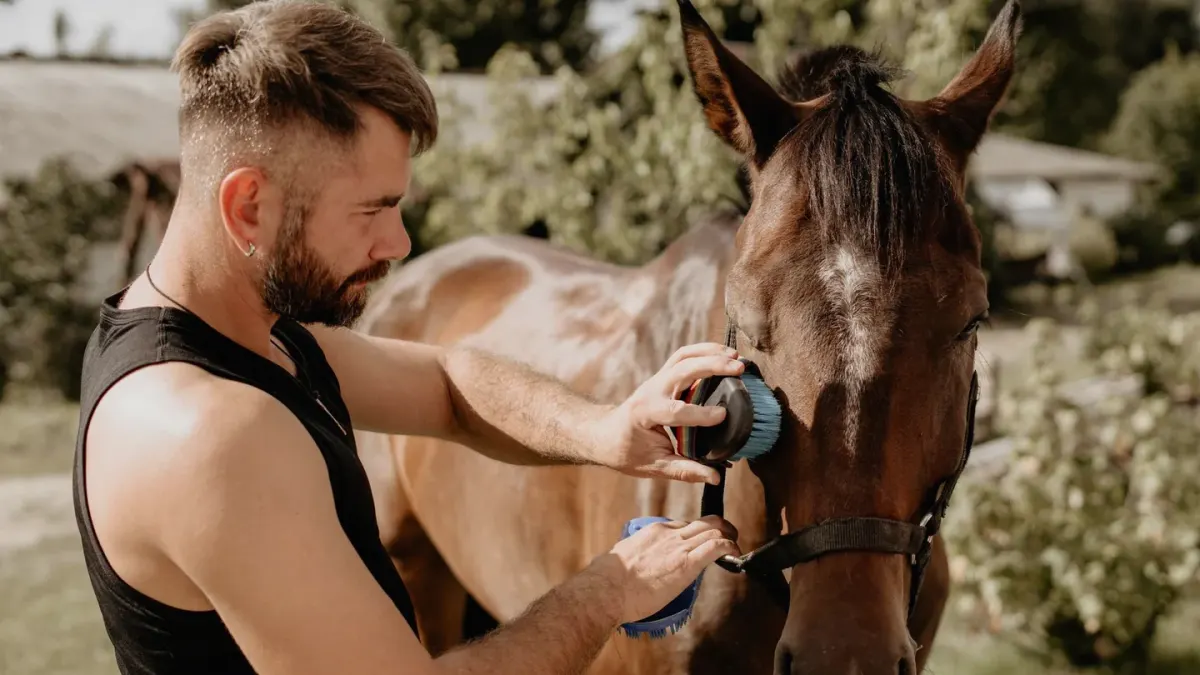
A short, single or double coat like a beagle’s cycles hair constantly rather than growing long and shedding seasonally the way some breeds do. Every strand you don’t brush out ends up on your couch, your car seat, or your dog’s own skin as trapped debris. According to the How to Groom a Dog at Home: American Kennel Club, short-coated breeds do best with a bristle brush, and a rubber curry comb is useful for polishing smooth coats and lifting dead hair before it sheds on its own. I reach for a rubber curry brush first in almost every short-haired case I see, because the rubber teeth loosen dead undercoat without irritating skin the way a stiff slicker brush can on a dog with minimal fur coverage.
Weekly brushing is the baseline the AKC recommends for short coats, and in practice that’s about right for most healthy dogs — daily during a heavy shedding season, weekly the rest of the year. Skipping weeks doesn’t save time; it just concentrates two or three sessions’ worth of loose hair into one longer, messier one, and it gives dead hair more time to sit against the skin, which is where I start seeing the dull, slightly gritty coat texture that brought that beagle in.
Bathing less often than you’d think
Short coats look cleaner than they are, which tempts owners toward more frequent baths than the skin actually needs. The How to Bathe Your Dog: Tips for Safely Giving Your Pet a Bath points toward washing on an as-needed basis rather than a fixed weekly schedule, and most healthy short-haired dogs do well on a cadence closer to once every four to eight weeks. Bathing too often strips the natural oils that keep the skin barrier intact, and a stripped barrier is often what turns into the flaky, itchy skin I see far more often than owners expect from a dog they’re washing “to keep clean.”
Use a dog-specific shampoo, not a human one — dog skin sits at a different pH than ours, and a mismatched shampoo can disrupt the skin’s protective barrier over repeated use. If your dog is itchy, losing hair in patches, or developing an odor between baths, that’s a skin question for your veterinarian rather than something to fix by bathing more.
A weekly sequence that actually works
Here’s the routine I give owners of beagles, boxers, Labs, and other short-coated dogs, in the order I’d do it myself:
- Brush first, every week, dry. Rubber curry brush or a short-bristle brush, short strokes with the coat, focused on the flanks, hips, and base of the tail where shedding concentrates.
- Check nails at the same time. Short coats hide overgrown nails less than long ones do — if you can hear clicking on hard floors, they’re due.
- Look at the ears and skin while you’re already there. You’re running your hands over the whole dog anyway; use it to catch redness, odor, or a new lump early.
- Bathe on its own schedule, not the brushing schedule. Roughly every four to eight weeks for most healthy dogs, sooner only if your dog gets visibly dirty or your vet has a skin-specific reason to bathe more.
- Towel or air dry fully before your dog settles somewhere warm. Damp skin under short hair is exactly the environment yeast and bacteria like.
If you’re deciding whether any of this is worth doing yourself versus paying someone else to do it, our guide to at-home grooming versus a professional groomer walks through that trade-off in more detail, and our breakdown of what grooming actually costs is a useful reality check either way.
I’ve watched this play out with a lot of short-haired dogs over the years, and the pattern repeats: the owners who brush weekly almost never end up asking me about mysterious skin flare-ups or sudden “excessive” shedding, because they’re seeing the coat and skin up close every week and catching small changes before they become appointments. The owners who wait until shedding becomes a household problem are usually also the ones surprised by a skin issue that had been building quietly for months. I’ll be honest that the preventive evidence here is more clinical experience than controlled study — nobody has run a trial proving weekly brushing prevents skin disease in beagles — but the pattern is consistent enough across the dogs I’ve examined that I recommend it without much hesitation.
Tools worth having, without the leaderboard
You don’t need much. A rubber curry brush, a short-bristle brush for finishing, a nail trimmer or grinder, and a dog-formulated shampoo cover nearly every short-haired dog’s routine. If you’re unsure whether your dog’s nails need a clipper or a grinder, or whether scissors belong in the kit at all for a coat this short, our comparison of dog clippers versus scissors is a fair starting point. For ear cleaning, which is a separate habit from coat grooming but often gets folded into the same weekly check, see our guide to what actually works in a dog ear cleaner.
Where I land
Short hair earns its reputation for being easier, not effortless. A weekly brushing habit, a bathing schedule that respects the skin barrier rather than fighting it, and a few minutes of hands-on checking each week is the whole job for most dogs. The beagle from my exam room went back on a weekly brushing routine and a bath roughly every six weeks; within a couple of months his coat had regained its shine and the itching had resolved without needing anything more aggressive. That’s not a guarantee for every dog — skin issues sometimes need veterinary treatment beyond grooming changes — but it’s the outcome I see often enough to keep recommending the same basic sequence.

Sources
- How to Groom a Dog at Home — American Kennel Club
- How to Bathe Your Dog: Tips for Safely Giving Your Pet a Bath — American Kennel Club