On this page
The checklist first, because most owners just need the answer fast:
- Thick, matted, or heavily shedding coat covering a large area (back, sides, belly)? Clippers, with the right guard length.
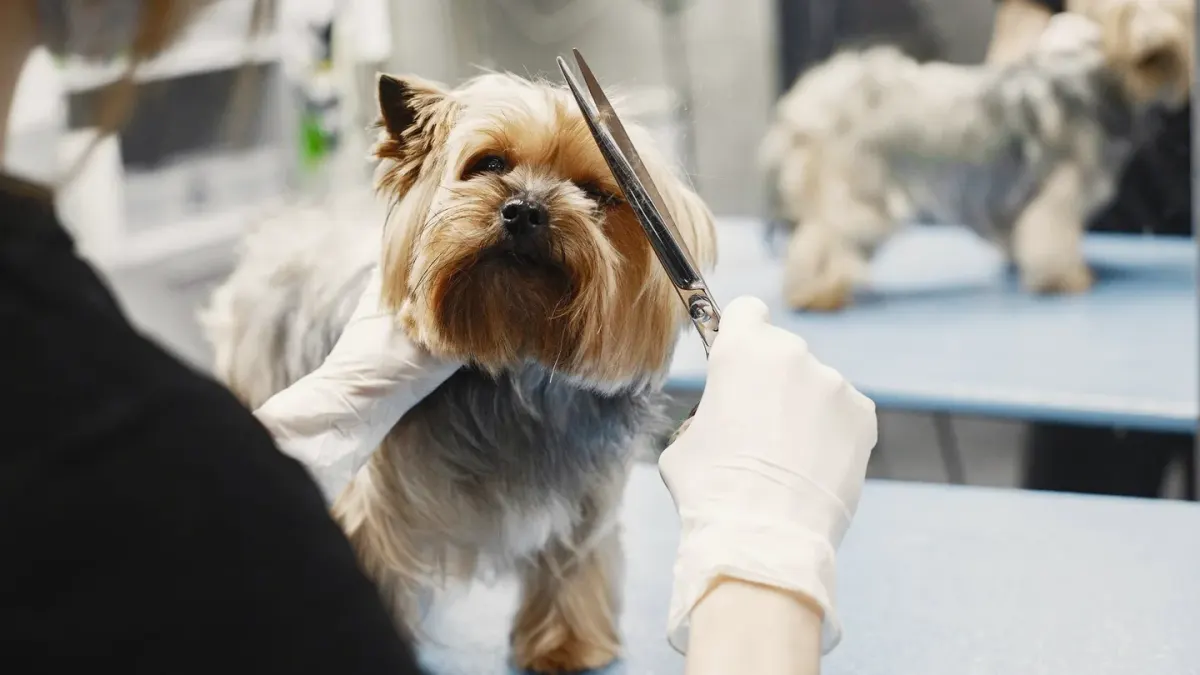
- Face, ears, paws, tail, or anywhere near skin folds or joints? Scissors, or a comb-and-scissor combo — never bare clipper blade.
- Double-coated breed (Husky, Golden Retriever, Corgi, German Shepherd)? Scissors and de-shedding tools for routine care; clippers only for medical or hygiene reasons, and know the tradeoff below.
- Curly or wire coat that needs shape (Poodle, Doodle, Schnauzer)? A combination — clippers for bulk, scissors for the finish line.
- First time doing this yourself? Start with scissors and a slicker brush. Clippers have a steeper learning curve and a higher cost of a mistake.
Now here’s why that list looks the way it does, and where I still tell owners to just book a groomer.
I still think about a Golden Retriever named Baxter, seven years old, whose owner brought him in one August because he’d been shaved down to nearly bare skin at a walk-in grooming shop the week before — she’d asked for “something to help with the heat.” Three months later his coat had grown back in patches, coarser in some spots, thin in others, and it took closer to a year before he looked like himself again. That’s not a rare story. It’s the single most common regret I hear from owners who reach for clippers on a double-coated dog without knowing what that coat is actually doing for their dog.
Why the coat type matters more than the tool you buy
A single-coated dog — think Poodles, Yorkies, most terriers — has one layer of hair that grows continuously, more like human hair. Clipping it is low-risk and pretty forgiving; it grows back evenly because there’s only one layer to manage.
A double-coated dog is a different animal entirely. According to the What Is a Double Coat, and What Dog Breeds Are Double-Coated?: AKC, these dogs carry a soft, insulating undercoat beneath a coarser, protective topcoat, and many of them “blow” that undercoat twice a year in a heavier seasonal shed. That two-layer system is doing real work — insulation in winter, a barrier against sun and heat in summer. Clip through both layers with a blade, and you’re not just shortening hair. You’re cutting guard hairs that grow back far slower than the undercoat does, which is exactly why coats can come back patchy, uneven, or, as I saw with Baxter, take the better part of a year to look right again. Walkerville Vet notes that regrowth after clipping can take up to a year or eighteen months, and in cases of more severe coat disruption, the texture can come back permanently coarser or woolier than before.
None of that means clippers are wrong for double-coated dogs. Sanitary trims around the rear, mat removal when brushing has failed, or a vet-directed shave for a skin condition are all legitimate reasons to clip. The distinction I’d draw is between a targeted, small-area clip and a full-body shave “for summer,” which is the request that tends to cause the regret.
Myth versus reality on shaving for heat
The myth: shaving a double-coated dog keeps them cooler in summer. The reality: that undercoat is part of the dog’s natural cooling system, trapping air and reflecting heat, and removing it can actually leave skin more exposed to sunburn and temperature swings, not less. I’ve had this conversation more times than I can count with owners who are doing exactly what feels intuitive — take the coat off, the dog will be cooler — and it’s one of the places where the evidence-supported move works against instinct. Regular brushing and de-shedding, not shaving, is what actually helps a double-coated dog manage a hot season comfortably.
What scissors are actually good at
Scissors — real grooming shears, not household scissors — earn their keep in precision work: faces, ears, feet, tails, and the general shaping that clippers can’t do without a guard comb. They’re quieter, which matters for a dog who’s noise-sensitive, and there’s less risk of nicking skin around a joint or a skin fold because you can see exactly what you’re cutting as you go. The tradeoff is time and hand fatigue; scissoring a full coat takes real patience, and it’s genuinely a skill that takes practice to do evenly.
A sequence that works at home
- Brush first, always. Matted or tangled hair should never go under a clipper blade at skin level — mats pull skin up with them and the risk of a nick goes up sharply. Work mats out with a slicker brush or undercoat rake before any cutting tool touches the coat.
- Identify the areas you’re actually trying to solve. Overgrown paw fur, a matted rear, a shaggy face — most home-grooming needs are localized, not full-body.
- Use scissors for anything within a few inches of skin, joints, or the face. This is where most at-home grooming injuries happen, and it’s avoidable.
- Reserve clippers for large, flat areas with a guard comb attached, never a bare blade directly on skin unless you’ve been shown how by a professional.
- When in doubt, or when the coat is a double coat you’re not confident reading, book a professional. The Dog Grooming at Home: The Dos and Don’ts of Proper Hygiene: AKC is direct about this: don’t attempt to clip or shave a dog’s coat without proper training, because groomers know both the tool and the specific breed’s coat needs.
Where this lands for a first-time home groomer
If you’re new to this, I’d rather you own a decent slicker brush and a pair of grooming scissors before you ever buy clippers. That’s not the flashier answer, and I know a clipper set feels like the more “complete” purchase. But the honest caveat is that clippers are the tool most likely to cause a regretted outcome in inexperienced hands — a nicked ear, an uneven all-over buzz, a double coat shaved down before anyone understood what that coat was doing for the dog. Scissors are more forgiving of a beginner’s mistakes. You can always take off more length next week; you can’t put a shaved coat back on this week.
If you’re just getting your grooming and care routine established at all — not just clippers versus scissors, but the whole picture — New to Dog Care? Start Here With the Everyday Basics is a reasonable place to build that foundation before you invest in tools.
The dogs I see struggle most with grooming, honestly, aren’t struggling because of the tool at all — they’re struggling because grooming was never made a normal part of the routine, so every session feels like an ambush. A five-minute brush-out three times a week, started early and kept calm, does more for coat health than any clipper or scissor purchase ever will. That’s the part that doesn’t show up on a shopping list, and it’s the part I wish more first-time owners heard before the tool conversation even starts.
So — is it clippers or scissors your dog actually needs, or is it just a better brushing habit you haven’t built yet?
For related context, read Why Housetraining an Adult Rescue Dog Isn’t Just Puppy Training All Over Again.
Frequently asked questions
Is it ever okay to shave a double-coated dog?
There are legitimate reasons — mat removal when brushing has failed, sanitary trims, or a vet-directed shave for a skin condition — but shaving a healthy double coat "for the heat" is generally discouraged, since that coat is part of the dog's natural cooling and sun protection system.
Can I use human scissors to groom my dog at home?
Household scissors aren't ideal; blunt-tipped grooming shears designed for dogs give you more control and are safer around ears, paws, and skin folds.
How often should I brush a double-coated dog?
Several times a week during normal shedding, and closer to daily during a seasonal "coat blow," using an undercoat rake or slicker brush to reach the undercoat without damaging the topcoat.