On this page
Checklist before we go any further—run through this with your dog nearby if you can:
- Are the nails long enough that you hear clicking on the floor, or long enough to touch the ground when your dog stands square?
- Do the paw pads look dry, cracked, or slightly flaky, especially after time outside in winter or on hot pavement?
- Does the slipping happen mostly on turns and sudden starts, or does it happen just walking in a straight line?
- Has it gotten worse over weeks or months, rather than being a lifelong quirk?
- Is one leg or side worse than the other, or does your dog seem to hesitate before crossing the room?
- Has your dog lost visible muscle over the hips or thighs compared to a year ago?
I open a lot of these conversations the same way: a family walks in with a dog who “just started sliding around,” and they’re worried it means something serious. Sometimes it does. Most of the time it doesn’t, but I never dismiss the worry, because the dog on the floor in front of me is the one who matters.
The myth worth retiring: “it’s just the floor”
Owners often assume hardwood itself is the problem, and swap it for rugs, then move on. Floors matter, but they’re rarely the whole story. A young, healthy dog with trimmed nails and supple paw pads can trot across hardwood without much trouble. When an older dog—or even a middle-aged one—starts sliding, the floor is usually just exposing something that was already changing underneath: overgrown nails, dry pads, or muscle that isn’t holding a joint the way it used to.
Long nails are one of the most common and most fixable culprits. When nails grow too long, a dog shifts weight onto the hard nail instead of the soft, flexible pad, and that pad is what’s actually designed to grip a smooth surface, according to Dr. Buzby’s ToeGrips for Dogs: Dr. Buzby’s ToeGrips. Overgrown nails also change how a dog stands and moves, which over time can strain the feet and legs themselves. A trim every two to four weeks, kept short enough that the pad—not the nail—hits the ground, resolves a surprising share of “sudden” slipping.
Dry or cracked paw pads are the other quiet cause. Pads lose grip when they’re dehydrated, and warm water soaks or a pad-safe balm can restore some traction within days, per the veterinary guidance summarized by JustAnswer. It’s a small habit, but it’s one you can start tonight.
A scene from my practice
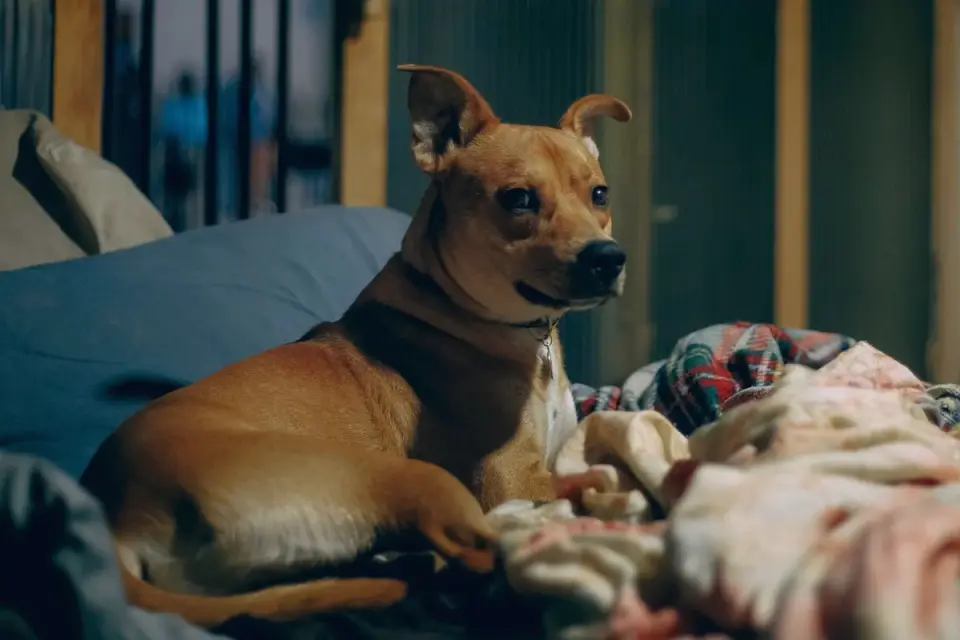
I remember a lab mix, ten years old, sixty-some pounds, who’d always trotted confidently across the kitchen. Her owners noticed it that fall: her back legs would slide apart on the hardwood by the water bowl, especially first thing in the morning or after she’d been napping on the couch. They’d tried a runner rug near the door, which helped a little, but the real slide was happening mid-room, not at the threshold. When I watched her walk, her nails were long enough to click with every step, and her hip muscles felt noticeably thinner than I’d expect for her size. We trimmed the nails short, added a glucosamine-containing joint supplement, and started short, twice-daily leash walks to rebuild muscle around the hips. Within about three weeks, her owners said the slipping at the water bowl had nearly stopped. I can’t promise every dog responds that fast, and I don’t treat one case as proof of anything—but the pattern, nails plus muscle plus surface, is one I see often enough to trust.
Muscle loss deserves its own mention, because it’s easy to miss. Dogs can lose roughly one to two percent of lean muscle mass per year starting around age seven, most noticeably in the hind legs, and the early signs—hesitating before jumping, trembling hindquarters, general slowing down—are often chalked up to “just getting older” rather than something you can actively support, according to PetMD. Weak hindquarters don’t grip a floor the way strong ones do, no matter how short the nails are.
Building a plan that fits your home
Start with what’s cheapest and fastest: trim the nails, check the pads, and lay non-slip runners along the paths your dog actually uses—not just by the door. If your dog is older, ask your vet about a joint-support supplement and whether short, structured walks or gentle strength work make sense; muscle responds to use, and rebuilding it is slow but real work, not a quick fix. For a dog whose slipping seems sudden, painful, or one-sided, that’s worth a vet visit rather than a floor mat—arthritis, a soft-tissue strain, or a neurologic issue can all look like “just slipping” at first glance, and hardwood only makes those conditions more obvious, not more common.
While you’re addressing the floor itself, it’s worth thinking about the rest of the home setup too. If your dog eats or drinks near that same slippery patch, our guide on slow feeders versus raised bowls covers how bowl height can ease strain on aging joints. And if long nails are part of what you’re managing, our breakdown of at-home grooming versus a professional groomer can help you decide how to keep up with trims consistently. If ear or coat care is also on your list, our best dog ear cleaner guide and our grooming cost guide round out a same-day home-care checklist.
Where I land
In hospice and palliative care, I spend a lot of time with families who are watching a dog’s body change in small ways, and the floor is often where they notice it first. My honest position is that hardwood is a symptom detector more than a villain. If your dog is sliding, I’d rather you check nails, pads, and muscle before you re-floor the house. Some slipping is simply part of getting older, and the goal isn’t to erase it entirely—it’s to keep your dog comfortable and confident walking through their own home. What would it take for you to feel reassured the next time you watch your dog cross that room?
Sources
- 15 Tips to Stop Your Dog Slipping on the Floor — Dr. Buzby's ToeGrips for Dogs
- Expert Solutions for Dogs Slipping on Hardwood Floors — JustAnswer
- Sarcopenia in Dogs — PetMD