
On this page
The first thing families get wrong about senior dogs is assuming size doesn’t change the timeline. It does. A 12-year-old Chihuahua and a 7-year-old Great Dane can both be, medically, “old” — and the home adjustments that help each of them are not interchangeable.
Why “senior” arrives on two different clocks
Large and giant breeds don’t just die younger; they get old faster. Large breeds in the 50–90 pound range are generally considered senior around age 7, with a typical life expectancy of 10–12 years, while giant breeds over 90 pounds can reach senior status at 5 to 6, according to Orlando Vets. Toy and small breeds, by contrast, often aren’t classified as senior until 9 or 10. The Senior Status? Understanding Your Senior Pet’s Life Stage: AAHA frames senior status not as a birthday but as the last quarter of a dog’s estimated lifespan — which is exactly why the math looks so different by size.
I’ve watched this play out in an exam room more than once: a family brings in their 6-year-old mastiff mix expecting a routine wellness visit, and I’m the one who has to say the word “senior” out loud for the first time. They’re not ready for it. Meanwhile the toy poodle down the street is 11, still doing zoomies around the coffee table, and nobody’s used the word “senior” for her yet either. Neither family is wrong to be surprised. The size difference in aging is real, it’s biological, and it means the home conversation — rugs, stairs, bed height — has to start on a different calendar depending on which dog is in front of you.
What changes in a large-breed body first
Joints carry the story for big dogs. Large breeds such as Labradors, Golden Retrievers, and German Shepherds are more prone to arthritis, and it’s less common — though not absent — in smaller breeds, per Walkin’ Pets. Across all dogs over a year old, roughly 20% are affected by osteoarthritis, and that share climbs sharply with age; in dogs over seven, incidence can reach as high as 80%, the same source notes. For a 90-pound dog, every one of those joints is bearing four times the load a 25-pound dog’s joints carry doing the identical motion — climbing the same porch step, jumping onto the same couch.
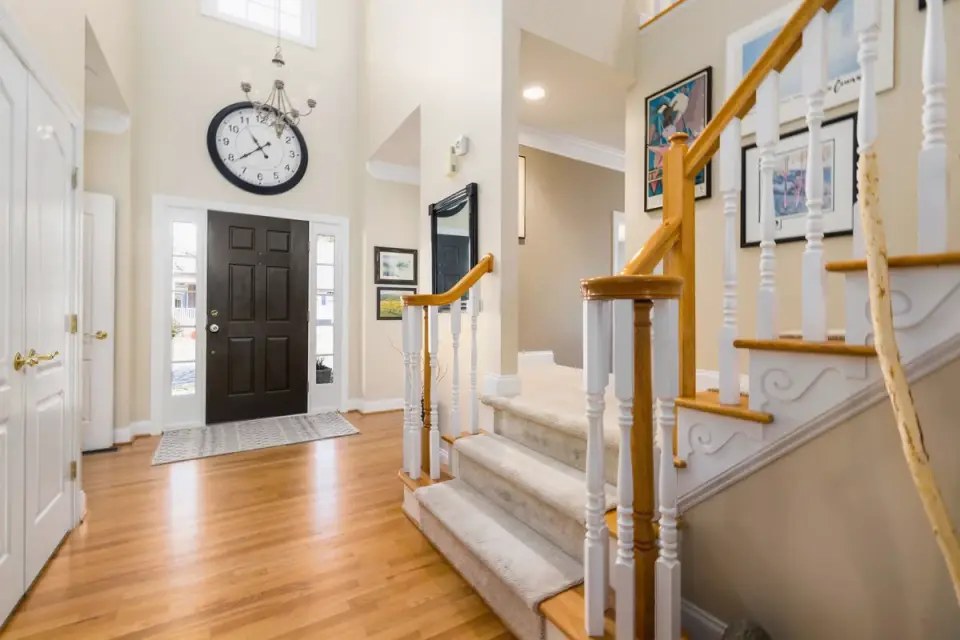
That’s why a large senior’s home setup tends to center on load management: ramps instead of jumps, rugs over hardwood, and a bed with real support rather than a flattened cushion. AKC notes that ramps are generally gentler on joints and better suited to larger dogs or those with arthritis, while stairs may suit smaller, more agile pets better. It’s a small distinction, but it’s the right one — a ramp asks a big dog’s hips to do less work per step; stairs sized for a Chihuahua don’t ask much of anyone’s hips at all.
What changes in a small-breed body first
Small dogs age into different trouble. Dental disease, luxating patellas, and tracheal sensitivity tend to show up well before hip or spine failure does, and because a small dog’s whole world is closer to the ground, the “home hazard” list looks different too. A step off the couch that a 15-pound terrier used to bound down without a thought becomes a genuine fall risk once her knees start clicking. Counters and beds that seemed like harmless perches for a decade suddenly need a ramp of their own — just a much smaller one.
I think of a 14-year-old dachshund I saw for a comfort consult, a dog whose owners had noticed she’d stopped jumping onto their bed sometime that winter, though they couldn’t pin down exactly when. She weighed nine pounds. Her spine, not her hips, was the concern — dachshunds carry real risk for intervertebral disc disease, and a bad landing off a tall bed is a genuinely different kind of injury than the wear-and-tear arthritis I see in a Lab of the same age. We talked about a low step stool by the bed, a non-slip runner down the hallway she used at 2 a.m., and keeping her off the leather ottoman she loved to climb. None of it was dramatic. All of it mattered.
Where large and small senior care actually overlap
For all the differences, the goals converge. Both sizes benefit from predictable footing, from beds that support a stiff body rather than just cushion it, and from routines that don’t ask an aging joint — big or small — to do something sudden. Traction matters everywhere in the house, not just on stairs. Getting the basics of a dog’s daily structure right, something covered well in New to Dog Care? Start Here With the Everyday Basics, still applies once a dog turns senior; it’s just that the specifics of “basics” shift with size and age together.
Exercise is the other place size categories blur into each other more than owners expect. A large arthritic dog and a small one with luxating patellas can often both do better in water than on pavement, since swimming takes weight off the joints entirely — worth reading up on in Are All Dogs Natural Swimmers? What Body Shape and Breed Really Determine before you assume every dog takes to it the same way. And a senior dog of any size still benefits from getting outside; a calm, shaded dog-friendly patio can be a gentler outing than a long walk once joints are part of the picture.

A same-day sequence, by size
For a large senior: add a ramp at the one or two spots he jumps most (car, couch, bed), swap slick flooring for runners along his main paths, and raise food and water bowls to chest height so he isn’t lowering a stiff neck repeatedly.
For a small senior: block access to any drop higher than her own body length, add a low step or ramp at furniture she still wants to reach, and check that her collar or harness isn’t putting pressure on a trachea that’s grown more sensitive with age.
For both: a supportive bed placed somewhere warm and low-traffic, non-slip rugs at every turn she takes daily, and a semiannual vet exam — the frequency AAHA recommends once a dog reaches senior status, per its 8 Things You Need To Know About AAHA’s Canine Life Stage Guidelines, so that new pain or stiffness gets caught early rather than explained away as “just getting old.”
Where I land
I don’t think there’s a single senior setup that works for every dog, and I’d be skeptical of anyone who tells you otherwise. What I do believe is that comfort-first thinking scales down to a nine-pound dachshund exactly as well as it scales up to a mastiff — you’re just solving for different joints, different drops, and a different calendar. The counterargument worth taking seriously is that some small dogs stay remarkably spry well into their teens and don’t need much modification at all; that’s true, and it’s exactly why I’d rather owners watch their own dog’s specific changes than follow a generic senior checklist by the year on the calendar.
In hospice and palliative work, I’ve sat with a lot of families in that in-between season — the dog is slower, not sick, and everyone is quietly recalibrating what “normal” looks like now. The mastiff owners I mentioned earlier came back three months after that first senior conversation, and what struck me wasn’t the ramp they’d installed or the rug they’d bought, though both helped. It was that they’d started watching him get up from the floor the way you’d watch a person you love, patient and unhurried, timing his good mornings against his stiffer ones. That kind of attention, more than any product, is what actually changes a senior dog’s comfort day to day. Structure/function support — joint chews, mobility supplements, orthopedic bedding — may help maintain comfort alongside that attention. None of it replaces watching the dog in front of you.
Frequently asked questions
At what age is a large dog considered senior compared to a small dog?
Large breeds (50–90 lb) are typically considered senior around age 7, giant breeds as early as 5–6, and small or toy breeds often not until 9 or 10, per veterinary sources like Orlando Vets and AAHA's life-stage framework, which defines senior as the last quarter of a dog's estimated lifespan.
Do large senior dogs need ramps more than small senior dogs?
Large and arthritic dogs generally benefit most from ramps since they take load off already-strained joints, while smaller, more agile dogs may do fine with stairs — though a small senior with luxating patellas or spine issues often needs a ramp too.
Is arthritis more common in large or small senior dogs?
Large breeds like Labradors, Golden Retrievers, and German Shepherds are more prone to arthritis, though it can affect dogs of any size; overall, roughly 20% of dogs over a year old have osteoarthritis, rising to as high as 80% in dogs over seven.
Sources
- Do Large Breed Dogs Age Faster? Vet-Explained — Orlando Vets
- Senior Status? Understanding Your Senior Pet's Life Stage — AAHA
- 8 Things You Need To Know About AAHA's Canine Life Stage Guidelines — AAHA
- Arthritis and Your Dog's Mobility — Walkin' Pets
- Dog Stairs vs. Ramps: Choosing the Right Option for Your Dog — AKC