On this page
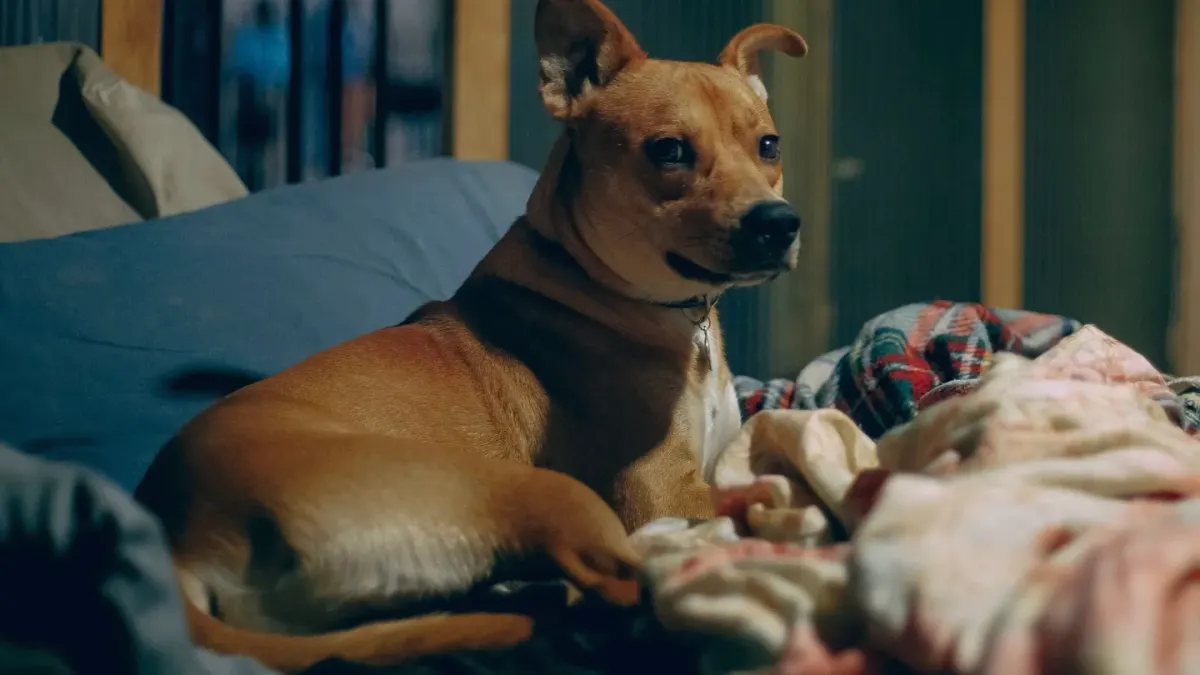
I open a lot of conversations about incontinence the same way: with an owner apologizing for their dog. They tell me, almost sheepishly, that their twelve-year-old Lab mix has started leaving wet spots on the bed, and they’ve already tried scolding her, already started keeping her off the furniture, already wondered if this is just “what happens” now. It isn’t a habit problem. It’s usually a plumbing problem — and it’s one of the more manageable changes that comes with an aging body.
The myth worth retiring: that leaking means “accidents”
Urinary incontinence — involuntary leaking, often while a dog is asleep or relaxed — is different from a housetraining lapse. The Merck Veterinary Manual describes urethral sphincter mechanism incompetence (USMI) as the most common cause of this kind of leaking in dogs, and it’s usually tied to a weakening of the muscle that holds the bladder closed — not to anything the dog is choosing to do. In spayed females especially, this is often linked to reduced estrogen and is sometimes called hormone-responsive incontinence. Larger-breed dogs and dogs carrying extra weight seem to be affected more often. Other causes — urinary tract infections, kidney disease, diabetes, or neurologic changes affecting the nerves that control the bladder — can look identical from the outside but need very different management, which is why a veterinary visit always comes before a home routine, not after it.
A short paragraph, because this part is simple: a dog that’s leaking needs a vet visit before a management plan, not instead of one.
What a vet visit is actually ruling in or out
Bloodwork, a urinalysis, and sometimes imaging help your veterinarian sort a treatable infection or metabolic disease from true sphincter weakness. If it is USMI, Today’s Veterinary Practice notes that phenylpropanolamine (PPA) — sold under brand names like Proin — is commonly prescribed as a first-line medication because it helps tighten the muscle at the base of the bladder. Response rates reported in the literature are good, though not universal, and side effects like restlessness or elevated blood pressure are possible, so dogs on PPA are typically monitored. For some spayed females, a vet may also discuss supplemental estrogen therapy. None of this is a home remedy substitute — it’s the foundation the home routine sits on top of.
Building a home routine around the medical plan
Once your vet has a diagnosis and, if appropriate, a medication on board, the home side is mostly about reducing friction for everyone in the house.
- More frequent bathroom breaks. A senior bladder with a weaker sphincter benefits from more, not fewer, chances to empty — before bed, first thing in the morning, and at least once overnight for dogs who are struggling.
- Washable, absorbent bedding in the spots your dog actually sleeps, not just the dog bed you wish they used.
- Belly bands or dog diapers for dogs who leak during the day, changed often enough to avoid skin irritation.
- Barrier cream on the belly, inner thighs, or hocks if you’re seeing redness — urine scald develops faster in older, thinner skin.
- Flooring that’s easy to clean and easy to grip. Slick, absorbent-unfriendly flooring becomes a bigger issue once accidents enter the picture; our guide to flooring choices for a home with senior dogs walks through options that hold up.
One of the dogs I think about most was a spayed Rottweiler named Junie, eleven years old, about 85 pounds, whose owners noticed damp patches on her bed for maybe two weeks before they called. They’d assumed it was because she wasn’t asking to go outside enough in the evenings, so they’d started limiting her water after dinner — which, understandably, made things worse, not better. Once her vet started her on PPA and her owners added a washable pad under her hips and one more nighttime bathroom trip around 11 p.m., the leaking mostly resolved within about ten days. What stuck with me wasn’t the medication response, which is fairly typical — it was how much lighter the whole household felt once they stopped treating it as something Junie was doing wrong.
What I’d tell you to prioritize
A common question is whether diapers or belly bands are a first step or a last resort. I’d say neither — they’re a comfort tool you can use in parallel with medical treatment, not a substitute for finding out why the leaking is happening. The dogs I worry about aren’t the ones wearing a belly band; they’re the ones whose owners never got the urinalysis because the leaking seemed “manageable enough” on its own.
If your dog also has trouble navigating the house — bumping into furniture, hesitating on stairs — it’s worth reading about helping a deaf senior dog feel safe at home or, for dogs whose needs have shifted with size and mobility, how home needs actually differ between small and large senior dogs. Skin under a diaper or belly band also needs real attention — gentle cleaning matters here the same way it does with cleaning a dog’s ears at home: frequent, gentle, and never so aggressive that you cause more irritation than you’re solving.
Where I land
I choose quality-of-life framing over a quick fix here, and I’ll say plainly why: incontinence management isn’t about eliminating every wet spot on the first day. It’s about giving your dog’s body the medical support it needs, protecting its skin and dignity in the meantime, and accepting that some trial and error — on medication dosing, on schedule, on the right absorbent product — is normal. The strongest counterargument I hear is that diapers and pads are “giving up,” treating the symptom instead of the cause. I understand the instinct, but I don’t agree with it. Used alongside — not instead of — a veterinary diagnosis and appropriate treatment, they’re simply comfort tools, the same as a ramp for stiff knees or a rug for slick floors.
Next step: if your senior dog has started leaking, book a veterinary visit for bloodwork and a urinalysis before assuming it’s behavioral — most cases have a real, treatable cause, and the sooner you know what you’re managing, the sooner both of you get some rest.
Frequently asked questions
Is incontinence in senior dogs always a sign of a serious disease?
Not always, but it always deserves a veterinary workup. The most common cause, urethral sphincter mechanism incompetence, is very treatable, but a urinalysis and bloodwork rule out infections or metabolic disease that need different care.
Do belly bands or diapers make incontinence worse over time?
Not by themselves, as long as skin is kept clean and dry underneath. They're a comfort and cleanliness tool, not a treatment, so they work best paired with your vet's medical plan.
Sources
- Disorders of Micturition in Dogs and Cats — Merck Veterinary Manual
- Phenylpropanolamine for Urinary Incontinence — Today's Veterinary Practice