On this page
I still remember a bulldog named Gus, nine years old and about sixty pounds, whose owner called me on a Tuesday in July because he’d started “sounding different” after a short walk to the mailbox. Not collapsed, not vomiting — just louder breathing than usual, tacky gums, and a reluctance to lie all the way down. She’d done everything “right” by her own account: it was overcast, they’d only been outside four minutes, and he had water waiting. That’s the part that sticks with me. With a dog built like Gus, the emergency doesn’t always announce itself with drama. It shows up as a slightly-off afternoon, and if nobody’s watching for it, it can become something worse by dinnertime.
The airway math most owners never got told
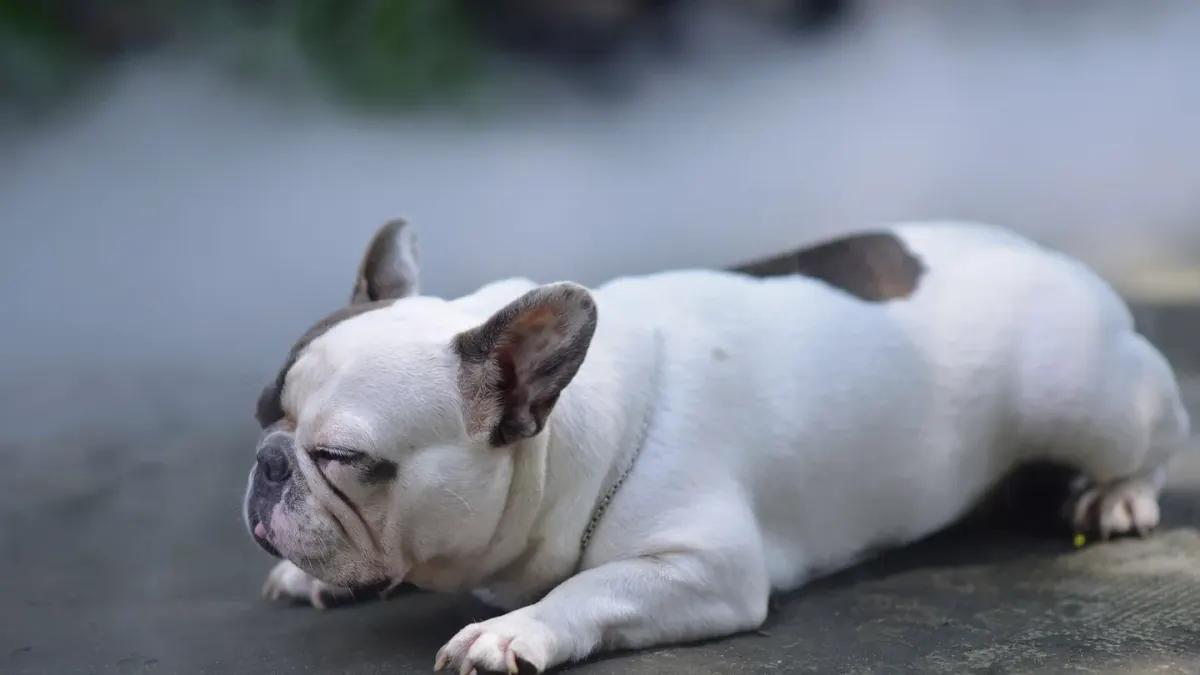
Dogs cool themselves primarily by panting — moving air across the tongue, mouth, and upper airway to evaporate moisture and shed heat. A bulldog’s airway anatomy works against that system at nearly every step: a shortened muzzle, narrowed nostrils, an elongated soft palate, and often a narrower windpipe than a longer-nosed dog of the same size. Less airway surface area means less evaporative cooling per breath, so the same summer afternoon that barely registers for a Labrador can push a bulldog, French Bulldog, Pug, or Boston Terrier into heat stress. Research reviewed in Veterinary Evidence found that brachycephalic dogs are over-represented in cases of heat-related illness, with breed, higher body weight, and age over two years all contributing to risk. That’s not a scare statistic to file away — it’s a reason to treat indoor climate control as a daily-care habit, not a summer-only chore.
Myth: shade and water are enough indoors
A lot of owners assume that once a flat-faced dog is inside, out of direct sun, the risk basically resets to zero. It doesn’t. A closed room without airflow can sit warmer than owners realize, especially upper floors, sunrooms, or a crate near a window with afternoon exposure. Heat stress in brachycephalic dogs isn’t only an outdoor-walk problem; it’s a whole-house problem that includes nap spots, car rides to pick up the mail, and even a warm kitchen after the oven’s been on. The fix isn’t more water bowls scattered around — it’s actually managing air movement and surface temperature in the places your dog spends the most time.
Building the setup, room by room
Start with where your dog actually rests, not where you’d like them to rest. Most bulldogs gravitate toward tile, hardwood, or a cool corner over a heated bed, and that instinct is worth working with rather than against.
- Airflow first. A box fan or oscillating fan aimed at your dog’s regular resting spot does more for real-time cooling than air conditioning alone, because moving air speeds up evaporation from the tongue and skin.
- Cool surfaces, not just cool air. Tile, a raised cot with mesh fabric, or a gel-cooling mat gives a flat-faced dog somewhere to dump body heat by conduction, which matters more for these breeds because their panting is doing less of the work.
- Time the thermostat to the dog, not the family. If you’re comfortable at 74–76°F, a bulldog resting after any activity may not be. Many owners find they need to run the house a few degrees cooler during peak afternoon hours in summer.
- Watch humidity, not just temperature. High humidity blunts evaporative cooling almost entirely, so a “mild” 78°F room at 70% humidity can be harder on a brachycephalic dog than a drier 85°F day.
- Keep exertion low during setup. Even fetching a toy across the living room counts as exertion for a dog working this hard to breathe; save active play for the coolest part of the day.
What early heat stress actually looks like
This is the part I ask owners to genuinely memorize, because by the time a dog collapses, you’ve lost the window where home cooling helps. According to AKC’s Canine Health Foundation, early signs include heavy panting, drooling, gums that look dry, sticky, or an abnormal color, restlessness, and a dog that seems to be seeking out cooler surfaces on its own — and dogs cooled before arrival at the vet are roughly 2.5 times more likely to survive heat stroke. If you see those early signs, move your dog to the coolest room you have, get airflow on them, and offer — don’t force — cool water. Sponge cool (not ice-cold) water over the belly and paw pads if a fan alone isn’t settling the panting. If your dog doesn’t visibly improve within a few minutes, or shows disorientation, vomiting, or gum color that stays off, that’s a same-day vet visit, not a wait-and-see.
I think about Gus’s owner a lot, because she did almost everything by the book and still ended up sponging his belly on her kitchen floor while I talked her through it on the phone. He recovered fine that day, resting on the tile with the fan running while his breathing settled back to normal over about twenty minutes. But it’s a good reminder that “mild weather” and “short walk” aren’t reliable safety markers for a dog whose airway was never built for heavy heat exchange. I’d rather a family build the cooling habit into an ordinary Tuesday than learn it during an emergency.
Where this connects to daily routine
A cooling setup works best when it’s part of the dog’s normal environment rather than something you scramble for on hot days. That overlaps with other home-care decisions worth getting right early — for instance, how you clean your dog’s ears at home matters more in warm, humid months when ear infections tend to flare, and choosing the right nail grinder can make it easier to keep exercise sessions shorter and calmer for a dog that overheats easily. If you’re weighing at-home grooming against a professional groomer, keep in mind that a shorter, well-maintained coat can help a flat-faced dog shed heat more efficiently in summer months.
Where I land
I’m not going to tell you a cooling mat or a fan is a cure for brachycephalic airway limitations — nothing sold in a pet store changes a dog’s anatomy, and I’d be doing you a disservice if I implied otherwise. What I will say, with real confidence, is that a deliberate indoor setup — airflow, cool surfaces, a few degrees of thermostat discipline, and genuinely knowing the early signs — measurably lowers the odds that an ordinary summer day turns into an emergency room visit. That’s quality-of-life work, not a quick fix, and it’s the kind of unglamorous daily habit that keeps dogs like Gus comfortable instead of critical.
Sources
- Heatstroke and brachycephalic dogs – is there an increased risk? — Veterinary Evidence
- Heatstroke in Dogs: Signs, Symptoms, Treatments — AKC