On this page
Most golden retriever owners assume the outer coat is the problem. It isn’t. The long, flowing hair on top is water-resistant and mats less than people expect. The real work happens underneath, in the dense undercoat that sheds heavily twice a year and packs in tight against the skin the rest of the time. A grooming routine built around the wrong layer wastes effort and still leaves a dog matted behind the ears and shedding across the couch.
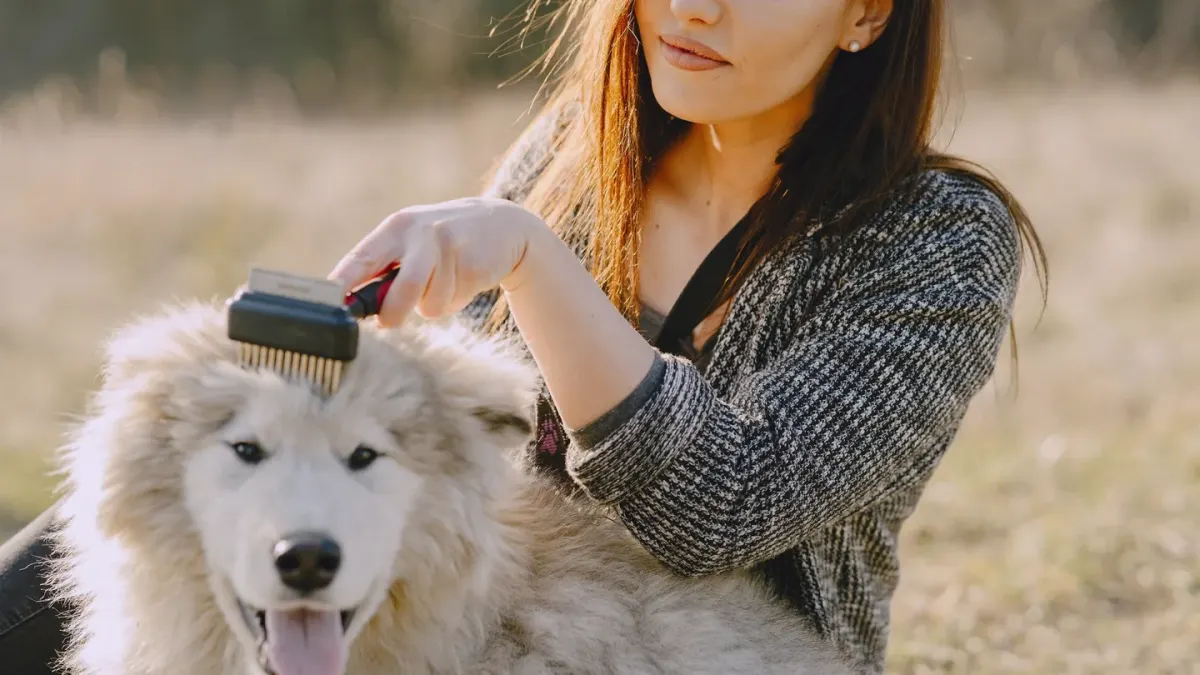
I’ve worked with a lot of golden owners who show up frustrated that their dog “won’t stop shedding no matter how much I brush.” When I ask what tool they’re using, it’s almost always a slicker brush alone, run quickly over the topcoat. A slicker brush is useful for finishing and for the feathering on the legs and tail, but it barely touches the undercoat. Switching that same owner to a rake — even just twice a week, five minutes at a time — usually changes the amount of hair on the floor within a couple of weeks. That’s not a guarantee, and coat density varies a lot between individual dogs, but it’s the single most common fix I recommend.
What golden retriever coats actually need
Goldens carry a double coat: a coarser, water-resistant outer layer and a soft, insulating undercoat that sheds seasonally and lightly year-round. American Kennel Club guidance recommends brushing at least two to three times a week, moving to daily during the spring and fall “coat blow.” A slicker brush and an undercoat rake used together, in that order, cover both layers — the slicker for the surface and feathering, the rake for what’s packed in underneath.
One thing worth being direct about: blade-style deshedding tools that cut through the coat rather than lift hair out are not the same as a rake, and using one on a golden can shorten and thin the guard hairs that give the coat its water resistance. A rake with long, rounded teeth pulls loose undercoat free without cutting anything.
A brushing and bathing sequence that works
- Start dry, before a bath. Brushing a matted or tangled coat once it’s wet tends to tighten the mats instead of loosening them.
- Slicker brush first, working in the direction of hair growth, with particular attention to the ears, “armpits,” and britches (the feathering on the back legs) — the spots that mat first.
- Undercoat rake next, in short, gentle strokes. If you meet resistance, back off; you’re removing loose hair, not pulling on the skin.
- Bathe every four to six weeks, or sooner if the coat smells or feels greasy, using a dog-formulated shampoo. Overbathing can dry the skin and undercoat.
- Dry thoroughly. A damp undercoat close to the skin is a setup for a musty smell and, in some dogs, skin irritation.
- Finish with a comb through the feathering to catch anything the brush missed.
If you’d rather hand this off, At-Home Grooming vs a Professional Groomer: How to Actually Decide walks through when a groomer earns the cost versus when a home routine is genuinely enough for a golden’s coat.
Ears, nails, and the parts owners skip
Golden retrievers’ floppy ears trap moisture and warmth, which is part of why ear issues come up so often in this breed. Check ears weekly for odor, redness, or discharge, and clean only when needed rather than on a rigid schedule — over-cleaning can irritate healthy ears. How to Clean Your Dog’s Ears at Home covers the technique in more detail, and Best Dog Ear Cleaner: What Actually Works and Why breaks down what to look for in a solution if the coat and activity level (goldens love water) mean ears need regular attention.
Nails are the other piece owners tend to put off. Most dogs need a trim about once a month, though dogs that walk regularly on pavement may go a little longer between trims, according to Preventive Vet. The goal isn’t a single dramatic cut — it’s short, frequent trims that let the quick (the blood vessel and nerve inside the nail) gradually recede, so nails can be kept shorter over time, per VCA Animal Hospitals. If you’re deciding between clippers and a grinder for a dog this size, Best Dog Nail Grinder: What Actually Matters Before You Buy One is a useful next stop.
A short story that sticks with me: a three-year-old golden named Biscuit, about 68 pounds, came in for a wellness visit in late spring. His owner mentioned offhand that he’d started “walking funny” on hardwood but seemed fine on carpet or grass. His nails were long enough to click audibly on the floor, and the quicks had grown out with them. It had crept up gradually — she said she’d meant to trim them “for a couple months” but kept putting it off because Biscuit hated the clippers. We switched to a grinder used for thirty seconds at a time, several evenings a week, paired with treats, and by early summer his gait on hardwood had changed and the clicking was gone. It’s one case, not a study, but it’s the pattern I see most: overgrown nails sneaking up on an otherwise healthy, well-groomed dog.
Myth versus reality
The myth: a golden retriever’s coat is “wash and go” between grooming appointments because the hair is long and pretty. The reality: the coat’s maintenance burden lives mostly in the undercoat you can’t see, and skipping the rake for a few weeks during shedding season is what leads to the mats, the hot spots, and the fur tumbleweeds that make people think their dog is “just a shedder” they can’t do anything about.
Where I land
If I had to boil this down to one habit, it’s the undercoat rake, used consistently, not the fanciest brush or the most frequent bath. Bathing too often and skipping the rake is a common combination that leaves the coat smelling clean on the surface while staying matted underneath. Twice-weekly raking, a monthly nail check, and a weekly glance at the ears will handle the majority of at-home grooming a golden needs — and it’s realistic for a busy household to keep up with, which matters more than any single technique.

Frequently asked questions
How often should I brush a golden retriever?
At least two to three times a week year-round, and daily during spring and fall shedding seasons, using a slicker brush plus an undercoat rake.
Can I use a FURminator-style tool on a golden retriever?
Blade-style deshedding tools cut through the coat rather than lift hair out, which can thin and shorten the water-resistant guard hairs. A rounded-tooth undercoat rake is the gentler choice.
How often do golden retriever nails need trimming?
Roughly once a month for most dogs, though frequent walking on pavement can extend that slightly.
Sources
- How to Groom a Golden Retriever — American Kennel Club
- How Often Should You Cut Your Dog's Nails? — Preventive Vet
- How to Trim a Dog's Nails — VCA Animal Hospitals