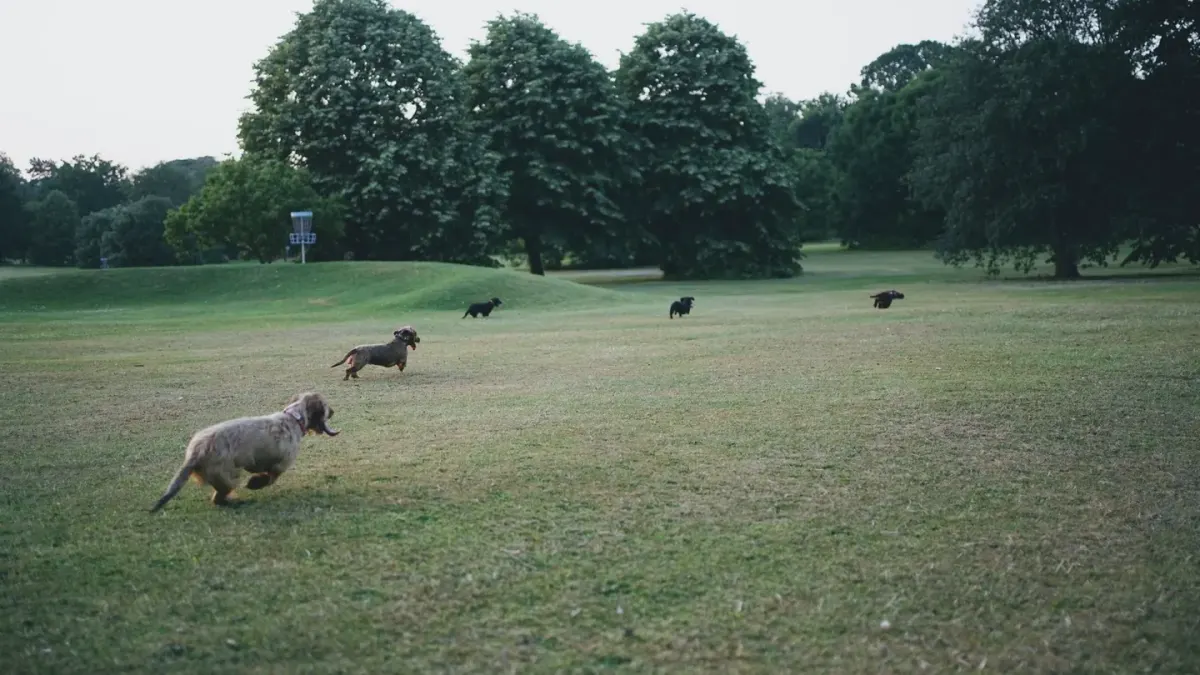
This five-minute daily drill turns dropped food from a grab into a check-in. Expectation first: most dogs do not learn to ignore food in one session, because scavenging is normal dog behavior that has paid off many times before.
I counsel owners to aim for better choices under low distraction first, then build toward the kitchen floor and the sidewalk. That is how impulse control may help support safety around grapes, chicken bones, pills, and trash, without turning meals into a standoff.
Picture a 10-month-old, 48-pound Labrador mix who vacuums the kitchen every night while dinner is prepped. Her owner is worried about counter-surfing and a recent stolen onion slice, and she is weighing whether to scold the grab or teach a replacement. Over three weeks of short work, the marker that changed was latency: by day 10 she paused two full seconds before moving toward a tossed kibble, then whipped her head back to her owner for the payoff. That pause is the whole decision made visible, and it is what we are going to rehearse on purpose.
The surprising limit: your dog is not being disobedient
Scavenging is a foraging system, not defiance. Dogs evolved to notice, sniff, snap, and swallow quickly, and every dropped crumb that was eaten strengthened that loop. Punishment after the fact does not rewire the loop because the physiology is already in motion: arousal rises, attention narrows, and the mouth moves before the thinking brain catches up.
This is why chasing, yelling, or prying the mouth open often backfires. The dog learns that dropped food predicts conflict, so next time she eats faster. Reward-based training works on a different mechanism. According to the American Veterinary Society of Animal Behavior, rewarding a wanted alternative builds more durable behavior with less stress than correction, which matters when we want a calm leave-it rather than a frantic one.
Myth versus reality: what “ignoring food” really looks like
The myth is a dog who never notices a dropped fry. The reality is a dog who notices, feels the pull, and chooses to disengage. That choice has parts: orient to the food, inhibit the lunge, reorient to you, and hold position until released.
If you only train the last part, the stay, the first part still fires at full speed. Our drill trains the middle of the chain, the turn-away, because that is where safety lives. The Merck Veterinary Manual describes this same principle when it recommends reinforcing an incompatible behavior rather than only stopping the unwanted one.
Early on I tried the classic mistake with a 3-year-old, 22-pound beagle mix who howled at crumbs during a toddler’s snack time. The owner, exhausted, kept saying “leave it” louder while holding a cookie over the dog’s nose as a bribe. By day 4 the dog had learned to stare harder at the lure and bark when it did not arrive, which looked like stubbornness but was really frustration. We had to scrap the hovering treat, lower the distraction to dry kibble on a chair leg, and pay for head turns instead of stares. The tradeoff was humbling: slower setup, faster learning.
The five-minute drill, step by step
Keep treats in two categories: low-value decoys for the floor and high-value pay for turning away. For many dogs that means kibble as the decoy and pea-sized chicken, cheese, or a lick of wet food as the paycheck. Work on leash indoors at first so management does the heavy lifting.
If your marker is rusty, rebuild it first with the same reward timing used in How to Teach a Dog to Sit: The Method That Actually Sticks — say “yes” the instant the dog disengages, then deliver from your pocket, never from the dropped pile.
Minute 0–1: set the baseline
Place one piece of kibble in your closed fist at the dog’s nose level. Let her sniff and nudge. The moment she pulls her nose even a quarter-inch away, mark and pay from the other hand. Repeat five or six times. You are teaching the rule that backing off, not mugging, makes food appear.
Minute 1–3: food on the floor, you in control
With your foot ready to cover, place a decoy on the floor two feet away while you stand upright. Cue “leave it” once, in a neutral tone. Most dogs will stare, step, or sniff. Wait. The second she glances away, hesitates, or shifts weight backward, mark and toss the high-value treat away from the decoy. Cover the decoy if she dives; no scolding, just reset.
Do four to six reps, then end with an easy fist rep so the session closes on success. That rhythm mirrors the short shaping blocks used for How to Teach a Rock-Solid Stay, where brief wins protect focus.
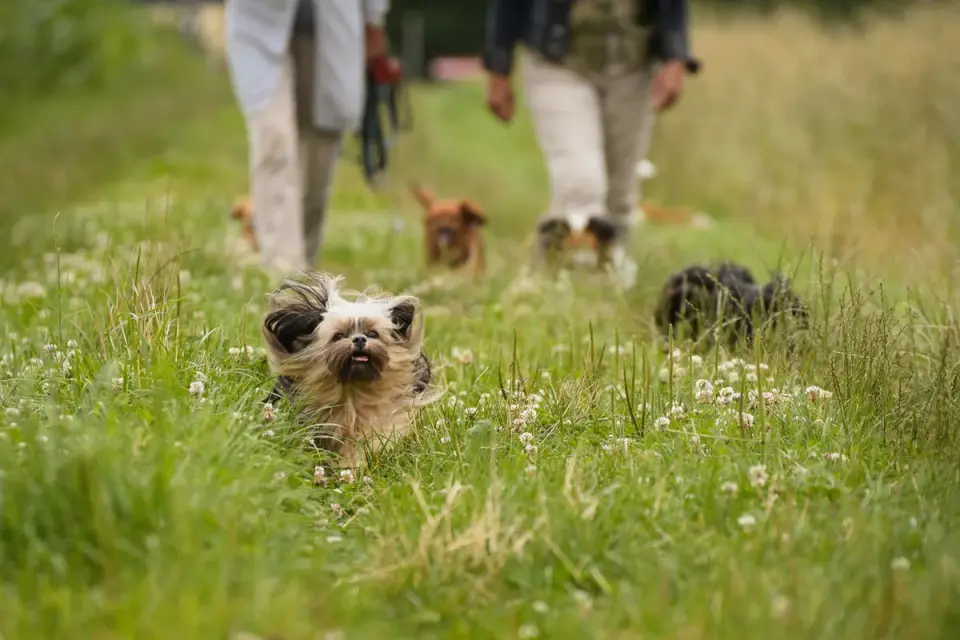
Minute 3–5: add the drop
Now make it real. Drop, do not toss, a decoy from waist height a few feet away. Dropping keeps arousal lower than bouncing food across tile. Cue once as it falls. Pay generously for the head snap back to you, even if it is slow.
Two rules keep this clean. Pay from your body, not from the floor, so “leave it” never means “wait, then eat that.” And vary your position: take one step sideways between reps so the dog learns the skill travels.
The edge case that changes the plan is the senior or anxious dog who guards rather than gulps. Last spring I coached an owner with a 9-year-old, 61-pound shepherd mix who had started freezing over dropped cheese three weeks after a dental cleaning. His body went still, his tail dropped, and a lip lift flashed when a grandchild reached down. We stopped floor drops entirely, switched to trading games at chest height, and referred for pain and resource-guarding help before resuming. For that dog, ignoring food was not an impulse problem but a stress signal, and pushing the drill would have made guarding worse. Guidance from Cornell University College of Veterinary Medicine makes the same point: adjust method and environment when fear or tension is driving the behavior.
How to progress without breaking it
Stay at each level until you get eight out of ten quick turn-aways.
Then raise only one variable at a time: tastier decoy, closer distance, longer wait, or a new room. If success drops below half, you raised too much. Go back to the last easy win.
Practice the same turn-away on walks by stepping on a boring leaf, cueing once, and paying the check-in. That transfer is why the kitchen drill pays off outside.
For dogs who already know party tricks but lose focus around food, interleaving a known cue can reset the brain. A quick spin from How to Teach a Dog to Spin (Without Losing the Behavior You Already Built) between food reps often lowers frustration without rehearsing the lunge.
Expect a realistic timeline. Puppies often show a pause within a week of daily reps. Adolescents and chronic scavengers usually need three to six weeks of consistent practice before they can ignore dropped cheese with a toddler nearby. Regression after a self-rewarded steal is normal; it does not erase progress.
Call your veterinarian promptly if gulping is sudden, frantic, or paired with weight loss, vomiting, coprophagia, or guarding that escalates. Medical causes, anxiety, and under-enrichment can all masquerade as poor manners.
Keep the baseline kind and the reps short. Five calm minutes a day will do more for that dropped grape than a lifetime of chasing ever could.
Sources
- Position Statements — American Veterinary Society of Animal Behavior