On this page
The checklist first
Before the explanation, here’s what actually works, in the order I’d tackle it:
- Block the jump-off, not just the jump-up. A ramp or set of steps needs to sit against the couch every single day, not just when you remember.
- Choose a ramp with a gentle rise. Look for roughly a 1 slope — steep ramps get skipped by achy dogs and used by no one.
- Add traction at the landing zone. A rug or foam mat where paws land absorbs the shock a jump doesn’t.
- Teach a “wait” or “off” cue so the dog pauses at the edge instead of launching.
- Get a pain and mobility check with your vet. Jumping off a couch is a small movement, but it’s often the first place stiffness shows up.
- Rethink furniture access altogether if the dog is declining fast — sometimes the couch isn’t worth the risk anymore.
Now let’s get into why each of those matters, and where I’d push back on the popular shortcuts.
Why the jump down is the dangerous part, not the jump up
Owners almost always call me about the leap onto the couch. They rarely think about the way down. That’s backwards. A dog pushing off the floor uses its own muscle to control the launch. A dog coming off the couch is dropping its full body weight onto two front legs, cold, with no warm-up, often from a dead sleep. For a dog with early hip or elbow osteoarthritis, that impact is exactly the kind of repeated micro-trauma that keeps a joint inflamed. I’ve had owners tell me their dog “seems fine” jumping up but “looks stiff” for a minute after coming down — that’s the tell, not a coincidence.
The 2022 AAHA Pain Management Guidelines for Dogs and Cats frame chronic joint pain as something that’s chronically underdiagnosed because dogs compensate quietly; a dog doesn’t limp until the joint is already inflamed. So the couch isn’t really the problem. The couch is where a joint issue that’s been building for months finally becomes visible.
The myth worth retiring: “he still jumps up fine, so he’s not there yet”
I hear this constantly, and I understand the logic — if the dog can still make the leap, surely the joints are okay. But jumping up and jumping down load the body completely differently, and a dog can absolutely manage one while struggling with the other. I’ve also had owners assume a ramp is only for dogs who can no longer jump at all, so they wait, and by the time they bring one in the dog has already developed a habit of avoiding the couch, or worse, a habit of still jumping despite the pain because it’s the only routine it knows. Waiting for the dog to “show you” it needs help skips the window where a ramp is easiest to teach.
A scene from my practice
I remember a 10-year-old Labrador named Otis, about 78 pounds, who came in because his owner noticed he’d started hesitating at the edge of the couch before jumping down — a pause that hadn’t been there six months earlier. It was late fall, hardwood floors throughout the living room, and Otis would land with an audible thud most evenings around 9 p.m. after his owner got up for a snack. The owner had tried a cheap folding ramp first, the kind sold as one-size-fits-all, and Otis refused to use it — too steep, too wobbly underfoot for a dog his size. We talked through what she was actually weighing: cost of a sturdier ramp, whether Otis would tolerate training at all at his age, and whether the couch access mattered enough to bother with. She landed on a wider, lower-angle ramp plus a runner rug at the landing spot, and within about three weeks Otis was using it on his own most nights, with the hesitation at the edge mostly gone.
Building the sequence that actually works
Start with the environment, not the training. Put the ramp in place before you try to teach anything — a dog won’t use equipment that shows up once and disappears. Anchor it against the couch so it doesn’t shift under weight, and add a mat or rug at the base so the transition from ramp to floor doesn’t happen on bare wood or tile.
Then shape the behavior in short sessions. Lure the dog onto the ramp with a treat at first, rewarding each step rather than the destination. Most dogs figure out the ramp in a handful of five-minute sessions across a few days. Don’t lift the dog onto the ramp to “show” them — that skips the learning and they’ll just jump around it later.
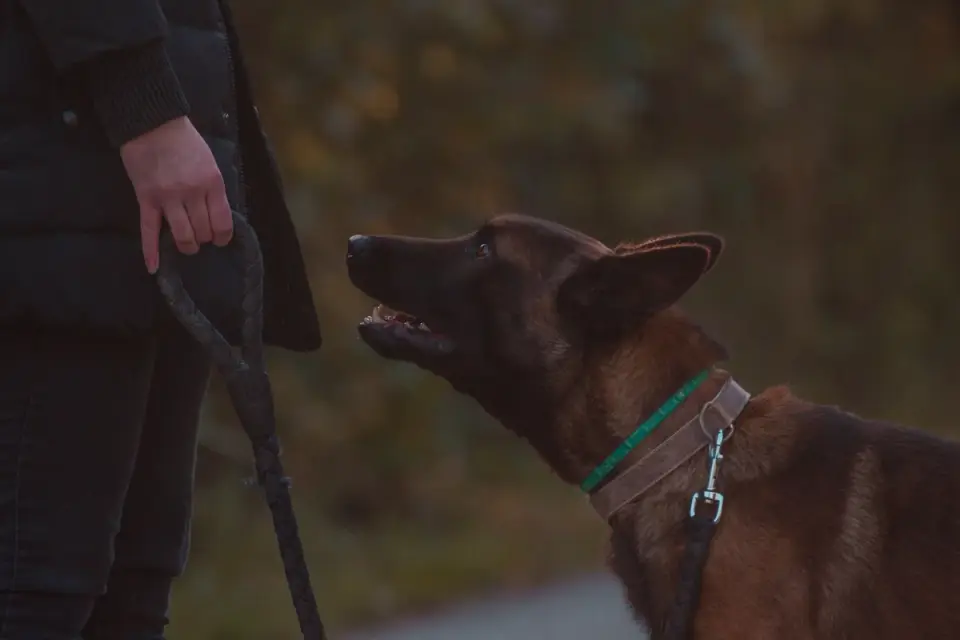
Layer in a verbal cue for pausing at the edge. “Wait” or “off” taught as a stationary behavior — the dog stops and looks at you before moving — gives you a tool for the moments the ramp isn’t in exactly the right spot, like a hotel room or a friend’s house.
Loop in your vet before you assume this is just aging. A dog who’s suddenly hesitant, slower to jump, or reluctant on stairs deserves a joint and mobility exam. Structure/function joint support, weight management, and a pain evaluation may help maintain comfortable movement, and catching stiffness early tends to make training the ramp go a lot faster because the dog isn’t actively avoiding pain while learning.
If you’re also managing a dog that’s stiff in the mornings or slow to warm up, it’s worth looking at the floor surfaces around the house — Best Flooring Choices for a Home With Senior Dogs covers what actually helps traction versus what just looks nice. And if the dog is also struggling with a food or water bowl at floor height, Are Raised Bowls Better for Senior or Arthritic Dogs? is a natural next read.
What to weigh if the couch isn’t worth it anymore
Here’s a short one: sometimes the right answer is to stop fighting for couch access at all.
For dogs with more advanced arthritis, a large breed with hip dysplasia, or a dog recovering from surgery, I’ll often recommend giving up the couch entirely in favor of a supportive floor bed at the same comfort level. It’s not a failure — it’s removing a daily risk that doesn’t need to exist. The Cornell University College of Veterinary Medicine: Cornell Riney Canine Health Center’s guidance on senior dog enrichment notes that comfort and safety modifications at home are part of supporting quality of life in aging dogs, not a downgrade from normal life. A dog that’s warm, supported, and near you on a floor bed hasn’t lost anything meaningful.
If your dog also runs cold at night on top of the joint stiffness, A Warming Setup for a Senior Dog That’s Always Cold walks through how to layer that in without overcomplicating the bedroom. And for households juggling a senior dog alongside a younger, more agile one, Small vs. Large Senior Dogs: How Home Needs Actually Differ is worth a look, since a ramp height and slope that works for a 15-pound terrier won’t work for a 70-pound Lab.
Where I land
The strongest counterargument I hear is that ramps are unnecessary fuss for a dog who’s “still getting around fine.” I don’t buy it, because the damage from repeated jump-down impact is cumulative and mostly invisible until it isn’t. I’d rather train the ramp early, while the dog is still flexible and motivated to learn, than wait for a limp to force the issue. The evidence on chronic joint pain in dogs is honest about how quietly it builds, and day-to-day practice backs that up: the dogs who adapt to a ramp easiest are the ones who start before they actually need it.
Bottom line: put the ramp in today, not after the limp shows up.
Frequently asked questions
Will my senior dog forget how to jump if I train a ramp?
No — most dogs simply learn a preference for the easier option. Keeping the ramp in place consistently is what makes the new habit stick, not any loss of ability.
How steep should a couch ramp be for an arthritic dog?
Look for a gentle incline, roughly a 1:4 rise-to-length ratio, wide enough for the dog's stance and stable enough that it doesn't shift underfoot.
Sources
- 2022 AAHA Pain Management Guidelines for Dogs and Cats — AAHA
- Senior dog enrichment — Cornell University College of Veterinary Medicine