On this page
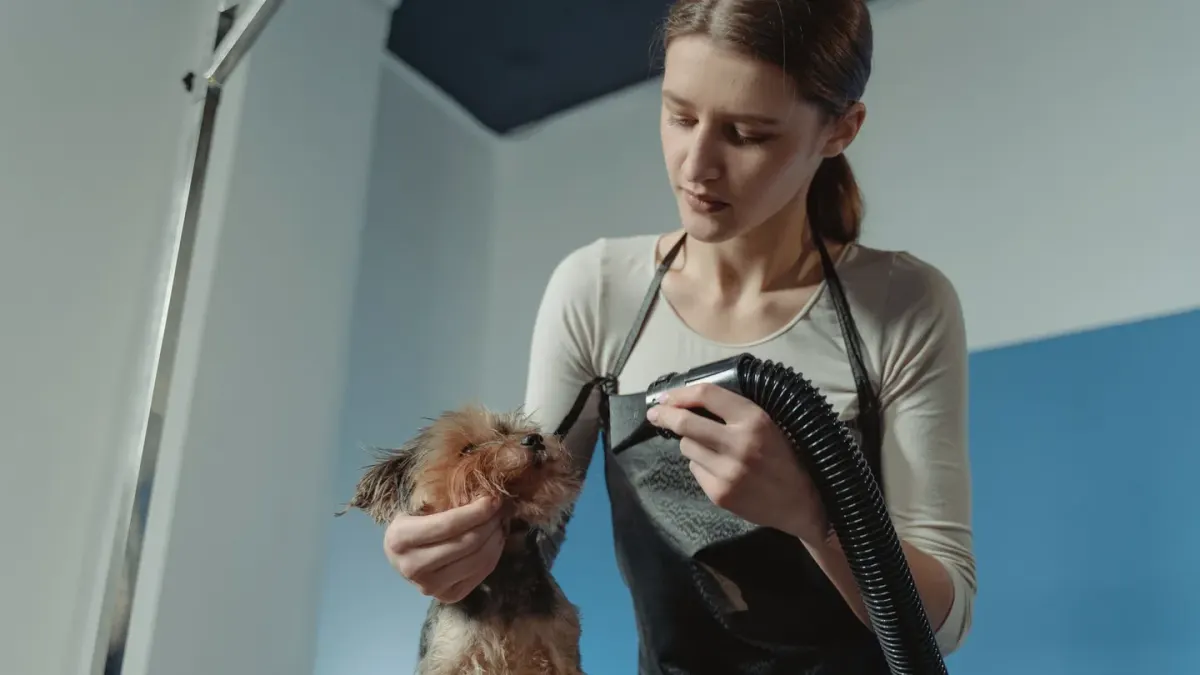
Sixty to ninety minutes. That’s roughly how long a dog spends inside a mobile grooming unit for a full service, start to finish, compared with the half-day drop-off that’s standard at a lot of salons. That single number is the whole argument in miniature, and it’s also where most owners stop thinking too soon.
I’ve been asked “mobile or salon?” more times than I can count, usually by owners standing in my exam room holding a leash attached to a dog who just failed nail trims for the third groomer in a row. My answer is never a clean either/or. It depends on what’s actually driving the question — is it your dog’s anxiety, your calendar, or your wallet? Those three problems have three different right answers, and conflating them is how people end up paying extra for a service that doesn’t solve what’s actually wrong.
The myth: mobile is just a fancier, pricier version of the same service
The common assumption is that mobile grooming and salon grooming are the same haircut with different delivery, and you’re paying a premium for convenience. That’s not quite right. The bigger difference is environmental. In a mobile unit, your dog is the only animal on board — Woofies notes that mobile grooming removes the sitting-and-waiting-in-a-cage phase entirely, since a dog goes in, gets groomed, and comes back out, often within one to two hours. A salon, by contrast, usually involves drop-off, a queue with other dogs barking nearby, and pickup hours later. For a calm, social dog, that queue is mostly background noise. For a dog who already struggles with novelty, it’s a stressor stacked on a stressor.
I saw this play out clearly with a nine-year-old Cavalier King Charles Spaniel named Biscuit, about eighteen pounds, whose owner had been driving her to the same strip-mall salon for six years without issue. Then Biscuit developed early osteoarthritis in one hip. The owner first noticed it on a Tuesday morning when Biscuit hesitated at the porch steps she’d bounded down for years. Within a few months, the car ride to the salon — normally a non-event — started ending in trembling and a tucked tail by the time they parked. Loading and unloading a stiff, anxious senior dog twice in one afternoon had quietly become the hardest part of her grooming day. We switched her to a mobile groomer who came to the driveway. Nothing about the haircut changed. What changed was removing two car transfers and a waiting room from a dog whose tolerance for novelty had shrunk along with her comfort on stairs.
What each option is actually built for
Mobile grooming is built around one dog getting undivided attention in a controlled, familiar-adjacent space. That’s a real advantage for dogs who are noise-sensitive, elderly, recovering from injury, or reactive to other animals. It also solves a logistics problem for owners who are homebound, working from home, or simply don’t have a way to transport a large or difficult dog. The tradeoff is capacity and cost: a single groomer working out of a van can only see so many dogs a day, and Revelation Pets points out that mobile services typically run 15–40% more than a comparable salon appointment for that reason.
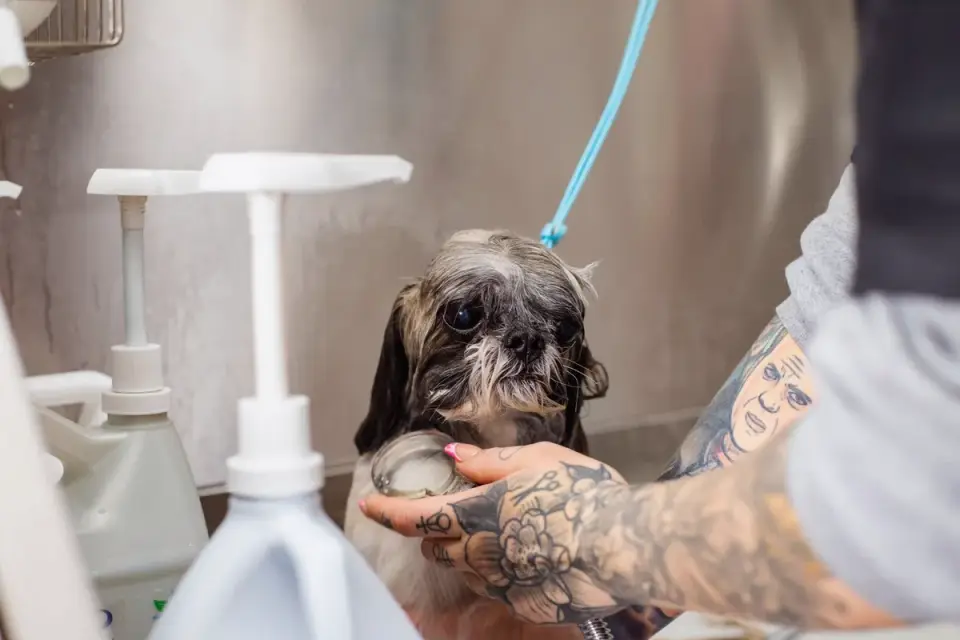
Salons are built around throughput and infrastructure. Multiple groomers, industrial dryers, backup staff if a dog needs an extra set of hands, and — often — more availability if your regular groomer is out. That infrastructure is also why salons tend to be the more affordable option per visit. The cost is environmental: more dogs, more noise, more transitions, and a dog who has to tolerate being one of several animals cycling through the same space in a day.
Neither setup is inherently better for coat or skin outcomes. The technique matters more than the location. Regular grooming — wherever it happens — supports skin health through routine bathing, coat maintenance through detangling and brushing, and early detection of lumps or irritation during hands-on handling, according to the Why It’s Worth Having Your Dog Groomed Professionally: American Kennel Club. That detection piece is genuinely underrated. A groomer’s hands go over every inch of a dog’s body on a schedule most owners don’t match at home, which means a new lump, a hot spot, or an early ear infection often gets flagged there first.
A sequence that works in real households
Start by naming the actual problem before you name the format. If your dog is a wreck in waiting rooms, gets carsick, or is medically fragile, mobile is solving a real issue and probably worth the premium. If your dog does fine at drop-off and budget or scheduling flexibility matters more, a salon likely serves you just as well for less.
From there:
- Call two or three options, mobile and salon, and ask directly about experience with your breed’s coat type — a What to Ask Potential Groomers Before You Hand Them Your Dog: Certified Master Groomer credential from the National Dog Groomers Association of America is a reasonable proxy for training, whichever format they work in.
- Ask what happens if your dog needs to be muzzled, sedated, or handled with extra caution. A mobile groomer working solo has less backup than a salon team if a dog turns out to be more work than expected.
- Book a short trial service — a nail trim or bath, not a full groom — before committing to a full-service appointment with a new provider in either format.
- Watch your dog’s body language during and after that first visit: panting at rest, avoidance of the car or the door, or a change in appetite that evening are all worth noting.
If you’re still building your dog’s daily routine around grooming, a broader look at the everyday basics is a good starting point before you specialize into format decisions like this one.
Where I land
I don’t think there’s a universal right answer here, and I’d be skeptical of anyone who tells you there is. My honest bias, after years of watching anxious and senior dogs specifically, leans toward mobile grooming for dogs who show clear stress around transport or waiting rooms — the cost premium buys something real for that dog. For a social, easygoing dog without mobility or anxiety issues, I don’t think the extra cost of mobile grooming is buying much beyond convenience for the owner, and a good salon serves that dog just as well.
The honest caveat: I’m a veterinarian, not a groomer, and my read on this is shaped by the stress and mobility cases that walk into my exam room — not by coat-technique expertise. For questions about a specific cut, coat condition, or technique, a Certified Master Groomer is the better authority than I am.
A related decision a lot of new owners are working through around the same time is how a young dog handles new environments generally — our week-by-week potty training approach touches on the same novelty-tolerance issues that show up at a first grooming appointment.
Bottom line: match the format to the specific stressor you’re trying to solve — transport anxiety and mobility point toward mobile, budget and scheduling flexibility point toward a salon.
Frequently asked questions
Is mobile dog grooming worth the extra cost?
It depends on what's driving the decision. For dogs with real transport anxiety, mobility limitations, or reactivity around other animals, the premium buys a genuinely calmer experience. For an easygoing dog who tolerates a waiting room fine, a traditional salon usually delivers the same grooming quality for less.
Does grooming format affect coat or skin health outcomes?
Not meaningfully. Technique, product choice, and consistency matter more than whether the grooming happens in a van or a shop. Regular hands-on grooming in either format also helps catch new lumps or skin issues early.
How do I find a qualified groomer, mobile or salon?
Ask about their training and experience with your dog's specific coat type, and look for a Certified Master Groomer credential from the National Dog Groomers Association of America as a marker of formal training.
Sources
- Mobile Grooming: Pros and Cons — Revelation Pets
- 4 Benefits of Mobile Dog Grooming — Woofies
- Why It's Worth Having Your Dog Groomed Professionally — American Kennel Club
- What to Ask Potential Groomers Before You Hand Them Your Dog — American Kennel Club