On this page
- The checklist to run before anyone’s paws hit the ground
- The myth: any two friendly dogs will figure it out
- The reality: match and setting decide more than personality does
- A same-day sequence for the actual meeting
- When the match doesn’t work, don’t force a second date
- A less obvious wrinkle: the friendly dog who plays too rough for its own vet visit
- Where this leaves you before the next playdate
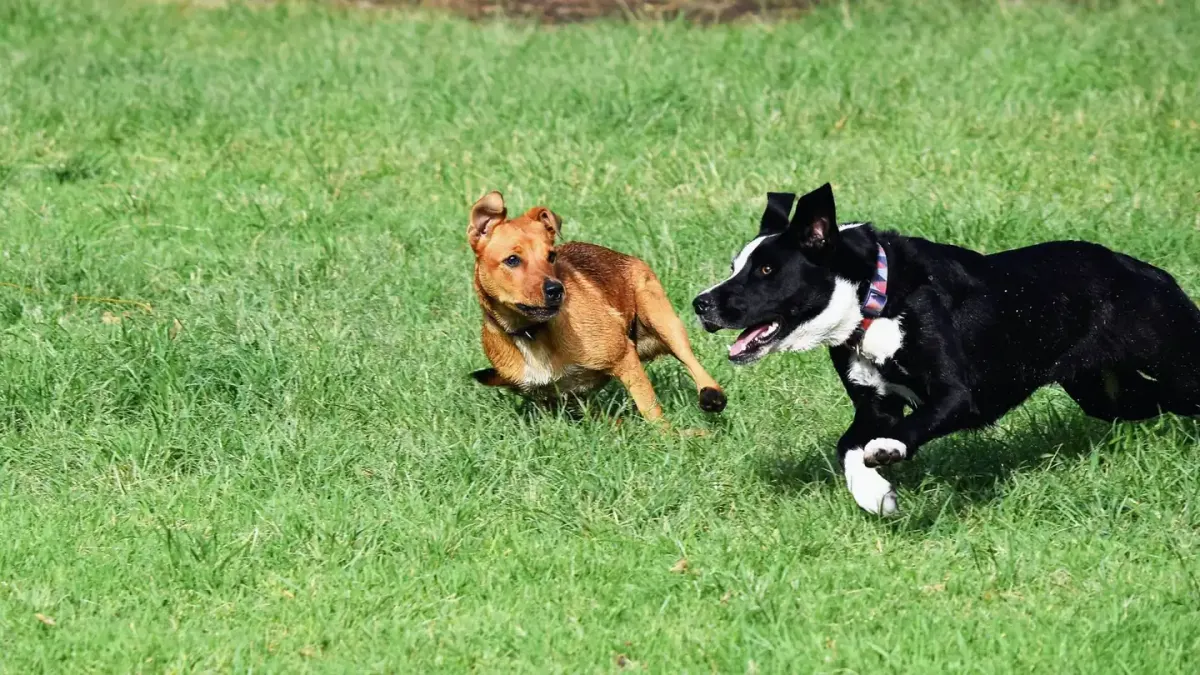
Most owners plan a playdate the way they’d plan a coffee catch-up: pick a time, pick a place, let the dogs sort it out. That’s the part I’d change first. Dogs don’t negotiate the way people do, and the setup — who meets whom, where, and for how long — decides more of the outcome than anything that happens once they’re off leash.
The checklist to run before anyone’s paws hit the ground
- Match energy and play style, not just size — a wrestler paired with a chaser burns out fast and can tip into frustration.
- Pick neutral territory for the first meeting; a dog’s own yard or living room adds a resource-guarding layer you don’t need on day one.
- Confirm vaccination status with the other owner, especially if either dog is a puppy still finishing the core series.
- Keep the first session short — 15 to 20 minutes is plenty to gauge fit.
- Have both leashes on and slack for the greeting, then drop them once body language looks loose and mutual.
- Know your dog’s stress signals before you go, not while you’re watching them happen.
- Plan an exit — a place to walk the dogs apart, cool down, and end on a calm note rather than pushing past that point.
Each of those earns a longer look, because the checklist only works if you understand why it’s on there.
The myth: any two friendly dogs will figure it out
The assumption that “friendly” dogs sort themselves out on instinct is the single most common reason playdates go sideways. Friendliness toward people doesn’t predict how a dog reads canine body language under novel social pressure, and even dogs with good social skills can misfire when the match is wrong — a bull-in-a-china-shop puppy crashing into an older dog’s space, or two dogs with identical high-arousal chase drives who escalate each other past the point either would stop alone.
The reality: match and setting decide more than personality does
What actually predicts a good playdate is compatibility on three axes — size, play style, and life stage — plus a setting that doesn’t stack extra stressors on top of a first meeting. A young, bouncy dog and a slower senior can still play, but only in short, supervised bursts with an easy way for the older dog to disengage. Two dogs who both want to body-slam and wrestle are a much safer pairing than a wrestler and a dog who prefers chase-and-keep-away, because mismatched play styles are where frustration barking turns into something sharper.
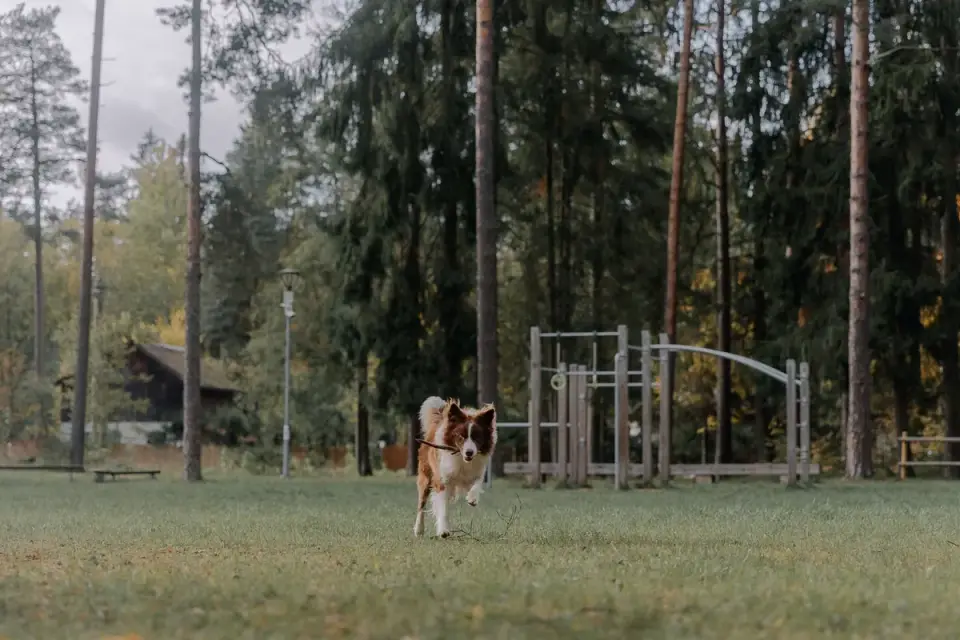
I think about this every time a client describes their 7-month-old Labrador as “just wants to play with everyone.” At that age the dog is still finishing the vaccination series the AAHA outlines in its life stage guidelines, and its idea of play is often full-body, no-brakes enthusiasm that an adult dog reads as rude. The owner’s instinct is to let the puppy “learn from” an older, more tolerant dog. Sometimes that works. But by minute 12 of one such meetup, the older dog’s tail had gone stiff and his lip lift was barely visible under his beard — the kind of signal that’s easy to miss if you’re mid-conversation with the other owner instead of watching the dogs.
A same-day sequence for the actual meeting
- Meet on leash, moving, not stationary. Walk parallel for a minute or two before any nose-to-nose greeting — a moving approach reads as less confrontational than two dogs squaring off face to face.
- Keep greetings under three seconds at first. Sniff, separate, reassess. A dog that stays loose and soft-eyed after a short greeting is a dog ready for more.
- Drop the leashes once body posture is loose — weight distributed evenly, tails at a neutral height, play bows if you see them.
- Interrupt every three to five minutes with a quick recall or sit, then release them again. This keeps arousal from climbing unchecked and gives both dogs a chance to shake off and reset.
- Watch for the freeze-then-explode pattern — a sudden stillness followed by a hard stare is a more reliable warning than growling, which the ASPCA notes is actually a dog communicating discomfort rather than one being “bad.”
- End before either dog is tired and cranky. A playdate that ends on a good note builds toward the next one; one that runs until a dog snaps sets you both back.
That sequence works because it never asks either dog to guess what happens next.
When the match doesn’t work, don’t force a second date
I once consulted on a case that looked textbook-simple on paper: two 45-pound mixed breeds, both spayed females, both described by their owners as “great with other dogs.” Three weeks of biweekly meetups in the same fenced yard, and each session got tenser instead of easier — more body-blocking, less loose play, until one dog started guarding the gate itself. The owners had assumed familiarity would smooth things out. Instead, repeated exposure without real compatibility just rehearsed the tension. Not every mismatch resolves with more practice, and knowing when to stop trying is as much a skill as knowing how to start.
A less obvious wrinkle: the friendly dog who plays too rough for its own vet visit
Here’s the edge case owners rarely plan for. A muscular 60-pound adolescent dog can play at an intensity that’s genuinely fine for another dog his size and totally inappropriate for a recovering patient. If your dog is six weeks out from an orthopedic procedure or managing a joint issue, “playdate” needs a different definition — parallel leashed walking, maybe, instead of off-leash wrestling — even if the dog feels ready. Weighing what a body can realistically handle during recovery matters as much here as it does with any recovery plan: enthusiasm isn’t the same as readiness, and a setback from overexertion costs far more time than a few extra weeks of caution would have.
Where this leaves you before the next playdate
The dogs don’t need you to referee every second. They need the setup — the match, the space, the length of the session — to be right before they ever meet, and they need you watching for the quiet signals instead of waiting for the loud ones. The AVSAB position statement on puppy socialization makes the case that early, well-managed exposure to other dogs shapes long-term social confidence — which is exactly why getting the first few playdates right is worth the extra planning. If a meetup does go wrong despite good prep, that’s useful information about the match, not a verdict on either dog. Adjust the pairing, shorten the sessions, or try a different setting next time, and most dogs get better at this with practice.
If you’re building playdates into a broader routine, Dog Park Etiquette Every Owner Should Know covers the group-setting version of these same principles, and How to Find a Dog-Friendly Patio That’s Actually Good for Your Dog is a useful next step once your dog handles one-on-one meetups calmly. For dogs who do best with structured, high-energy outlets instead of open play, Canicross: Running Connected to Your Dog is worth a look, and owners managing a slower recovery period may find Cold-Weather Activities to Keep Your Dog Active useful for lower-impact options.
Frequently asked questions
What's the right age to start dog playdates?
Puppies can begin carefully managed, small-group socialization once they've had their first vaccines and dewormer, typically around 7 to 8 weeks, following the guidance in the AVSAB's position statement. Full off-leash play with unfamiliar dogs is safer once the vaccine series is further along.
How long should a first playdate last?
Keep it short — 15 to 20 minutes is usually enough to see whether the match works. It's easier to end on a good note and schedule another one than to let a good playdate run long enough to turn sour.
What are the early warning signs I should watch for?
A sudden freeze followed by a hard stare, lip lifting, stiff tail carriage, and repeated body-blocking are more reliable warnings than growling — growling itself is communication, not misbehavior, per the ASPCA.
Sources
- Puppy Socialization Position Statement — AVSAB
- Dog Bite Prevention — ASPCA
- 2019 Canine Life Stage Guidelines — AAHA