
On this page
Is the pavement actually too hot, or does it just look hot?
I get asked this constantly in the exam room during July and August: “It’s only 85 degrees out, does that really matter?” It matters more than owners expect. Asphalt and concrete absorb solar radiation and hold heat, so the surface temperature can run well above the air temperature reading on your phone. According to the American Veterinary Medical Association, avoiding hot surfaces like asphalt is one of the core warm-weather safety steps for pets, precisely because those surfaces can burn paw pads even when the day doesn’t feel unbearable to a person standing upright in shoes.
The gap between air and surface temperature is the part most people underestimate. On an 86°F day, asphalt can reach roughly 135°F, and skin damage on a hot surface can start in about 60 seconds of contact. That’s not a hypothetical - it’s the physics of a dark, dense material sitting in direct sun for hours. Grass and dirt stay dramatically cooler under the same sun because they reflect and absorb heat differently.
A myth worth retiring: “if my dog isn’t limping, the pavement is fine”
Here’s the myth I want to correct, because it leads owners to walk right past a real hazard: the idea that you’ll know pavement is too hot because your dog will refuse to walk on it. In my practice, that’s often not how it plays out. Dogs are motivated - by a squirrel, another dog, the simple momentum of the walk - and many will keep trotting through pain rather than stop. Paw pads are thick, keratinized tissue, which makes them tougher than bare human skin, but “tougher” is not “heatproof.” By the time a dog is visibly limping or lifting a paw, thermal damage may already be underway.
The reality is that pavement heat needs to be checked proactively, not diagnosed after the fact by watching your dog’s gait. That’s the whole basis of the hand test: press the back of your hand flat against the pavement and hold it there. If you can’t comfortably keep it down for seven to ten seconds, the surface is too hot for a dog to walk on barefoot, according to guidance summarized by the American Animal Hospital Association. It takes fifteen seconds, and it’s more reliable than eyeballing the sidewalk or trusting your dog to self-report discomfort.
I think back to a Labrador mix I saw one August, about four years old and sixty-five pounds, who’d been on his normal 4 p.m. loop around the block - the same route, same time, for months. The owner noticed him pausing at each driveway apron instead of his usual steady pace, then favoring his front-right foot by the time they got home twenty minutes later. The pads on that foot were visibly redder than the others, slightly shiny, tender to the touch. Nothing dramatic, no open wound - but enough that we shifted his walk time to early morning and told the owner to watch for blistering over the next 48 hours, since pavement burns can take a day or two to fully show themselves.
What actually happens to a burned paw pad
A pavement burn isn’t just redness that fades by dinner. According to PetMD, signs of paw pad burns include limping, licking or chewing at the feet, pads that look darker or redder than normal, and in more severe cases blisters or missing sections of pad tissue. Because pads are exposed to dirt and bacteria with every step, even a moderate burn carries real infection risk if it isn’t kept clean.
If you suspect your dog’s paws have been burned, get them off the hot surface immediately and rinse the pads with cool - not ice-cold - water for several minutes. Ice can restrict blood flow to already-stressed tissue, which isn’t what you want. Keep your dog off the affected foot as much as possible, watch closely for blistering, discharge, or a foul smell over the next day or two, and call your vet if you see any of those signs or if your dog is clearly favoring the paw. This is home first aid, not a substitute for a veterinary exam when a burn looks moderate to severe.
A sequence that actually works in daily life
Prevention here isn’t complicated, but it does require building it into your routine rather than reacting in the moment:
- Test before you step outside. Do the seven-second hand test on your actual walking route - driveway, sidewalk, parking lot - not just your lawn.
- Shift your timing. Early morning and after sunset are almost always cooler underfoot than midday, even on the same forecasted high.
- Choose the surface, not just the route. Grass, dirt trails, and shaded paths stay significantly cooler than open asphalt or concrete in direct sun.
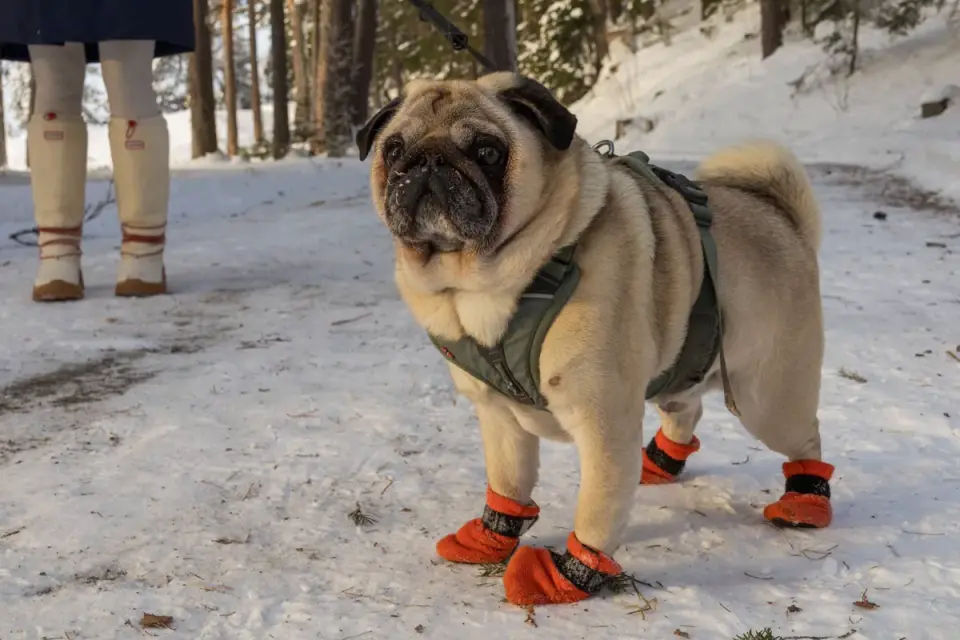
- Consider paw protection for genuinely hot conditions. Dog boots or a paw wax/balm can add a barrier layer for dogs who must cross hot surfaces regularly, though fit and your dog’s tolerance for wearing them both matter.
- Check paws after every summer walk. Look between the toes and across each pad for redness, heat, or tenderness, especially in dogs who don’t reliably show pain.
This is also where I’d point you toward related routine care - a dog who tolerates having his paws handled for a boot fitting is usually a dog whose nails and pads get checked regularly too. If you’re building out that broader at-home routine, our guides on choosing a nail grinder and deciding between at-home grooming and a professional groomer cover the adjacent habits that make paw checks feel routine instead of like a struggle.
Where I land
I’ll be honest about where the evidence is thin: there isn’t a rigorous published study measuring exactly how many seconds of contact at exactly which temperature causes a first-degree versus second-degree pad burn in dogs. Most of what we rely on - the hand test, the “if it’s too hot for your hand” heuristic - comes from consistent veterinary and animal-welfare organization guidance rather than a single controlled trial. That’s a real limitation, and I won’t pretend otherwise.
What I do trust is the physics of surface heat absorption and what I see clinically every summer: dogs who walk on hot asphalt at midday come in with red, tender pads far more often than dogs whose owners shifted to morning walks and grass routes. Given that asymmetry - low cost of the hand test, real cost of a burn - I land firmly on the side of testing the pavement every time, not just on days that feel obviously scorching. Sixty-five degrees can still mean hot concrete in direct August sun. The habit takes fifteen seconds. The alternative is a limping dog and a vet visit.
Frequently asked questions
How hot does pavement need to be to burn a dog's paws?
Damage can start around 125°F, a temperature asphalt can reach when air temperatures are only in the upper 70s to mid-80s, since dark, dense surfaces absorb and hold heat well beyond the surrounding air temperature.
What's the fastest way to check if pavement is safe?
Press the back of your hand flat on the surface and hold it for seven to ten seconds. If it's too uncomfortable to keep your hand there, it's too hot for your dog's bare paws.
My dog didn't limp during the walk - could the pavement still have hurt her paws?
Yes. Many dogs stay motivated enough by their surroundings to keep walking through discomfort, so absence of limping isn't reliable proof the surface was safe. Check pads after every summer walk regardless.
Sources
- Warm weather pet safety — American Veterinary Medical Association
- Walking on Sunshine: How to Protect Your Pet's Paws This Summer — American Animal Hospital Association
- Paw Pad Burns on Dogs: What to Do — PetMD