
On this page
Most owners chase the thermostat when a dog seems cold. That’s usually the wrong instrument to trust.
Air temperature two feet off the ground and air temperature where a fourteen-pound senior dog is actually lying are two different numbers. Drafts, cold floors, and radiant heat loss to an exterior wall can drop the effective temperature a dog experiences by several degrees below what the thermostat reads, and small or senior dogs feel that gap first because they have less muscle mass to generate heat and often less fat to insulate against it.
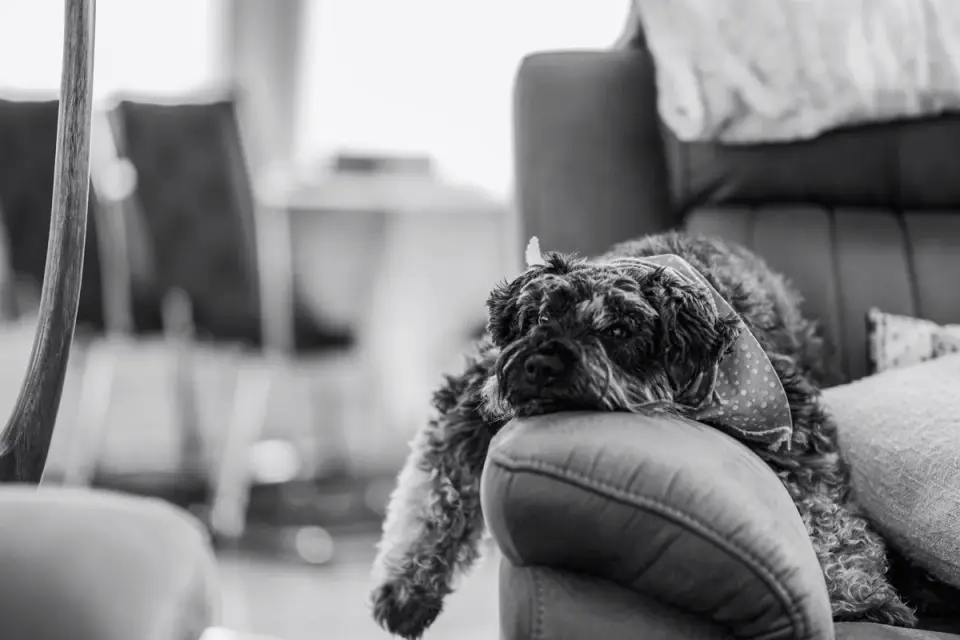
I had a client last winter with a nine-year-old Chihuahua mix, about eight pounds, who’d started refusing her bed by the living room window around early December. The owner assumed it was arthritis acting up. It turned out the dog’s bed sat directly under a single-pane window with a leaky sash, and the floor register nearby was pushing cold air across that exact spot every time the furnace cycled off. Once we moved the bed six feet to an interior wall and added a draft snake at the window sill, the dog went back to sleeping there through the night instead of pacing and resettling every hour. Nothing about her joints had changed. The room had.
Why the thermostat lies to you
A furnace thermostat measures air temperature at one point, usually chest height on a wall, in a room with normal air circulation. It says nothing about radiant heat loss, which is the process by which a dog’s body loses warmth to a colder nearby surface — a window pane, an exterior wall, an uninsulated floor — even if the air itself is at a comfortable reading. Small and senior dogs, who spend more time lying still and low to the ground than pacing or playing, are exposed to that radiant loss for longer stretches. The American Veterinary Medical Association: AVMA notes that seniors, dogs with arthritis, and short-legged or thin-coated dogs have less cold tolerance than the general dog population, which is exactly the group most likely to be lying against a cold floor or wall rather than moving around it.
Senior dogs carry an added disadvantage. Reduced muscle mass means reduced thermogenic capacity — muscle tissue is one of the body’s primary heat generators, and older dogs simply have less of it working for them. That’s part of why the AAHA flags small-breed and senior dogs as needing extra consideration in cold weather, including shorter outdoor exposure and closer monitoring indoors.
The myth worth retiring: “the room is heated, so the dog is fine”
This is the assumption I push back on most. A heated room can still have cold zones, and dogs — especially small ones who bed down on the floor rather than furniture — find those zones reliably. Common culprits I see in client homes:
- A bed pushed against an exterior wall, especially a corner where two exterior walls meet
- Uninsulated hardwood, tile, or laminate flooring with no rug or pad underneath
- A window with a failing seal, visible as a faint curtain sway on a still day
- A floor-level heating or cooling vent aimed across a sleeping area
- A door with a gap under it leading to an unheated hallway, mudroom, or garage wall
None of these show up on a wall thermometer. They show up in where the dog chooses — or refuses — to sleep.
A sequence that actually finds the problem
Work through this in order rather than guessing at a fix first.
1. Do a hand test at dog height
Kneel or sit where the dog’s bed is and hold the back of your hand a few inches above the floor for thirty seconds. If you feel a cool current or the floor itself feels noticeably colder than the air around your face, you’ve likely found a draft or a radiant cold surface.
2. Check the obvious draft points
Run your hand along window sashes, door frames, and baseboards near exterior walls. A flickering candle or a strip of tissue held near the frame will show air movement a hand alone might miss.
3. Relocate before you insulate
Moving the bed to an interior wall, away from windows and floor vents, solves more of these cases than any product does. This is the step owners skip because it feels too simple, and it’s the one I’d defend first if I had to pick just one fix.
4. Add a floor barrier
A rug, orthopedic pad, or folded blanket between the dog and a cold hard floor cuts conductive heat loss — the loss that happens through direct contact rather than air movement. This matters even in a room that otherwise feels warm.
5. Seal what’s actually leaking
Draft snakes, removable window film, and door sweeps address the air-movement problem specifically. Save this step for after you’ve confirmed where the draft is, not before.
6. Reassess after a week
Watch whether the dog returns to the spot, avoids it, or seems more settled overnight. A dog’s own behavior is a better instrument than the thermostat for judging whether the fix worked.
Where I land
I’ve watched enough of these cases play out that I no longer trust a room’s reported temperature to tell me whether a small or senior dog is actually warm enough. The hand test and a week of watching where the dog chooses to sleep will tell you more than a thermostat reading ever will. The strongest counterargument I hear is that a heated home shouldn’t need this kind of troubleshooting — and in a newer, well-sealed house, it often doesn’t. But most of the homes I see are older builds with real thermal weak points, and a small or senior dog with reduced heat-generating capacity will find every one of them before you do. If a dog’s sleep or comfort doesn’t improve after addressing drafts and cold floors, or if you notice shivering, reluctance to move, or stiffness that doesn’t ease with warmth, that’s worth a conversation with your veterinarian rather than another blanket.
For dogs who stay cold even in a draft-free room, a warming setup built around the dog’s specific needs is the next step, and it’s worth understanding how small and large senior dogs’ home needs actually differ before you invest in gear. Flooring choice also plays a bigger role than most owners expect — see our guide to flooring for a home with senior dogs — and if joint comfort is part of the picture, heated beds for arthritic dogs are worth comparing against a simple relocation-and-insulation approach first.
Frequently asked questions
Is a heated room ever still too cold for a senior dog?
Yes. Air temperature and the temperature a dog experiences at floor level near a window, vent, or exterior wall can differ by several degrees, so a room can read warm while a dog lying in a draft or against a cold surface is still losing heat.
How can I tell if my dog's bed is in a draft without special equipment?
Kneel at bed height and hold the back of your hand near the floor for about thirty seconds, or watch a strip of tissue near window and door frames for movement. A cool current or a noticeably colder floor surface points to a draft or radiant cold spot.
Should I move my dog's bed or add heating equipment first?
Relocation first. Moving a bed away from exterior walls, windows, and floor vents solves the problem for many dogs without any added equipment, and it makes any heating aid you add afterward more effective.
Sources
- Cold weather animal safety | American Veterinary Medical Association — American Veterinary Medical Association
- Cold Weather Pet Safety Tips for Dogs and Cats — AAHA