On this page
- The Trait That Actually Predicts a Good Running Dog
- Puppies: Why the ‘Best Running Breed’ Still Isn’t Ready
- Young Adults: Building the Aerobic Base Without Rushing It
- Adult Dogs in Their Prime: The Breeds That Go the Distance
- Breeds and Body Types to Approach With Real Caution
- A Same-Day Starter Sequence for New Running Partners
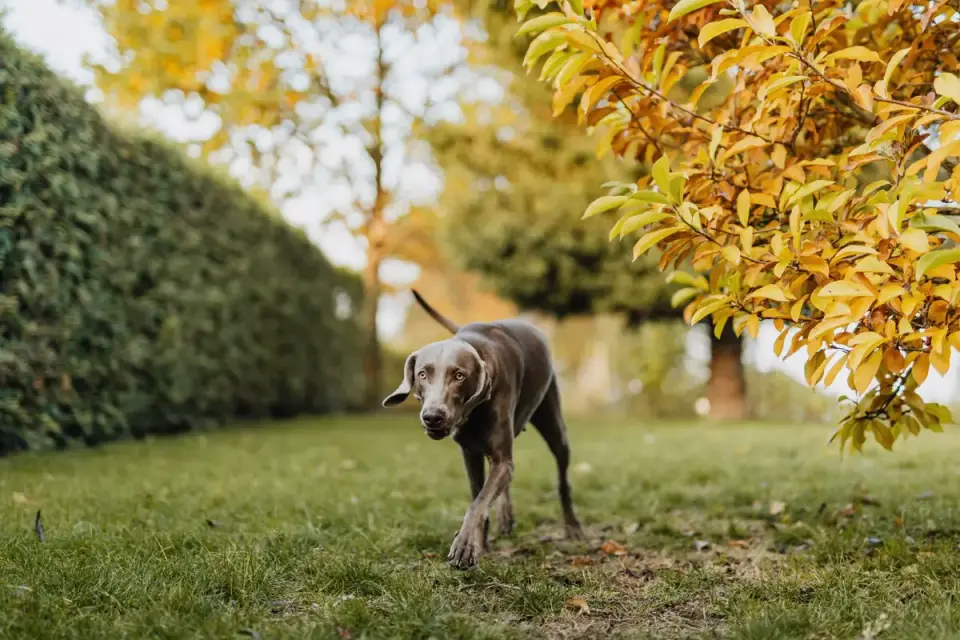
I once watched a client bring a young Weimaraner into the clinic parking lot practically towing her down the sidewalk, tail high, tongue already out — a dog who’d clearly decided the appointment could wait until after a sprint. She’d read that Weimaraners were ‘born to run’ and figured the breed name was the whole plan: buy the athletic dog, lace up, done. What she hadn’t planned for was that this particular dog was nine months old, still finishing growth in his long legs, and that eagerness is not the same thing as readiness. That gap — between what a breed is supposed to do and what an individual dog’s body can actually handle on a given day — is where most running partnerships go right or wrong, and it’s the piece owners skip when they’re shopping by reputation instead of by structure.
The Trait That Actually Predicts a Good Running Dog
Here’s the myth: a ‘running breed’ is a fixed list, and any dog on it will make a reliable training partner. The reality is closer to physiology. The dogs that hold up over miles tend to share three things — a moderate muzzle length that supports efficient panting, a lean-to-moderate body condition without excess load on the joints, and genuine aerobic drive rather than short bursts of intensity. According to the Best Dog Breeds for Running and Endurance: American Kennel Club, breeds built for stamina rather than sprinting — herding dogs like Border Collies and Australian Shepherds, pointing breeds like Vizslas and German Shorthaired Pointers, and all-around athletic types like Weimaraners — tend to sustain steady mileage best. Sighthounds such as Greyhounds are explosive but often prefer shorter, faster efforts over distance work. None of that is a guarantee for any individual dog; it’s a starting probability, and your own dog’s joints, weight, and enthusiasm still get the final vote.
Puppies: Why the ‘Best Running Breed’ Still Isn’t Ready
A young dog’s skeleton is under construction. The long bones grow from cartilage plates near each end, and those plates don’t finish hardening into solid bone until well after a dog looks and acts full grown. The Puppy Growth Chart: When Does My Puppy Finish Growing?: American Kennel Club’s puppy growth guidance notes that toy breeds may close out by six to eight months, while large and giant breeds can carry open growth plates into the second year of life. Repetitive impact on an unfinished joint — the kind road running or hard-surface jogging delivers — is exactly the load those plates are least equipped to absorb. I tell owners to treat this stage as conditioning the mind and the habit, not the mileage: leash manners, loose walks on grass, and free play in the yard build the partnership without asking bone to do a job it isn’t finished forming for.
Young Adults: Building the Aerobic Base Without Rushing It
Once growth plates have closed — generally 14 to 18 months for medium and large breeds, later for giants — you can start layering in structured runs, but gradually. This is the stage where I ask owners to think like a coach, not a fan: add distance in small increments, keep pace conversational for the dog (able to breathe through the nose part of the time, not open-mouth panting the whole route), and give at least one full rest day between harder efforts. A young dog’s cardiovascular fitness improves faster than its connective tissue adapts, so the tendons and ligaments are usually the limiting factor even when the lungs seem ready for more.
I think of a client’s young Border Collie who’d aced every agility class and seemed built for distance, but three weeks into a running program started favoring a front leg after longer outings. Nothing dramatic — no yelp, no obvious injury — just a subtle head-bob at the trot that her owner almost missed. We backed the mileage down by half, added a rest day, and within a month she was running the original distance cleanly. The lesson wasn’t that she was the wrong breed; it was that enthusiasm had outpaced her tissue’s adaptation rate, and the fix was patience, not a different dog.
Adult Dogs in Their Prime: The Breeds That Go the Distance
By two to three years old, most sound, well-conditioned dogs from endurance-oriented breeds — herding, pointing, and versatile working types — can comfortably handle several miles at a time if they’ve been built up properly. This is also the window where a dog’s individual conditioning starts to matter more than pedigree. A well-conditioned mixed-breed dog with the right build will often out-perform a purebred running-list dog that’s overweight or undertrained. Structure and function, not the name on the registration paper, decide what a given dog’s joints and lungs can sustainably do.
Breeds and Body Types to Approach With Real Caution
Brachycephalic, or flat-faced, breeds — Bulldogs, Pugs, Boston Terriers, and similar builds — deserve a direct call-out here, because their airway anatomy limits the panting they rely on to cool down. Research summarized in Veterinary Evidence found brachycephalic dogs face roughly double the odds of heatstroke compared with dogs of average muzzle length, and they can overheat at lower temperatures and after less exertion than other dogs. Very small toy breeds, dogs with existing orthopedic disease, and giant breeds prone to joint conditions also warrant a conversation with your veterinarian before any running program, structured or not.
A Same-Day Starter Sequence for New Running Partners
If your adult dog is cleared to run, here’s the sequence I walk owners through: start with a five-minute brisk walk to warm the muscles, then run at an easy, conversational pace for 10 to 15 minutes, watching for open-mouth panting that doesn’t ease when you slow down. Finish with another five-minute walk to cool down before heading home. Repeat that same short route three times a week for two weeks before adding distance, and keep at least one full rest day between runs. If you’re newer to structured dog activity in general, the Everyday Basics guide is a reasonable place to build the daily-routine habits that make a running program stick.
The breed name gets a dog in the conversation. What actually determines whether that dog becomes a reliable running partner is age-appropriate timing, an airway built for the job, and a training buildup that respects how joints and tendons actually adapt. Get those three right and you’ll likely find a capable partner in far more dogs than any top-ten breed list suggests — including the mixed breed asleep on your couch right now.
Frequently asked questions
What age can a dog safely start running with me?
Most veterinarians advise waiting until growth plates have closed — roughly 14 to 18 months for medium and large breeds, sometimes later for giant breeds — before road running or repeated hard-surface work, per the American Kennel Club's puppy growth guidance (https://www.akc.org/expert-advice/health/when-does-my-puppy-finish-growing/). Before that, stick to leash walks and free play on grass.
Are flat-faced breeds ever okay to jog with?
Short, cool, slow outings on grass may be tolerated by some individual dogs, but brachycephalic breeds carry roughly double the odds of heatstroke compared with dogs of average muzzle length, so sustained running is not something I recommend for this group as a rule.
How do I know if my running dog is overdoing it?
Watch for lagging behind, excessive panting that doesn't settle within a few minutes of rest, reluctance to jump into the car, or stiffness the next morning. Any of those is a cue to shorten the next few outings and, if it persists, have your veterinarian check joints and gait.
Sources
- Best Dog Breeds for Running and Endurance — American Kennel Club
- Puppy Growth Chart: When Does My Puppy Finish Growing? — American Kennel Club
- Heatstroke and brachycephalic dogs – is there an increased risk? — Veterinary Evidence