On this page
The dog park scene I keep coming back to is an ordinary Tuesday evening one: a retriever mix bouncing after a tennis ball, a terrier who’d been minding his own business near the water fountain, and then, in under two seconds, a knot of noise and fur that sent every owner within thirty feet lurching forward with their hands out. Nobody was hurt. The terrier had corrected the retriever for crowding his space, the retriever yelped more from surprise than pain, and within a minute both dogs were sniffing the same fence post like nothing happened. What stuck with me wasn’t the fight — it was watching three well-meaning owners nearly get bitten trying to stop it, hands reaching for collars and faces ducking in close, exactly where a redirected bite lands.
The Myth of the Snarling Standoff
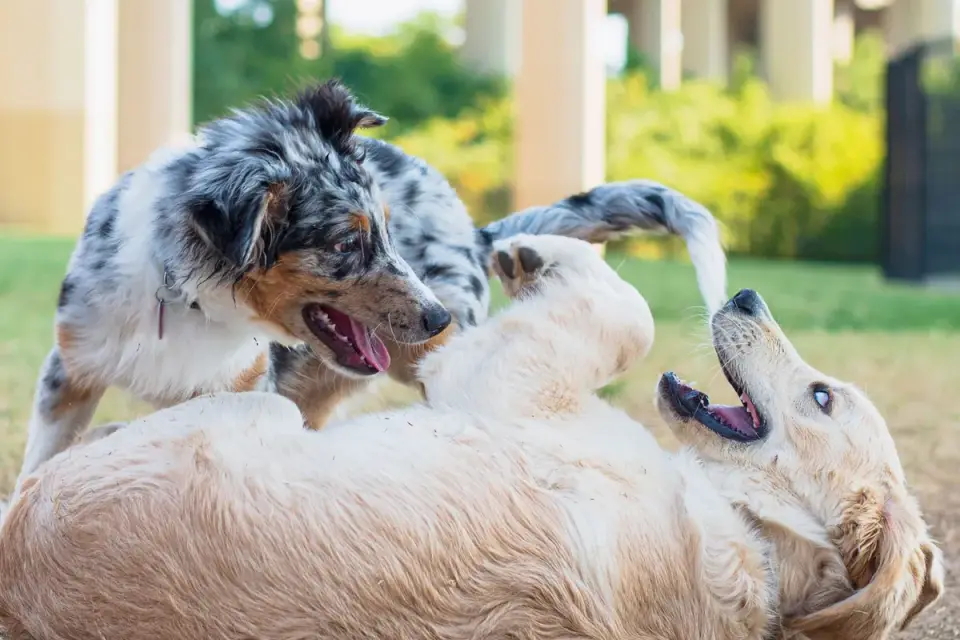
Most dog park conflicts are what trainers call ritualized aggression — a lot of noise, teeth display, and body-slamming designed to end the disagreement without real injury. It sounds catastrophic. It usually isn’t. The dogs are running a script that evolved to resolve conflict cheaply: snarl, snap, separate, done. The genuine danger isn’t the fight itself so much as what a human does in the middle of it. Preventive Vet notes that most fights between unfamiliar dogs are loud but not injurious, and that the primary goal for a bystander is separation without getting bitten — not stopping the noise.
What Actually Works in the First Ten Seconds
A sudden, unfamiliar stimulus interrupts a fight faster than anything you can do with your hands. A blast from a hose, an air horn, a chair or jacket thrown over one dog’s head, or even a loud clap can break the loop of arousal before it locks into a bite hold. This works because the dogs are running on adrenaline and startle reflex, not calculated decision-making, and a jarring sensory interruption resets that state for a second or two — long enough to create separation. How to Break Up a Dogfight: Stop Dogs From Fighting recommends exactly this sequence: try noise and distraction first, and treat physical intervention as the fallback, not the opening move.
The Wheelbarrow Method, Done Correctly
If noise doesn’t break the fight and two people are present, the wheelbarrow method is the safest hands-on option. Each person approaches from behind — never from the front or the side where a head can swing around — and grabs the dog’s hind legs at the top of the thigh, lifting the rear end off the ground the way you’d lift a wheelbarrow’s handles. Walk backward in a wide curve rather than a straight line; a dog can’t get purchase or torque toward you on an arc the way it can in a straight retreat. Both people need to move at the same time. One person pulling alone just gives the other dog a stationary target.
Do this alone and you’re gambling. One person can, in some cases, use a foot against the ribcage of one dog to create a gap and step back, but this only works if you’re already positioned correctly when the fight starts, and it fails badly with a bite-hold fight where pulling risks worse tissue damage at the grip point. If the dogs have locked onto a bite hold rather than a general scuffle, don’t pull. Get help, get a barrier between them, and get the noise interruption going instead.
What Not to Do
Never reach between two dogs’ heads or grab a collar from the front. That’s where the overwhelming majority of human bite injuries during dog fights happen, because a dog mid-fight doesn’t distinguish a hand near its face from a threat worth snapping at. Skip the instinct to yell directly at the dogs from close range, too — it raises arousal rather than lowering it. And don’t pick up a small dog to “rescue” it from a larger one unless you’re certain the larger dog has disengaged; lifting a dog mid-altercation can redirect a bite onto your arms.
After the Dogs Are Apart
Once separated, leash both dogs and put real distance — a car’s length or more — between them before you do anything else. This is the moment to actually look, not glance. Part the fur along the neck, shoulders, chest, and legs, because a bite wound can look like a small puncture on the surface while hiding real damage underneath. VCA Animal Hospitals explains that bite wounds are frequently worse than they appear, since a dog’s canine teeth can crush and tear tissue well beneath an entry point that’s barely visible once the fur settles back into place. AKC’s Bite Wounds adds that infection can surface days after the incident, with swelling, discharge, warmth, or a sudden drop in appetite as the warning signs to watch for. Any puncture, tear, or bleeding is a same-day veterinary visit, not a wait-and-see.
When Recovery Needs More Than a Bandage
Here’s where I’d push owners to think a step further than the wound itself. A fight is a whole-body event — a dog that got knocked, twisted, or pinned can come away with sore muscles, a strained shoulder, or a flare in an old joint issue well before any of that shows up as a limp. I’d weigh what a supplement can realistically do for a dog in that window: it can support the diet and recovery process around an injury, it isn’t a substitute for the exam that rules out a fracture or deep tissue injury, and it isn’t going to speed wound healing that’s already being managed by antibiotics and rest. The honest answer is that recovery nutrition and joint support are complementary to veterinary care after a fight, not instead of it. Owners who reach for a supplement as the first response, before the vet visit, are usually skipping the step that actually matters most.
Preventing the Next One
Most repeat dog park fights trace back to the same handful of triggers: resource guarding over a ball or stick, a tense dog getting rushed by an exuberant one, or two dogs with mismatched play styles who never should have been off-leash together in the first place. Watch body language before it escalates — a stiff tail, hard stare, or a dog that stops moving is worth a leash-up, well before teeth are involved. If you’re newer to reading these signals or building daily routines that reduce park stress in the first place, our guide for owners just getting started covers the basics worth having in place before your next visit.
A dog park fight is rarely the crisis it feels like in the moment. What actually determines the outcome is whether the humans nearby know to reach for a hose before they reach for a collar.
Frequently asked questions
Is it safe to yell or use a loud noise to stop a dog fight?
A sharp noise, a blast of water, or throwing a jacket over one dog's head can interrupt a fight before it escalates, and it carries far less risk than reaching in with your hands. It works best in the first second or two, before both dogs are locked into a bite hold.
How do I know if my dog needs a vet after a fight?
Any puncture, tear, or bleeding warrants an exam even if it looks small, because bite wounds often hide deeper tissue damage under a tight entry point. Limping, reluctance to move, or a dog that seems dazed also needs same-day veterinary attention.
Should I separate two dogs who just had a first-time scuffle at the park?
Yes — put physical distance between them immediately, check both animals over, and let adrenaline settle before any reintroduction. A single scuffle doesn't mean the dogs can never coexist, but it does mean the next meeting should be managed, not left to chance.
Sources
- How to Break Up a Dogfight: Stop Dogs From Fighting — American Kennel Club
- Bite Wounds — American Kennel Club
- Bite Wounds in Dogs — VCA Animal Hospitals
- How to Break Up a Dog Fight Safely — Preventive Vet