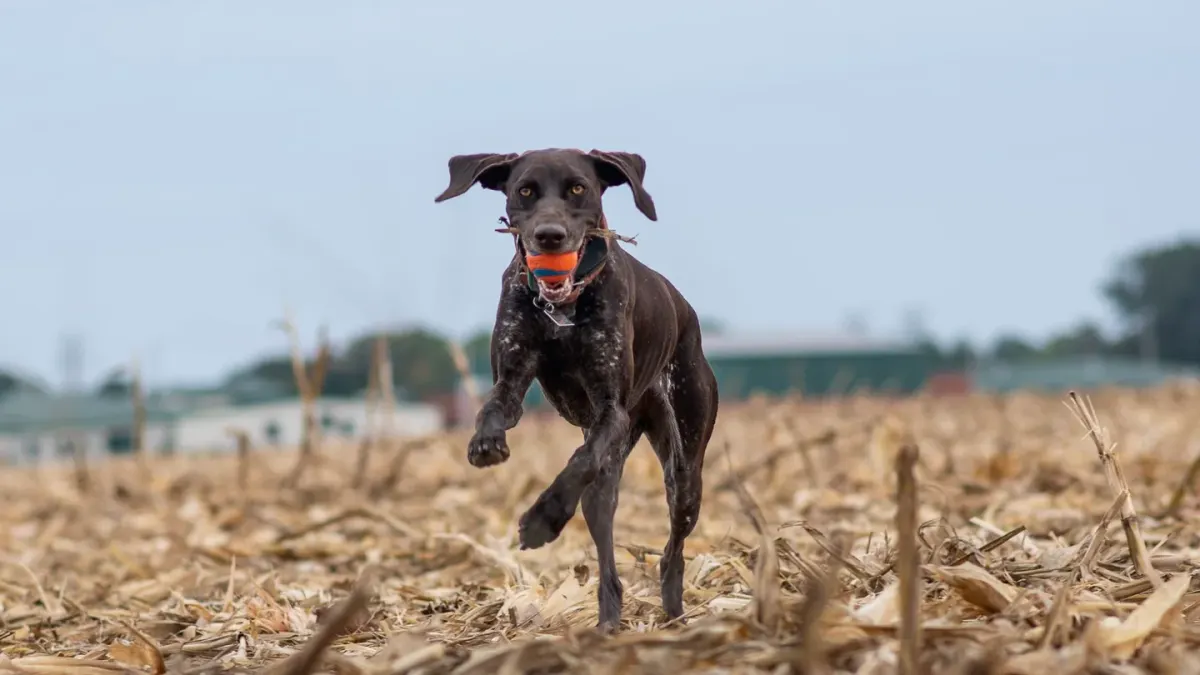
A four-year-old Border Collie mix named in my notes only by breed and circumstance came home after knee surgery with strict instructions: eight weeks in a pen, leash walks only to potty. By night three she was barking at the crate door, shredding bedding, and her owner was wondering whether keeping her still was doing more harm than good. That tension is the whole challenge of activities for a dog on crate rest — the body needs stillness to heal, while the brain still needs a job.
Over the next ten days on leash-only potty breaks, that same dog learned to settle faster once her day had predictable calm work: a snuffle mat in the morning, two minutes of chin-rest practice at noon, frozen broth in a Toppl at night. Her whining in the crate dropped from nearly constant to brief fussing at door sounds. The crate did not change. The routine inside it did.
The surprising limitation is this: most crate-rest failures are not disobedience, they are arousal. Fetch in the hallway, wrestling, even excited trick training can undo surgical repair or delay bone healing. From a sports-medicine and rehab perspective, I weigh movement strictly by tissue risk first, enrichment value second. What a food puzzle or nose game can realistically do is lower restlessness and may help support daily routine, appetite, and handling tolerance during recovery — it cannot speed ligament or fracture healing by itself.
That distinction matters because integrative claims get inflated fast. Ground an integrative claim in the nutritional evidence: licking, chewing, and sniffing use small, controlled muscle effort and provide sensory input without loading joints, which is why rehabilitation teams use them alongside confinement. Postoperative guidance from American College of Veterinary Surgeons emphasizes strict confinement, leash restriction, and monitoring the incision, and enrichment has to fit inside those boundaries rather than stretch them.
Rest still means rest, even when he looks bored
The myth is that a quiet dog is a healed dog, or that boredom justifies a little freedom. The reality is that healing ligaments, fractures, and disks look the same on Tuesday as they did on Monday — boring from the outside, fragile inside. The Merck Veterinary Manual notes how little movement it takes to aggravate spinal cord and disk injury, which is why veterinarians prescribe crate rest rather than “taking it easy.”
So set the crate up like a recovery room. Keep it in the family area, covered on three sides, with non-slip bedding and water that cannot spill. Potty trips stay short, leashed, and boring. No stairs, couches, dog parks, or off-leash greetings. If your discharge sheet gives a timeline, that sheet wins over anything here.
Enrichment starts only after pain, nausea, and appetite look stable, usually in the first 48 to 72 hours. That is a decision for your veterinarian, not a calendar rule.
Calm work that stays inside the crate
Think nose first, mouth second, paws last. A dog can work hard mentally while lying on one hip with elbows tucked.
My second case that sticks with me involved a nine-month-old terrier after an elbow fracture, a dog who could not be trusted with two extra inches of leash. His owner tried tossing treats for him to catch in the pen, and within four repetitions he was lunging, panting, and guarding the bedding. We scrapped the toss entirely. In its place we did four two-minute scent sessions a day: a dab of peanut butter on a cotton ball tucked under a folded towel at crate level, then under a cup, then under one of two cups. By week two he would sniff, pause, and lie back down to wait — the failed approach taught us that vertical or chase movement spikes arousal, while horizontal sniffing settles it.
Practical sequence owners can use the same day, with vet approval:
Sniff without standing. Hold two closed fists at nose level while your dog lies down, one with a treat, and let him nudge the correct hand. Progress to a muffin tin with tennis balls over a few wells, all served inside the crate.
Lick and chew quietly. Spread canned food thinly on a lick mat or freeze low-sodium broth with kibble in a stuffable toy. Chewing a safe long-duration chew under supervision gives jaw work without pacing.
Watch and listen. Name household sounds, reward glances back at you, or play low-volume novel sounds at a distance. This is especially useful for herding breeds who need a watching job.
Touch with consent. Practice chin rest on a towel roll, ear lifts, paw handling, and thermometer touches paired with food. Short cooperative-care reps pay off at rechecks and bandage changes.
Keep sessions to two to three minutes, two to four times daily, and stop while your dog still wants more.
Calm beats clever.
That single line decides most days. If panting, whining, or crate circling rises, you chose too hard a game, not too little time.
When the usual advice has to bend
A 68-pound, seven-year-old Labrador with arthritis plus a fresh hind-limb sprain showed me the exception. Flat on an orthopedic bed in a living-room pen, he could not do long lick sessions because he would fall asleep mid-lick and then wake frustrated, and he hated food puzzles after 20 feet to the yard left him sore. What worked was social proximity as enrichment: his owner moved a desk chair beside the pen for three afternoons, read aloud, and rewarded sighs and hip shifts onto the good side with a single kibble delivered low. No training agenda, no duration goal. His nighttime restlessness eased from hourly position changes to one quiet repositioning between 10 p.m. and 6 a.m., which his owner tracked on a notepad.
Older, painful, or anxious dogs often need less novelty and more rhythm. Keep lights low at night, keep the same feeding and potty order, and ask your veterinarian about pain scoring if sleep breaks up. Guidance on confinement behavior and recovery monitoring from American Animal Hospital Association reinforces the same point: stillness only helps when pain is controlled and the dog can actually rest.
For high-energy adolescents, borrow movement-free outlets outside the crate window. Park the crate near a window for ten minutes of dog-watching, rotate two scents rather than ten toys, and use massage along the neck and shoulders if your veterinarian allows touch near the injury. If cabin fever builds despite that, call the clinic before adding activity — many surgeons will adjust sedatives, pain control, or the confinement plan. That call is part of the plan, not failure.
For ideas that keep arousal low once your veterinarian clears slightly more freedom, look to quiet indoor concepts like Cold-Weather Activities to Keep Your Dog Active and low-pressure handling games such as How to Teach a Dog That Won’t Fetch: A Step-by-Step Plan Grounded in Real Dog Behavior. Both translate well because they reward thinking over running, much like trail sports stripped of speed described in Canicross: Running Connected to Your Dog.
Watch for red flags every day: swelling, heat, discharge, opening incision, sudden non-weight-bearing, vomiting, refusal of two consecutive meals, labored breathing, or a personality change. Those belong on the phone with your veterinary team, not in the next enrichment session.
What I still land on, after years of rehab and nutrition work, is that food therapy and supplement science play a supporting role here. I weigh what a supplement can realistically do for diet, mobility, and recovery as modest: consistent complete nutrition plus calm husbandry may help support normal tissue maintenance and day-to-day comfort, while confinement and follow-up imaging do the structural work. Feed the prescribed diet, keep treats under about ten percent of daily calories unless your veterinarian says otherwise, and save joint or calming supplements for a direct conversation about evidence, dose form, and interactions.
Frequently asked questions
How do I tire out a dog on crate rest without exercise?
Use short nose games, lick mats, and handling practice in 2- to 3-minute sessions a few times daily. Stop while your dog still wants more and keep all work lying down inside the crate or pen.
What activities are unsafe during crate rest?
Running, jumping, stairs, wrestling, tug, fetch, dog parks, and off-leash time are typically off-limits. Always follow your discharge instructions and ask your veterinarian before adding anything new.
My dog barks nonstop in the crate — what should I do?
Check pain, potty needs, and crate setup first, then add predictable calm routine rather than more exciting games. If barking persists or behavior changes suddenly, call your veterinary team about pain control or confinement adjustments.
Sources
- Cranial Cruciate Ligament Disease in Dogs — American College of Veterinary Surgeons
- 2022 AAHA Pain Management Guidelines for Dogs and Cats — American Animal Hospital Association