On this page
Snow looks soft, but it works your dog harder than dry ground with every step. That is the surprising limitation most owners miss when learning how to start snow walking with a dog.
I see it every winter as a sports-medicine clinician. A fit-looking 4-year-old, 68-pound Labrador pulls his owner onto a fresh trail, bounds through knee-deep drifts for 20 minutes, then comes home stiff, licking his paws raw. By day 2 he is reluctant on stairs. The owner worries about an injury, but what really happened was predictable: deep snow multiplied the workload, cold masked early fatigue, and salt plus ice balls irritated the feet. We did not need more enthusiasm. We needed a shorter first outing and a better plan for fuel, feet, and recovery.
From a nutrition and mobility standpoint, I weigh what food and targeted supplementation can realistically do for diet, mobility, and recovery. Snow walking will not be fixed by a chew alone. Conditioning, pacing, and paw protection do most of the work, while steady daily nutrition may help support normal joint structure and recovery after exertion. That is my evidence-bounded position, grounded in the nutritional evidence for long-chain omega-3s and maintenance of lean tissue with adequate protein and calories in active dogs.
The strongest counterargument is fair: why talk about nutrition at all for a walk in the snow? Because winter changes energy cost and recovery demand. Cold exposure, plowing through snow, and shivering all burn calories, and owners often underfeed active dogs in winter without realizing it. I still land where I do — fitness first, food as the quiet backup — because no supplement replaces gradual training.
The myth: a thick coat means ready for snow
Many owners assume if a dog loves snow, the body is ready for long snow hikes. Normal dog behavior tells a different story.
Desire is not conditioning. Huskies will overheat on a hard pull even in winter, while a lean 6-year-old, 42-pound Border Collie mix may have the drive but lack the paw toughness and shoulder stability for uneven, icy footing. Brachycephalic breeds, very young puppies, seniors with arthritis, and dogs with heart disease face a lower ceiling. The American Veterinary Medical Association reminds owners that cold tolerance varies widely and that shelter, dryness, and watching for shivering and paw lifting matter more than a single temperature number.
Think coat plus body plus history. A dense double coat helps with insulation but does nothing for ice-ball buildup between toes, salt irritation, or a weekend-warrior strain. That is why the first snow walks should test the whole dog, not just the thermometer.
The reality: snow changes gait, paws, and fuel needs
Walking in 4 to 6 inches of packed snow can feel like sand work — shorter stride, more lift from the hips and shoulders, more slipping on hidden ice. Dogs compensate by tensing through the back and shifting weight, which is why they tire faster and get sore the next day.
Paws take the brunt. Snow packs into interdigital hair, melts, refreezes, and abrades. Road salt and deicers dry and crack pads. You will see the early signs as a high-stepping gait, frequent stopping to chew a foot, or a paw held up briefly then set back down.
Fuel shifts too. Active dogs in cold weather may need more calories to maintain weight and lean muscle, and adequate protein remains central to supporting muscle maintenance during a training season. On the integrative side, I ground claims in the nutritional evidence: eicosapentaenoic acid (EPA) and docosahexaenoic acid (DHA) from marine oils are among the better-studied nutrients for supporting a normal inflammatory response and joint comfort as part of a balanced diet, as summarized by the National Institutes of Health Office of Dietary Supplements. That is support, not repair. It may help support mobility alongside weight control and conditioning, not in place of them.
A same-day sequence to start right
You can do this today in about 30 minutes, driveway to park included.
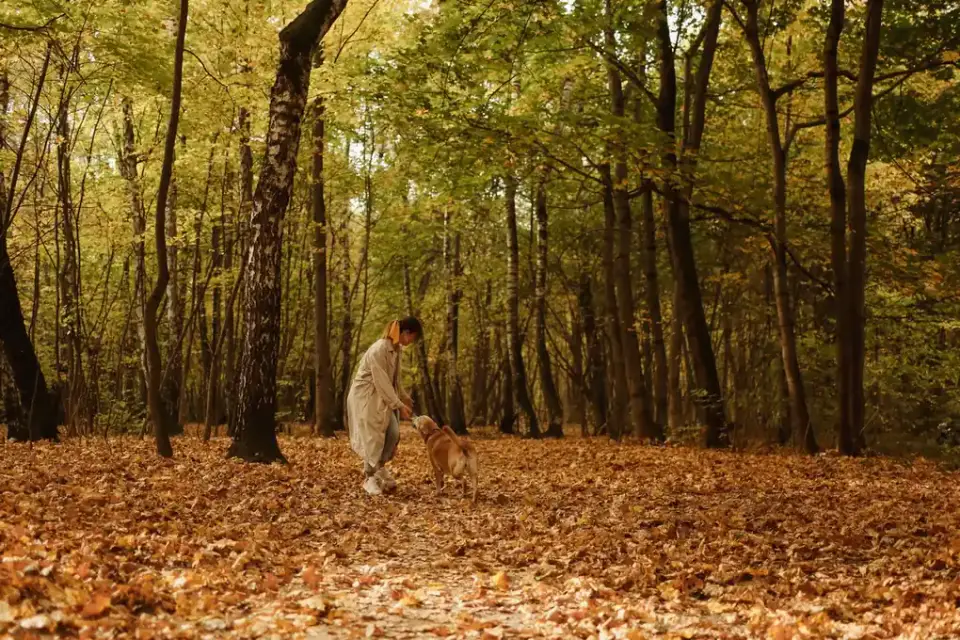
Start with a 10-minute dry-ground warmup. Brisk walk, a few sits to stands, gentle turns both directions. You are warming muscles you cannot stretch like a human hamstring.
Then move to shallow, packed snow for 10 to 15 minutes only. Keep your dog at a walk or slow trot on a 6-foot leash. Avoid deep drifts, off-leash sprinting, and fetch on ice for the first two weeks. Let them sniff — nose-down walking naturally slows pace and loads the body more evenly. If you want ideas for shorter outings when it is bitter cold, borrow from these cold-weather activities to keep your dog active.
I learned this tradeoff the hard way with a client setup that looked perfect on paper. A 3-year-old, 55-pound Australian Shepherd in great summer hiking shape got booties, a well-fitted harness, and a plan for a 45-minute lakeside snow walk three weeks into January. By minute 25 she was hopping, holding up her left front foot. One bootie had twisted, snow had balled inside, and she had been trotting sideways to avoid the feeling. We cut the walk, dried the foot, and found red, damp skin between toes but no cut. The failed approach was not lack of gear — it was too much new at once. New booties plus new depth plus new duration hid the early limp until she was already sore the next morning. Now I introduce one variable at a time: short walk no gear, then short walk with paw wax, then booties on a familiar loop.
Finish with a 5-minute cool-down walk and a paw check indoors. Rinse salt with lukewarm water, pat dry, look between toes for redness or cracks. Offer water — dogs drink less in cold and then play catch-up. Feed the normal balanced dinner; do not double food after one walk.
If your dog already pulls hard on winter trails, build connection skills before you add distance. The body mechanics in Canicross: Running Connected to Your Dog translate well to snow walking: steady line tension, directional cues, and stopping on cue reduce those sudden lunges that strain shoulders on ice.
When to push, when to pause, and what recovery really takes
Push when your dog stays loose, bouncy, and willing to keep walking after a water break. Pause and head in for continuous shivering, whining, seeking shelter, stiff movement, or repeated paw lifting.
Quality matters here, and that is where the National Animal Supplement Council helps set expectations. I look for companies that follow its quality program and carry its seal, because purity and label accuracy matter more than trendy ingredients when you are feeding something daily through winter. That does not prove efficacy — it just lowers the risk you are buying inconsistency.
Here is the edge case that changes the plan: the senior dog who loves snow but pays for it later. A 9-year-old, 73-pound Golden Retriever I followed as a composite case could still do a 20-minute packed-trail walk beautifully, tail up, no lagging. By day 10 of every-other-day walks, though, he was slow to rise in the mornings and hesitant on the two basement steps. The walks themselves were not too long — the cumulative load was. We kept the snow walks but cut them to 12 minutes, added two dry-ground sniff walks on off days instead, kept his weight trim, and kept EPA and DHA as part of his already balanced diet rather than adding new powders each week. His morning stiffness eased within three weeks. For older or previously injured dogs, frequency and surface add up faster than any single walk suggests.
Stop and call your veterinarian for limping that lasts more than 24 hours, swelling, a pad cut that will not stop bleeding, pale gums, extreme lethargy, or any collapse in cold. Frostbite tips and deicer ingestion are not wait-and-see problems.
Build over 3 to 4 weeks. Add about 5 to 10 minutes per week if weight is stable, paws look good, and your dog recovers by the next morning. Keep deep-snow romps short and occasional, not daily. You will know you got it right when your dog finishes bright, drinks, naps normally, and wakes up ready — not creaky — for the next one.
Frequently asked questions
How long should the first snow walk be?
Keep the first snow portion to 10 to 15 minutes on shallow, packed snow after a dry-ground warmup. Add 5 to 10 minutes per week only if paws look healthy and your dog recovers by morning.
Do dogs need boots or is paw wax enough?
Many dogs do well starting with trimmed interdigital hair and paw wax on short walks. Use boots for salted sidewalks, deep or crusty snow, or dogs that get ice balls. Introduce one change at a time so you can spot rubbing early.
Should I feed more in winter?
Some active dogs need more calories in cold weather to maintain weight and muscle. Weigh monthly, watch ribs and waist, and adjust the balanced diet first before adding supplements. Ask your veterinarian if weight drops despite more food.
Sources
- Cold Weather Animal Safety — American Veterinary Medical Association
- Omega-3 Fatty Acids Fact Sheet for Health Professionals — National Institutes of Health Office of Dietary Supplements
- NASC Quality Program — National Animal Supplement Council