
On this page
A fresh coat of paint can leave a dog restless, sniffy, and underfoot, while the family worries about fumes, paw prints, and an open front door. A simple barrier plan may help support comfort and safety for both.
A barrier alone will not keep the air comfortable
Many owners focus on keeping paws off wet paint, yet breathing comfort matters just as much. Paint fumes, dust from sanding, and constant foot traffic can make a calm dog pace, pant, or hide.
Vets often see stomach upset or stress signs when dogs stay too close to home projects. The U.S. Environmental Protection Agency explains that paints can release volatile organic compounds that linger indoors, especially without ventilation. The ASPCA notes that paint exposure can trouble pets when licked, chewed, or inhaled in close quarters.
Set the safe room first, then contain the work zone.
The myth worth retiring: he will just stay away
Dogs rarely avoid a novel smell or a busy room on their own. Curiosity, worry, and the wish to stay near people pull them toward ladders, trays, and open doors.
Aaron learned this with Astor, his 5-year-old Weimaraner mix in Midland, Texas. Astor kept nosing the hallway plastic on day one, ears low and pacing. Aaron moved his bed and water 20 feet away into a quiet bedroom with a closed door, and Astor settled within an hour for the next two days of painting.
Closeness is normal behavior. Management protects it.
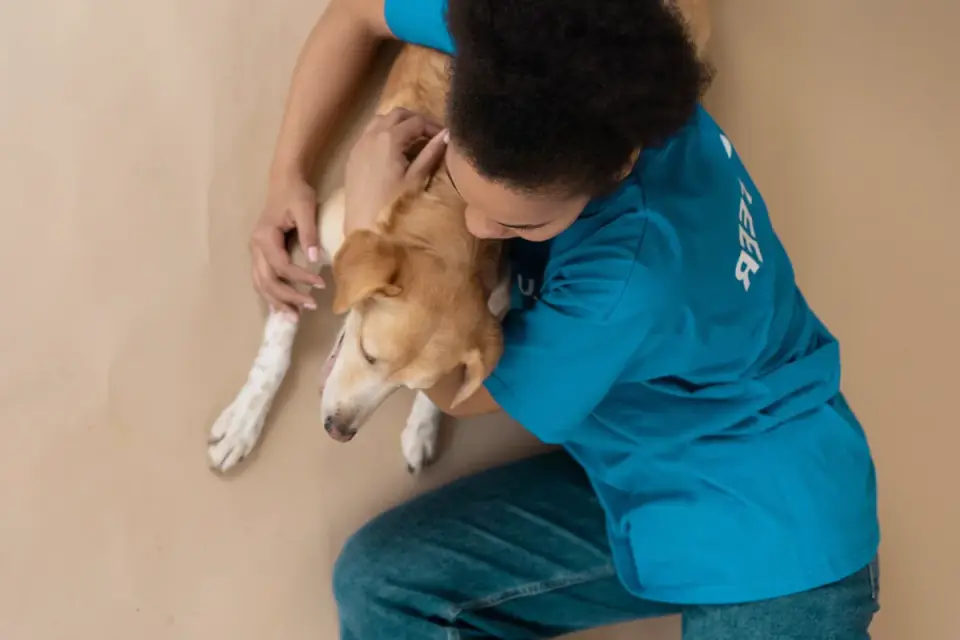
Set up barriers in this order
Work in short, calm steps an owner can finish the same morning.
1. Choose the dog’s room before the paint room. Pick a familiar room farthest from painting, with a door that latches. Add bed, water, chew, and a worn shirt. This becomes home base, similar to Setting Up a Calm Safe Space for an Anxious Dog.
2. Block with doors first, gates second. A closed interior door is the most secure barrier. Use a tall pressure-mounted baby gate or freestanding exercise pen only where a door is not available, and secure cords and plastic edges.
3. Create a double layer at exits. Painting often means propped exterior doors. Place one barrier at the work-room doorway and a second at the hallway or front door, so a slipped gate does not mean a lost dog.
4. Cover the temptations. Move drop cloths, rollers, and low paint trays out of reach. Tape plastic sheeting at dog-nose height so it does not billow, flap, and invite chewing.
5. Plan air and sound. Ventilate the work area toward the outside, not into the dog’s room. Keep the dog’s room quiet with low background sound. For hot or stuffy days, borrow ideas from Keeping a Dog Comfortable Indoors During a Heat Wave.
6. Build in potty breaks. Leash-walk through the work zone rather than letting the dog wander. Wipe paws on return.
Comfort holds when the routine stays predictable.
When this advice would be the wrong call
For most households, keeping the dog home behind solid barriers may help support a calm day. For a dog with breathing difficulty, severe anxiety, or strict rest needs, home barriers are not enough.
If the dog coughs, wheezes, vomits after licking paint, paces without settling, or is healing under confinement, pause and arrange care elsewhere for the day. A friend’s quiet house or a trusted sitter often supports comfort better than any gate. Owners managing recovery can adapt ideas from A Confinement-and-Comfort Plan for Strict Rest Orders.
Quality of life comes before finishing the project.
A short test helps. Set up the safe room the evening before painting, feed dinner there, and watch. A dog who eats, drinks, and rests there will likely cope well behind temporary barriers while the house gets its new color.
Frequently asked questions
How long should dogs stay out of a freshly painted room?
Keep dogs out until paint is dry to the touch and odor has faded with ventilation, often several hours and sometimes overnight. When in doubt, keep the safe-room door closed and ventilate the work space.
Are baby gates enough to contain a dog during painting?
A latched door is more secure than a gate alone. Use gates as a second layer in hallways or when a door must stay open for airflow, and supervise jumpers and puppies closely.
Sources
- What are volatile organic compounds (VOCs)? — U.S. Environmental Protection Agency
- Animal Poison Control — ASPCA