
On this page
What actually changes the day you get the diagnosis?
Most owners leave that first vet appointment thinking about medication schedules. That’s reasonable — but the bigger shift happens at home, in the next hour, before the prescription is even filled. Intervertebral disc disease (IVDD) is a condition where the cushioning discs between vertebrae degenerate and can bulge or rupture into the spinal canal, and it’s disproportionately common in long-backed breeds; the Purina Pro Club: American College of Veterinary Surgeons estimates dachshunds alone account for 40 to 75 percent of all cases. Whether your dog is heading toward conservative management or surgery, the environment you build in the first 24 hours does a lot of the protective work medication can’t.
I want to be direct about where I land: strict confinement, not partial restriction, is the recommendation I defend for the first phase. The counterargument I hear constantly is that a crate feels cruel for a dog who “seems fine” — wagging, wanting to explore, showing no obvious pain. I understand the instinct. But a disc that’s already compromised doesn’t announce further damage before it happens, and Cornell University College of Veterinary Medicine notes that IVDD progression can be sudden even when a dog appears comfortable between episodes. A dog that seems fine is not the same as a dog whose spine is stable.
One picture makes this concrete. A 6-year-old, 22-pound dachshund named in my notes only as “the Tuesday case” came in three weeks after a soft yelp when jumping off the couch. No dramatic collapse, no obvious limp — just a slightly hunched back and reluctance to climb stairs. By day 10 of strict crate rest at home, her owner reported she was walking normally on leash again. Nothing about that recovery was guaranteed by the crate alone, but the absence of jumping, twisting, or stair use in those first ten days is very likely why surgery never became necessary.
The myth worth retiring: “rest” means “less activity”
Rest, for IVDD, doesn’t mean a shorter walk or fewer trips up the stairs. It means eliminating jumping, twisting, and unsupported stair climbing entirely — for a defined period, usually weeks, that your veterinarian or neurologist sets based on your dog’s specific presentation. That distinction is the single biggest source of setbacks I see.
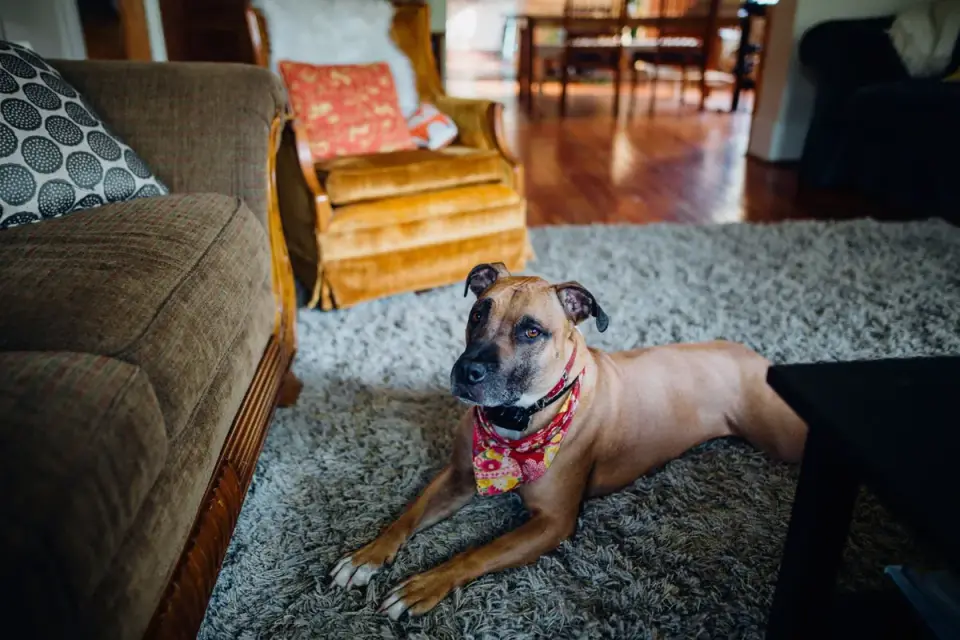
Here’s the sequence I actually walk owners through, room by room:
- Confinement zone first. A crate or exercise pen sized so your dog can stand, turn, and lie down — not a space large enough to pace or pivot sharply. This is the single highest-leverage change you can make on day one.
- Traction everywhere the crate opens onto. Hardwood and tile are a hazard for a dog with a compromised spine; a slipping hind end can undo careful management in a single step. Rubber-backed runners or interlocking foam mats across hallways and any open floor near the crate help a dog keep its footing without needing to catch itself.
- Ramps instead of jumps, and only with your vet’s sign-off. Once controlled movement is cleared, a low, wide, non-slip ramp lets your dog reach the car or a permitted piece of furniture without a leap. A ramp is not a substitute for confinement — it’s a tool for the specific moments your vet has approved.
- Baby gates at every stair landing, not just the top or bottom. Dogs in this phase will attempt stairs unsupervised if given the chance, and a single unsupervised flight can reinjure a healing disc.
- A rear-support harness or sling for bathroom trips and vet visits, so you’re guiding rather than letting the dog manage its own balance on slick surfaces or uneven ground.
Where the tradeoffs get complicated
It’s tempting to treat the setup as a checklist you finish once. It isn’t.
I think about a client with a 9-year-old, 34-pound corgi mix who did everything “right” on paper — crate, gates, ramp — but placed the crate in a laundry room the dog associated with isolation. By the second week, the dog was pacing and whining inside the crate itself, working the latch loose twice. Confinement that increases a dog’s stress can undercut healing almost as much as unrestricted movement does, because a distressed dog moves more erratically inside a small space, not less. Moving the crate into the main living area, within sight of the family but away from foot traffic, solved it. The lesson isn’t “location doesn’t matter” — it’s that strict rest has to account for the individual dog’s temperament, not just square footage.
There’s a real edge case worth naming too: multi-dog households. A rambunctious housemate can undo a careful setup in seconds — a body slam during a greeting, a chase around the coffee table — even when your IVDD dog is behaving exactly as instructed. If you have other dogs, separate them physically during the confinement period, not just supervise them together, especially in the first two to three weeks when a disc injury is least stable.
What I’d actually do, and what I’d skip
I’d invest first in traction and confinement — those two changes prevent the injuries that turn a conservative case into a surgical one. I’d treat the ramp as a later-phase tool, not a day-one purchase, because using it before your vet clears controlled movement can encourage exactly the jumping behavior you’re trying to eliminate. And I’d resist the urge to “reward good behavior” with extra time out of the crate; that’s the single most common way strict rest quietly becomes partial rest.
This is squarely a case where your veterinarian’s specific instructions override anything in this guide — disc location, severity, and whether surgery is on the table all change the details. What doesn’t change is the underlying principle: remove the physical opportunities for jumping, twisting, or slipping before you worry about anything else.
If your dog’s mobility needs are longer-term rather than a recovery window, the setup logic overlaps with what we cover in keeping a wheelchair (cart) dog comfortable at home and a warming setup for a senior dog that’s always cold, particularly around traction and supervised furniture access. And if you’re managing a large-breed dog through joint or mobility changes more broadly, home setup for a giant breed entering its senior years covers ramp and flooring choices in more depth.
Brief recap: confine strictly, add traction before anything else, hold off on ramps until your vet clears them, gate every stair landing, and separate housemates during the highest-risk weeks. None of this replaces your veterinarian’s specific plan — it’s the groundwork that makes their plan easier to follow.
Frequently asked questions
Can a dog with IVDD still go for walks during recovery?
Only if your veterinarian specifically clears leash walks as part of the recovery plan — and even then, typically short, flat, harness-supported walks with no stairs, jumping, or rough terrain.
How long does home confinement usually last?
It varies by severity and whether surgery was performed, but strict crate rest commonly runs several weeks; your vet or neurologist sets the exact timeline for your dog.
Is a ramp necessary right away?
Not usually. Ramps become useful once your vet clears controlled movement — introducing one too early can encourage jumping behavior you're trying to prevent.
Sources
- Research of Dachshunds Intervertebral Disc Disease — Purina Pro Club
- Intervertebral disc disease — Cornell University College of Veterinary Medicine