
On this page
The checklist, before you plan anything else
Most of what goes wrong at a house party isn’t a training failure — it’s a setup failure. Before you think about crates, gates, or introductions, work through this list:
- Pick a safe room away from the party, with water, a bed, and something to chew.
- Secure the food — trash cans, buffet tables, and guest bags off the floor or behind a door.
- Confirm the exits — front door, patio door, garage — and who’s watching them.
- Update the microchip and tags before the first guest arrives, not after a dog bolts.
- Decide the dog’s role in advance: greeting guests, staying gated, or fully separated for the night.
- Watch for stress signals, not just growling — lip licking, yawning, and a tucked tail count.
- Have an exit plan for the dog if the safe room stops being quiet enough.
Everything below expands on why each item matters and how to actually execute it the same day.
I once worked with a three-year-old Lab mix named Biscuit whose owners called me two days before a housewarming party, worried because he’d never met more than four people at once. Biscuit weighed about seventy pounds, was food-motivated to a fault, and had a habit of counter-surfing that his owners had never fully solved. We didn’t try to fix that habit in forty-eight hours. Instead we built the party around it — a baby gate across the kitchen doorway, a frozen stuffed toy in a back bedroom, and a house rule that guests didn’t feed him from their plates. The owners texted me the next morning: he’d slept through most of it. Nothing about Biscuit changed that week. The environment did.
The myth worth retiring: “he’s friendly, so he’ll be fine”
A lot of owners tell me their dog loves people, so a crowded living room shouldn’t be a problem. Friendliness and tolerance for prolonged sensory overload aren’t the same trait. A dog who’s genuinely happy to greet one guest at the door can still get overwhelmed after ninety minutes of doorbell noise, new smells, dropped food, and unfamiliar hands reaching for him. According to the ASPCA, lip licking outside of mealtime, yawning when not tired, a tucked tail, and pinned-back ears are early signs of stress that owners commonly miss because they read as small or even cute. The dog isn’t lying to you about being fine — you’re often just not watching for the right signals.
This is also where I lean on the American Veterinary Society of Animal Behavior: AVSAB, whose position statements on humane, low-stress handling emphasize managing a dog’s environment and choices rather than pushing him through a situation and hoping he adapts. A party is exactly the kind of high-arousal environment where that guidance applies: your job is to reduce the number of decisions the dog has to make under stress, not to test how tolerant he can be.
Building the setup, not just hoping for good behavior
Start with the safe room. It should be a real room with a door, not a corner of the living room with a bed in it — a spare bedroom, a home office, or a laundry room all work if they’re quiet and away from the main traffic path. Put down water, his normal bed, and something to occupy him: a stuffed food toy, a long-lasting chew, or a puzzle feeder he already knows how to use. Introducing a brand-new chew item on party night isn’t the moment to find out he doesn’t like it.
Next, control access. A baby gate at the kitchen or party-room entrance lets your dog see and hear the gathering without being in the middle of it, which works well for dogs who get anxious when fully isolated but overstimulated when free-roaming. For dogs who do better with zero exposure, a closed door and a white-noise machine or television left on can flatten the noise spike every time someone rings the doorbell.
Food safety deserves its own pass through the house. Chocolate, anything sweetened with xylitol, grapes, onions, and alcohol are common party hazards, and the FDA has warned specifically about xylitol showing up in sugar-free gum, mints, baked goods, and even some peanut butter brands guests might bring as a hostess gift. Ask a trusted person, not the dog himself, to do a final sweep of counters and coffee tables before guests sit down.
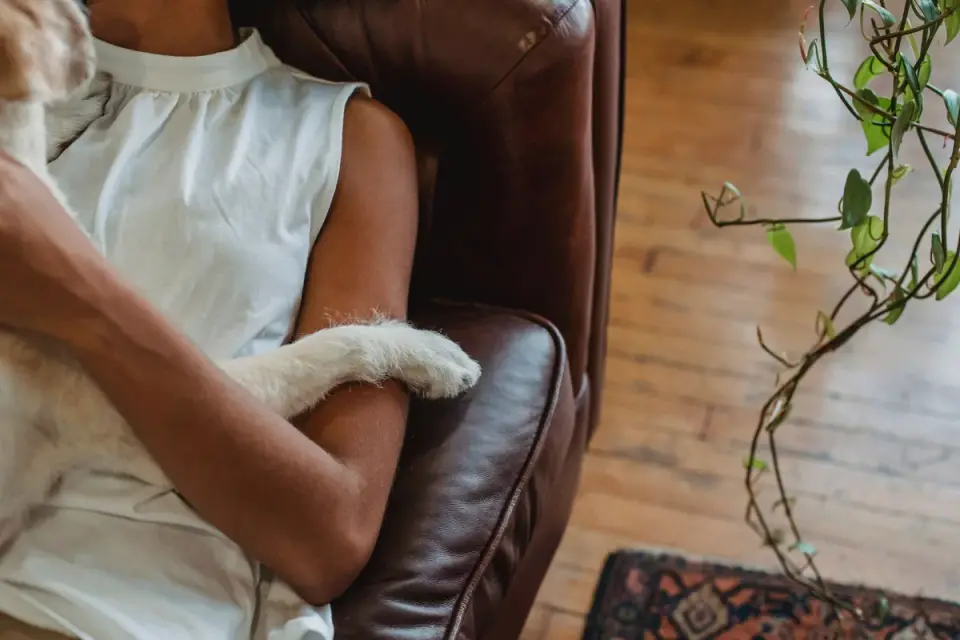
If your dog will be near a Christmas tree or other seasonal decor during a holiday gathering, the same management logic applies — our guide to keeping a dog safe around the tree and ornaments covers hazards specific to that setup. And if this party coincides with a new puppy still learning house manners, it’s worth reading our comparison of a baby gate versus a playpen before guests arrive, since the right containment tool changes what’s realistic for the night.
What I actually watch for once the party starts
Two hours in, I’m not watching the dog’s tail — a wagging tail can still mean stress. I’m watching whether he chooses to leave the room on his own. A dog who wanders to his safe space, lies down, and stays there is regulating himself well. A dog who keeps returning to the party but paces, pants heavily without exertion, or won’t settle even in the quiet room needs the environment adjusted further, not more exposure.
One recurring conversation I have with owners is the instinct to physically pull a stressed dog toward guests “so he gets used to it.” That instinct almost always backfires at a live event, because there’s no way to control the pace or retreat if he escalates. It’s fine, and often better, to simply close the door for the night. Nothing about that decision reflects poorly on the dog or the owner — it’s proportionate management of a normal, temporary situation.
This is also the moment senior or noise-sensitive dogs need extra attention. If your household includes a dog whose hearing has changed, our piece on helping a deaf senior dog feel safe at home has useful groundwork for reducing startle responses that applies directly to a crowded, unpredictable night.
Where I land
The strongest counterargument I hear is that isolating a dog for an entire party is unfair to him, that he should get to be part of the household’s life. I understand the instinct, and for a genuinely well-socialized, low-arousal dog, brief supervised greetings can be entirely appropriate. But for the majority of dogs I see, a few hours of quiet in a safe room with a good chew is a better night than several hours of low-grade overstimulation that ends in a growl nobody saw building. Management isn’t a failure of training — it’s day-to-day practice, applied on the one night a year it actually gets tested.
Bottom line: the goal isn’t a dog who tolerates the whole party — it’s a dog whose stress never has a reason to build in the first place.
Sources
- Canine Body Language — ASPCA
- Position Statements and Handouts — American Veterinary Society of Animal Behavior
- Paws Off Xylitol; It's Dangerous for Dogs — FDA