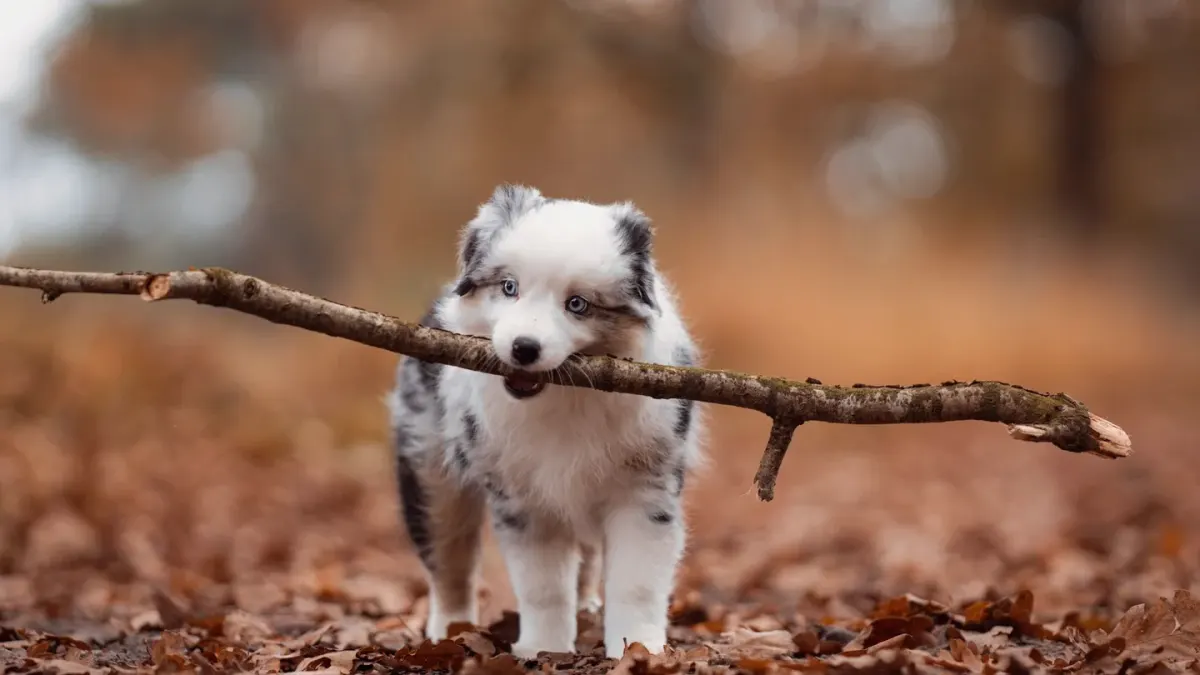
A 3-year-old, 48-pound mixed-breed rescue cowers at the doorway when the leash appears, then spends the whole block scanning for trucks, and her owner wonders whether a busier schedule of outings will finally make her brave. The decision that matters most is not which class to join, but whether each activity lets her control distance and earn food rewards for curiosity. I prioritize food-guided exploration and decompression movement over obedience pressure, because a nutritionally complete diet paired with high-value training food may help support normal learning, focus, and recovery after stressful outings, while no chew or powder creates courage by itself.
That limitation surprises owners. Activity helps, but it cannot override temperament, past learning, or pain.
Your same-day checklist: pick activities that pass all five
- The dog can move away at any time
- Sniffing and searching do more work than commands do
- Rewards are small, soft, and frequent
- Sessions last minutes, not an hour
- You end while the dog still wants more
If an idea fails one test, shelve it for now.
Why does choice come first? A fearful dog is watching for threat, and control lowers that vigilance enough for learning to happen. Guidance from the American Veterinary Society of Animal Behavior emphasizes humane, reward-based methods built on that principle, and in practice it looks like letting the dog arc around a scary bench rather than heeling past it. The Merck Veterinary Manual describes how normal canine social signaling depends on distance, posture, and retreat, which is why forced greetings backfire.
The strongest counterargument deserves a hearing: some trainers argue that a timid dog needs more rules and firmer corrections to feel led. I reject that for fear cases because punishment may suppress warning signals without changing the underlying emotion, and it risks a shutdown dog being mistaken for a calm dog.
What if bravery is a skill you set up, not a trait you test?
The myth says confidence comes from exposure — dog parks, crowded patios, long hikes. The reality is that flooding a sensitive dog often rehearses panic. True confidence work is graded: one novel surface, one quiet trail, one friendly person at 20 feet who tosses treats and ignores the dog.
Think in terms of diet, mobility, and recovery, the way I do with sports-medicine cases. Food therapy here means using the daily ration strategically, reserving pea-sized chicken or cheese for brave checks-ins on walks. Supplement science weighs in modestly: balanced omega-3s and adequate protein may help support brain and muscle health during training, but they do not replace desensitization. Movement should restore, not exhaust.
Which low-pressure games actually build courage?
Start with nose work, because the nose leads and worry follows. Scatter five treats in backyard grass and let the dog hunt. Hide a stuffed Kong behind a chair. Unroll a towel with kibble folded inside. These puzzles ask for no eye contact, no stay, no strangers.
By day 10 of twice-daily, three-minute searches, one 5-year-old, 22-pound terrier mix in a composite training scenario began trotting to the yard gate instead of freezing at the back step, ears forward for the first time on a familiar path. The number is not proof, only a marker: repetition of easy wins changed the morning routine from avoidance to anticipation. For dogs that shut down with toys, ideas from How to Teach a Dog That Won’t Fetch: A Step-by-Step Plan Grounded in Real Dog Behavior transfer well — shorten the chase, reward any interaction, quit early.
Try choice-based play next. Place two boxes, a wobble board, and a bath mat in a quiet room. Click or mark and treat any paw step, sniff, or glance. Let the dog opt out. Keep props low and stable so a slip does not erase a week of progress.
Decompression walks are the third pillar. Choose a quiet field, long line, and 20 minutes of letting the dog sniff in every direction. Skip the neighborhood gauntlet. Insights from Fear Free Happy Homes on reducing triggers align here: wider distance, quieter routes, and predictable handling help fearful dogs stay under threshold.
Dogs learn faster when the body feels safe.
Where does this plan go wrong?
Three weeks in, a 2-year-old, 65-pound shepherd mix in a composite case looked bolder at home — offering spins, carrying toys — yet barked harder on leash when a skateboard passed at 15 feet. The owner had added a weekend farmers market to celebrate progress, and the dog stopped taking even steak. That tradeoff is common: home confidence does not equal public confidence, and one over-threshold outing can cost several calm ones. We pulled back to dawn walks, reintroduced markets only as park-at-a-distance sessions, and rebuilt treat-taking as the barometer.
Avoid these traps:
- Luring a dog closer to what scares her to prove she is fine
- Long dog-park sessions to socialize the fear away; review Dog Park Etiquette Every Owner Should Know before you even consider it
- Back-to-back novel activities with no rest day
- Training when the dog is sore, tired, or skipping meals
Pain deserves special mention. A dog that suddenly fears stairs, car rides, or handling may be hurting, not stubborn. Check with your veterinarian before pushing through.
What about the dog who fears everything, even the yard?
Here is the edge case that changes the sequence. A 7-year-old, 14-pound senior dog in a composite scenario startled at wind, refused the porch for four days, and would only eat indoors. Instead of adding activities, we subtracted them: indoor snuffle mats, hand-fed breakfast for eye contact, and five minutes of sitting together near an open door with no invitation to exit. By week three she chose the porch on her own to sniff rain-wet leaves. For some dogs, stillness is the activity.
Cold or wet seasons complicate outings further, so borrow ideas from Cold-Weather Activities to Keep Your Dog Active and keep sessions short, dry, and familiar. Senior, brachycephalic, and orthopedic dogs need lower physical demands — think scent, not agility jumps.
When is it more than shyness? Constant panting, drooling, escape attempts, self-injury, or fear that does not improve over two to three weeks of careful work warrants a veterinary behavior discussion. Medication is not failure; for some dogs it restores the learning capacity that fear steals.
What small win will you set up today?
Frequently asked questions
How long should a confidence session last for a fearful dog?
Keep it to 3–5 minutes of active games or 15–20 minutes of slow sniff walking, and stop while your dog is still engaged. Short, successful reps build more courage than one long outing.
Should I comfort my fearful dog or will that reward the fear?
Calm petting and a steady voice do not reinforce fear. Reward brave curiosity with food and give space from triggers; comfort plus distance helps the dog recover.
When should I get professional help?
If your dog panics, tries to flee, stops eating treats on walks, or shows no improvement after 2–3 weeks of gentle work, ask your veterinarian about a behavior referral. Sudden behavior changes also deserve a medical check.
Sources
- Position Statements — American Veterinary Society of Animal Behavior
- Social Behavior of Dogs — Merck Veterinary Manual
- Helping Your Fearful Dog — Fear Free Happy Homes