On this page
Why does a healed leg still need a ramp?
I’ve had more than one owner call me at week five, confused, asking why their dog is walking almost normally but I still want a ramp blocking the stairs. Here’s the thing: a tibial plateau leveling osteotomy holds up on hardware and early bone bridging long before the surrounding soft tissue and remodeled bone can handle real load. A dog can look recovered and still be structurally fragile. That gap — between how the dog feels and where the bone actually is — is what a ramp setup is protecting against, and it’s the single most common reason I see a repeat visit to the surgeon.
Bed access is the piece owners underestimate most. A dog that’s slept on the bed for six years doesn’t stop wanting to at week two post-op — it just gets less cautious about how it gets up there as the incision stops hurting. That’s exactly the moment a ramp earns its keep.
The myth worth retiring: “any ramp will do”
Owners often assume the ramp itself is the fix — buy one, prop it against the bed, done. In practice, the ramp is only as good as the angle, the surface, and whether the dog is confined enough that the ramp is its only option for getting up. According to guidance compiled by Sustainable Pet Vet, dogs recovering from TPLO should be kept in a small confined area, not a gated-off room, for roughly the first 6 to 8 weeks, with no running, jumping, or unsupervised furniture access during that window. A ramp sitting next to a bed the dog can still leap off of, or a crate the dog can still be lifted out of by an impatient housemate, doesn’t do its job.
Incline matters too. A ramp that’s too steep asks for the same quad and stifle effort as the jump you’re trying to eliminate. Slope guidance generally lands in the 18–25 degree range depending on the dog’s size and mobility, with the gentler end favored for a dog carrying a healing leg. If a ramp feels short and steep against your particular bed height, a longer ramp is the fix — length reduces angle for the same rise, not a shorter one.
Building the setup, step by step
Start with the confinement zone before you buy anything. Pick a small room or an exercise pen, not a gated-off section of an open floor plan a dog can still bolt across. The ramp only works if the bed or crate it serves is the one approved surface the dog can reach.
Choose ramp length by bed height, not by what’s on sale. Measure from floor to mattress top. For a typical 24–28 inch bed height, aim for a ramp long enough to keep the incline in that gentler 18–22 degree range — that usually means a ramp in the 5–6 foot range for a medium dog’s bed, longer for a taller platform.
Check the surface before the dog ever sees it. Carpeted or rubber-textured ramp surfaces beat bare wood or metal, especially on a leg that isn’t yet trusting itself. If the ramp has any wobble when you step on it yourself, it’s not stable enough for a three-legged dog testing weight for the first time.
Anchor it, don’t just lean it. A ramp that shifts an inch under a hesitant first step teaches the dog to avoid the ramp and try the jump instead — the opposite of the goal. Rubber-backed ramps or ones with a locking bracket against the bed frame hold position better than a freestanding one.
Practice on the ramp before you actually need it, if timing allows. If surgery is scheduled, a few short sessions with treats on a flat or barely-inclined ramp beforehand means the dog already has a pattern for it once pain and swelling make new learning harder.
Reassess weekly, not once. Confinement needs and mobility change fast in this recovery. What I generally see: leash walks start at 5-minute increments several times a day early on and lengthen gradually toward the 8-week recheck, per timelines summarized by Canton Animal Hospital. The ramp’s job doesn’t shrink as walks lengthen — if anything, a dog that’s feeling stronger on leash is more likely to try a shortcut off the bed, so keep the ramp in place until your surgeon actually clears jumping.
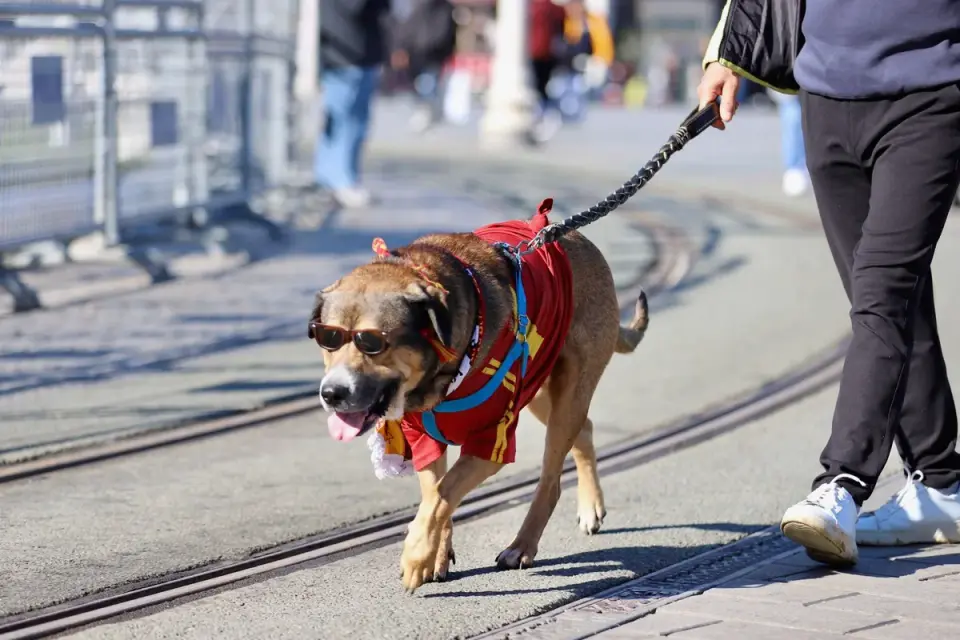
I had a lab mix client, about 55 pounds, six years old, in for a TPLO on the right hind about four years ago now. Her owner worked from home and thought that meant supervision would be enough — no ramp, just “I’ll watch her.” By day nine, the incision looked good, she wasn’t limping much at a walk, and one evening she jumped onto the couch on her own before anyone could stop her. Nothing catastrophic happened that time, but at the two-week recheck her surgical leg showed more swelling than expected for that stage, and we pushed her activity restriction back by two weeks. What struck me was that the owner hadn’t been careless — she’d just underestimated how fast a dog stops acting injured while still being injured. We set up a ramp to the couch and a baby gate off the bedroom that week, and the rest of her recovery went the way we wanted it to.
If your home has multiple furniture pieces the dog is used to jumping on, a baby gate blocking off the higher-risk rooms entirely is often more reliable than trying to ramp every surface.
What actually protects the joint — and what to weigh
A ramp reduces the load on a healing stifle by letting the dog walk up an incline instead of extending and flexing the joint explosively for a jump. That’s the mechanical logic behind it, and it’s consistent, but it isn’t the whole recovery plan — it’s one piece alongside strict confinement, leash-only outdoor time, and whatever rehab exercises your surgeon prescribes.
The tradeoff most owners actually weigh is convenience versus consistency. A ramp that has to be dragged out and set up each time gets skipped on a busy morning; one that lives permanently in place gets used. I generally recommend owners treat the ramp as a fixture for the full 8 weeks, not a tool pulled out only when the dog seems shaky, because the risk moment is exactly when the dog doesn’t seem shaky anymore.
If your dog’s regular bed is thin or unsupportive of a still-recovering rear end, this is also a reasonable time to look at how you’ve been managing sleep surfaces generally — see how often you should wash and replace a dog bed for the baseline hygiene and support questions that matter beyond the recovery period, too.
Where I land
I don’t think every dog needs a ramp forever, but I think almost every TPLO dog needs one for the full confinement window, even the dogs who “never jump on furniture anyway” — because the whole point is removing the choice, not trusting a judgment call from a dog that doesn’t feel any pain to weigh against. The counterargument I hear most is cost and space: a good ramp takes real floor real estate in a small apartment, and a family managing an already-disrupted routine doesn’t love adding furniture. I understand that. But a repeat surgery from a failed repair costs far more in money, time, and the dog’s comfort than a ramp does, and that’s where the math settles for me every time.
This guide covers general recovery setup and isn’t a substitute for your surgeon’s specific activity plan — confinement length, when stairs get cleared, and rehab timing should always follow your dog’s actual recheck findings, not a generic timeline.
Frequently asked questions
How long does a TPLO recovery dog need a ramp?
Most surgeons want strict activity restriction, including no jumping on or off furniture, for around 6 to 8 weeks post-surgery, so plan on the ramp being in place for that full window rather than removing it once the dog looks comfortable.
What incline angle is safest for a ramp during TPLO recovery?
A gentler slope, generally in the 18–22 degree range, asks less of a healing stifle than a steeper ramp. If your bed height forces a steep angle, choose a longer ramp rather than a shorter, steeper one.
Can I just block the bed instead of using a ramp?
Yes — a baby gate or confinement pen that removes bed access entirely is a valid alternative, and often more reliable than a ramp for a dog determined to jump anyway.
Sources
- How to Confine Your Dog Post-TPLO Surgery — Sustainable Pet Vet
- Post-Operative Care After TPLO Surgery — Canton Animal Hospital